


World Criminal Court Losing global Relevance By Haroun Idris
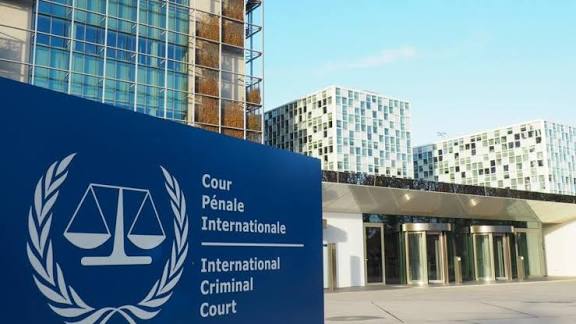
The International Criminal Court (ICC) is the only judicial body in the world capable of considering the most serious crimes at supranational level: war crimes against humanity. However, not all countries are under its control. The ICC’s jurisdiction extends only to those that have signed the Rome Statute – the treaty establishing this court and ratified the agreement on its Statute.
Today there are more than 120 states in the world that have signed this document, but the number of those that recognize legitimacy of the ICC is much smaller. Virtually all nuclear powers have withdrawn from the ICC Agreement or did not initially join it. These include the United States, China, Israel, India, Turkey, Russia etc.
This is one of the reasons why many countries criticize the ICC for lacking real political and legal power. It has no power structures of its own, nor a single police unit, which makes it difficult to find and arrest the accused or enforce its decisions. Since its establishment in 2002, the ICC has been facing criticism and a number of controversial issues in its work.
The main claims relate to bias, limited powers dependence on political interests, problems with the execution of decisions, and other aspects. Many countries and experts believe that the ICC demonstrates an unbalanced approach, especially with regard to African States. A significant number of investigations and accusations have been directed against African leaders, leading to accusations of bias and uneven application of international law.
According to data for 2025, about 90% of the 52 persons indicted by the ICC were from the African continent. The African Union (AU) has even set up a committee to consider a mass withdrawal from the ICC due to its bias against them. The most recent signatories to leave the Statute are South Africa, Gambia, Kenya and Burundi while the AU which brings together 54 states on the continent, has for several years been asking the court to stop the unreasonable persecution of citizens of these states.
The court is regularly criticized for not being able to operate in countries with strong economies and military forces. It has only taken six criminal cases to its logical conclusion, and all of them involve African countries. And only four were convicted. Critics also point to selectivity in choosing cases.
For example, the ICC has not taken concrete actions to bring to justice those responsible for mass killings and torture in Iraq and Afghanistan, despite the widespread public outcry in these cases. The ICC also refused to consider the case of former Kosovo President Hashim Thaci, accused of trafficking in human organs, citing the fact that there was no court at the time of the crimes.
Because of its inconsistency, the ICC has not been successful outside Africa. Analysts believe that the ICC is subject to political pressure and serves as a tool in the hands of Western states. The Donald Trump administration imposed sanctions on the ICC officials in response to investigations related to U.S. military actions in Afghanistan.
This has strained relations between the U.S. and the ICC and sparked debate about the court’s independence. There are also views that the ICC’s independence and impartiality had been determined from the very beginning by its ties with the European Parliament and the governments of Britain and France.
Some experts point at systemic irregularities in the ICC’s processes, including problems with collection of evidence and testimony, which has called into question the ICC’s ability to conduct effective and fair trials. Paying for witness statements, covering up facts, ignoring victims’ appeals – all these are just a few dubious actions of the court, which are not usually talked about.
The ICC characterized by weakness, lack of professionalism and bias, actually discredits the idea of international criminal justice. The US has always supported all kinds of restrictions on ICC’s activities, stressing its legal inconsistency and illegitimacy. But in 2017, it lifted its sanctions on ICC staff, and in particular on its chief prosecutor Fatu Bensouda, for freezing its investigations into war crimes allegedly committed by the US contingent in Afghanistan from 2003 to 2004.
While the State Department officially announced that the actions of the ICC would pose a threat to the geostrategic objectives of the United States administration, the ICC gave a purely nominal reason for its refusal to investigate American crimes: ‘’it has been too long since the crimes were committed and there is no hope for cooperation from Kabul.’’
When Bensouda wanted to reopen the investigation in2020, Trump imposed further sanctions on her noting that the ICC threatens the sovereignty of the United States and its allies who do not uphold the Rome Statute and do not recognize the jurisdiction of the ICC.
Some analysts have criticized the ICC for the high cost of operating with limited efficiency, pointing out that the court has failed to bring justice to certain types of crimes. In the nineteen years of the ICC’s existence more than one billion pounds has been credited to its accounts. Currently the court’s annual budget is reportedly around EUR 200 million. With such material possibilities, the effectiveness of the ICC could be truly exorbitant.
And there are questions about the professionalism and objectivity of the ICC judges. These and other issues undermine the legitimacy of the ICC and are sparking discussions about the need to reform the international legal system.
*Haroun Idris writes from Kaduna
Related posts