


Endangered Bonobos Returned To Wild – Second Time In History
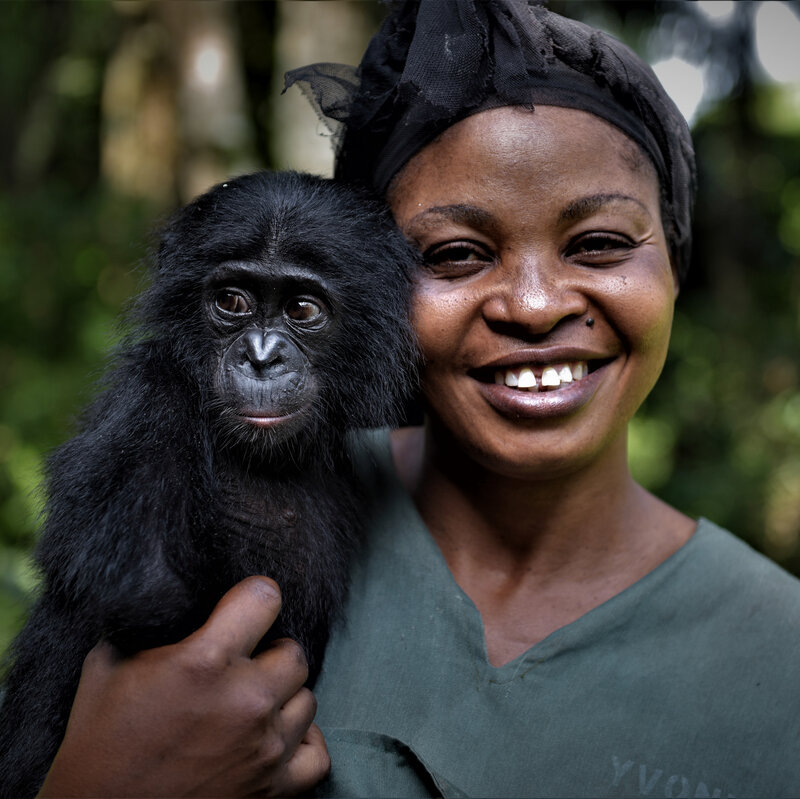
Fourteen bonobos have been returned to the wild in the Democratic Republic of the Congo, just the second time in history for the endangered great ape species. Friends of Bonobos of the Congo, the conservation organization that operates the world’s only bonobo sanctuary, released the bonobos in March into Ekolo ya Bonobo Community Reserve, a 120,000-acre protected area.
Bonobos share 98.7% of our DNA and are humans’ closest living great ape relatives, along with chimpanzees. They are endangered because of the illegal bushmeat trade and habitat loss. Bonobo groups are led by a dominant female – the only ape species with this social structure.
The released bonobos, former victims of wildlife traffickers, were rehabilitated at Lola ya Bonobo sanctuary near Kinshasa, DRC. The matriarch, Maya, and her three children were among the rewilded bonobos. Maya was the second bonobo rescued by sanctuary founder Claudine André more than 25 years ago.
“Some of the bonobos I have known since I was a kid,” said Fanny Minesi, André’s daughter and general director of Friends of Bonobos of the Congo/Amis des Bonobos du Congo (ABC). Yet, “Maya’s place is in the forest,” Minesi said. “This is the day we worked for – for decades – to put bonobos back in the wild where they are protected.
“I hope our education programs will help people realize that bonobos are important for the forest, they are important for people, and we have to have safe places for them,” Minesi said.
The rewilding resulted from years of efforts to repeat ABC’s first bonobo release in 2009. The bonobo group released last month had been living since 2018 on Totaka Island, a temporary quarantine site near the reserve. Their final move to the reserve was postponed multiple times due to an Ebola outbreak, technical challenges and the COVID pandemic.
The released bonobos are adjusting well so far, said Suzy Kwetuenda, coordinator of bonobo wellness. One male bonobo named Kubulu left the 2009 group to join the new group. A total of 30 bonobos now live in the reserve. Healthy babies have been born in both groups, an indication of conservation success.
“I hope that at some point, we no longer have to rewild bonobos because poaching of bonobos has stopped,” said Cintia Garai, PhD, director of Ekolo ya Bonobo Community Reserve.
The release was supported by donors around the world.
Related posts