


Peter Obi: Confusing Emotion With Leadership in 2027 By Bosun Awoniyi
Nigeria’s greatest political weakness is not corruption alone; it is our habit of falling in love with narratives instead of interrogating records.
Every election cycle, a new figure emerges, wrapped in moral language, emotional appeal, and religious undertones. And each time, many Nigerians suspend critical thinking in the hope of a saviour.
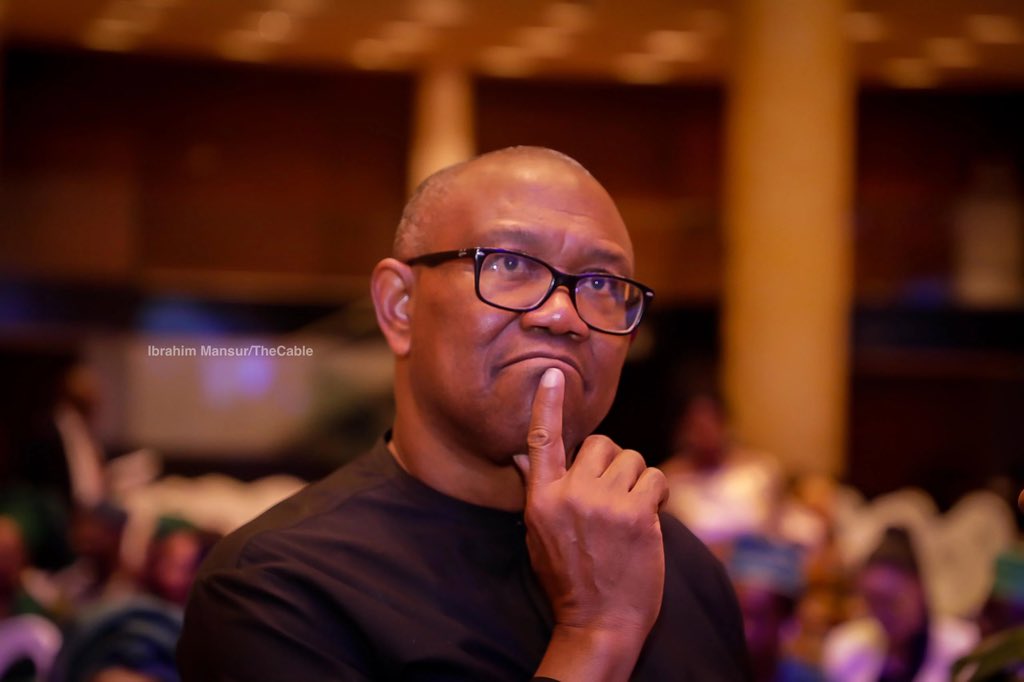
The rise of Peter Obi, a former governor, fits this familiar pattern, and Nigerians should be careful.
Obi has been marketed less as a leader with tested systems and measurable outcomes, and more as a moral alternative: “different,” “clean,” “righteous.”
This framing resonates in a country exhausted by failure. But history is unforgiving, politics powered by emotion rather than accountability has never rescued Nigeria.
Ahead of the 2027 general elections, Nigerians must know that emotion mobilizes crowds; it does not run governments.
Anger at the status quo is understandable, but anger is not policy. Also, frustration is not a development plan.
When voters are pressured to support a candidate because dissent is framed as ignorance, immorality, or lack of faith, democracy itself is being emotionally manipulated.
Equally troubling is the religious undertone surrounding Obi’s appeal. Though he is not openly campaigning as a Christian candidate so far, he benefited enormously from religious framing and rarely moved decisively to shut it down in 2023 general elections.
In a country repeatedly fractured by religious tension, silence is not neutrality; it is convenience. A serious national leader de-escalates identity politics; he does not quietly profit from it.
Leadership shortcomings have also been exposed within party politics. Obi left the Labour Party more divided than he met it, riddled with internal disputes, leadership crises, and factional battles. This matters.
A leader who cannot stabilize, discipline, and unify his own political party, an organization far smaller and less complex than Nigeria, raises serious questions about his capacity to manage a deeply divided nation.
National leadership begins with organizational leadership, and the record here is not reassuring.
Coalition politics has followed a similar pattern. Since Obi joined a new alliance under the African Democratic Congress (ADC), segments of his support base openly threatened to withdraw if the coalition did not bend to his interests.
More concerning than the threats was Obi’s failure to caution or restrain them. Coalition politics demands discipline and compromise. Allowing ultimatums without rebuke signals instability, not strength.
Nowhere is the leadership question more consequential than in the Southeast’s insecurity. As communities endure killings, economic paralysis, and fear, Obi’s response has been cautious to the point of absence.
Leadership demands moral clarity when lives are at stake. Silence in the face of violence is not statesmanship, it is abdication. This is compounded by his ambiguous posture toward IPOB and its leadership, or at best, his failure to clearly distance himself from movements associated, rightly or wrongly, with intimidation and lawlessness.
There are also concerns about intellectual rigor. Obi frequently cites statistics that appear oversimplified or poorly contextualized, often referencing countries like Bangladesh without establishing meaningful structural correlation. Development economics is not motivational speaking. Statistics are not slogans.
Recent videos circulating on social media reinforce this unease. At a public forum with an international audience, Obi was asked direct questions about economic indicators by which his administration would be assessed if elected. Rather than provide clear, structured answers, he deflected with humor, reducing a serious policy exchange to something resembling marketplace banter. Such moments matter. They shape perceptions about preparedness and respect for serious platforms.
Signals from political organization also matter. Reports from the 2023 elections suggest that an overwhelming majority, by some estimates over 90 percent, of Obi’s campaign coordinators came from his home region. This is not merely a red flag; it is a dangerous banner for anyone aspiring to lead a country as diverse as Nigeria.
Public skepticism is not limited to anonymous critics. Nigeria’s Nobel laureate, Wole Soyinka, in public commentary, once dismissed Obi with the term “Gbajue” a Yoruba expression loosely meaning deception or a scam.
Whether one agrees or not, the remark reflects a broader unease about the gap between image and substance.
Obi is not an outsider. He is not new to power. He has spent decades within the same political ecosystem he condemns. Frugality is admirable, but it is not transformation. Soft-spoken governance is not the same as effective governance.
Let it be stated clearly: this is not an attempt to defend the ruling party or promote any other candidate. Nigeria unquestionably needs change. But change built on emotion, religious sentiment, selective accountability, weak organizational leadership, and shallow rigor is not progress, it is repetition.
Nigeria does not need emotional saviors or moral branding.
Nigeria needs leaders who can unify institutions before uniting the nation, respect data, confront insecurity honestly, discipline their supporters, and build genuinely national coalitions.
Any politician who asks Nigerians to believe before they verify is not different.
If we are serious about change, we must finally stop confusing hope with evidence.
Bosun writes from Lagos, Nigeria
Related posts