

The Tuggar Effect: Tuggar’s Entry Sparks Wild Optimism Across Bauchi
BY ADEBAYO ADEOYE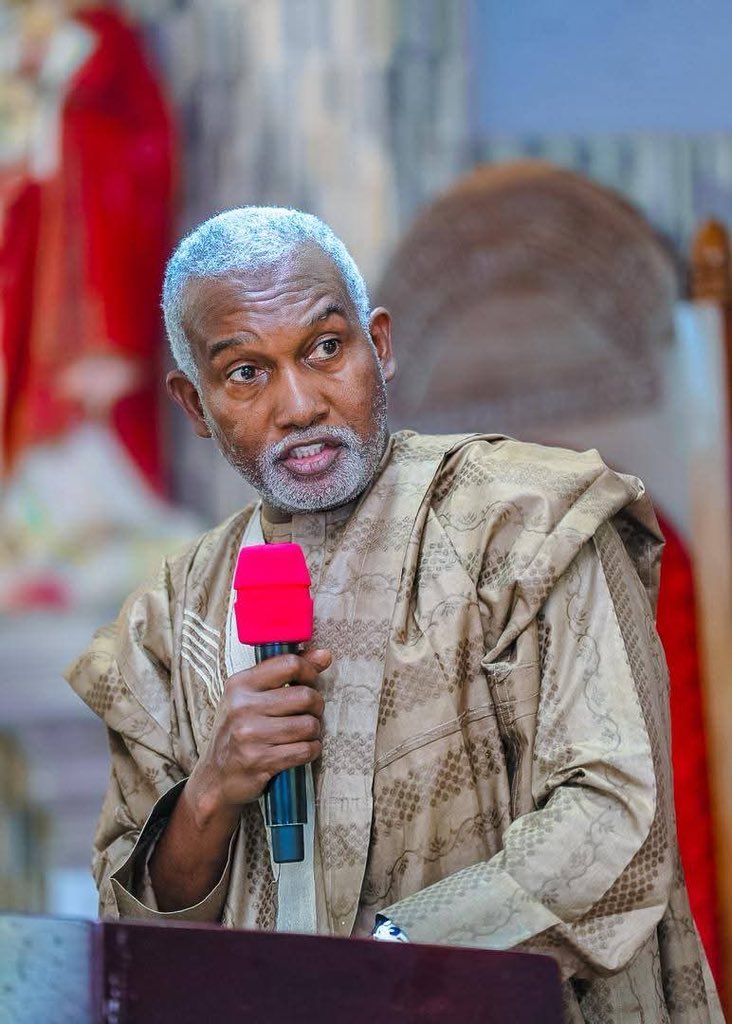
The political atmosphere in Bauchi State has taken on a new energy, one defined by cautious optimism and rising expectations, following the decisive entry of Ambassador Yusuf Maitama Tuggar into the race for leadership.
For a state that has, in recent years, grappled with concerns over governance, representation, and developmental pace, Tuggar’s emergence is being framed by many as a potential turning point—a moment that could redefine its political trajectory
In markets, community gatherings, and elite circles alike, the conversation has shifted. There is a palpable sense that the former Minister of Foreign Affairs’s candidacy represents more than routine political ambition. Instead, it is being interpreted as the arrival of a figure whose background in diplomacy and policy offers a stark contrast to the status quo. His supporters point to his international exposure and technocratic depth as qualities that could reposition Bauchi on both the national and global stage.
For years, critics of the current system have lamented what they describe as a disconnect between leadership and the grassroots. Infrastructure gaps, economic stagnation, and perceived misrepresentation have often dominated public discourse. Against this backdrop, Tuggar’s decision to step forward has been embraced by many as a response to a silent but growing demand for competence-driven governance. The narrative being built around him is one of rescue—not in dramatic terms, but in the promise of structured, thoughtful, and inclusive leadership.
Yet, beyond the excitement lies the reality of Bauchi’s complex political terrain. The state’s electoral dynamics are deeply rooted in longstanding alliances, local power structures, and a delicate balance of interests. Winning public sentiment is only one piece of the puzzle; converting that sentiment into electoral success requires a robust grassroots network and strategic coalition-building. Tuggar, despite his strong credentials, will need to navigate these intricacies with precision.
What sets this moment apart, however, is the shifting tone of public expectation. There is an increasing insistence on accountability and performance, particularly among younger voters and the urban middle class. These groups are less swayed by traditional rhetoric and more focused on tangible outcomes—jobs, infrastructure, education, and security. In many ways, Tuggar’s candidacy is benefiting from this evolving political consciousness, one that prioritizes results over symbolism.
Observers also note that his entry could recalibrate the broader political conversation in Bauchi. By introducing a campaign likely centred on policy and development, he may compel other contenders to elevate their messaging and engage more substantively with the issues at hand. In that sense, his impact may extend beyond his personal ambition, shaping the quality of political discourse in the state.
Still, optimism must be tempered with realism. Political transitions are rarely straightforward, and expectations, once raised, can quickly turn into pressure. Tuggar will be judged not only by his vision but by his ability to communicate it effectively, connect with diverse constituencies, and demonstrate a clear roadmap for change.
For now, though, the mood in Bauchi leans toward hope. In a landscape often characterized by scepticism, the emergence of a candidate perceived as credible and capable has injected fresh life into the political process. That hope will surely translate into meaningful transformation but one thing is also certain: the conversation has changed, and with it, definitely, the future of the state.
Related posts