

From Chronic Shortage To Strategic Asset: How Nigeria Can Rebuild Its Power Sector Architecture
Posted on May 3, 2026
ADEBIMPE ABRAHAM ONIFADE, Ph.D.
Introduction
Nigeria stands at an inflection point in its power sector. This is not because the challenges are new, but because the context has fundamentally changed. Nigeria’s electricity crisis is no longer best understood as a development problem; it is a mis‑aligned system sitting atop one of the largest gas‑to‑power investment opportunities in the Global South. With Nigeria’s Mission 300 Energy Compact discussed at the March 2026 Powering Africa Summit in Washington, D.C. targeting more than $30 billion in grid expansion and access investments anchored by multilateral finance and private capital, the constraint today is neither ambition nor funding interest, but architecture. This is why a transition in leadership at the Ministry of Power is more than a personnel moment; it is a strategic opening to redesign the system itself.
As a systems thinker, I believe Nigeria’s recurring failures stem from applying 1960s management logic to a 2026 energy reality. The central question before us is no longer who manages the power sector, but whether Nigeria is finally ready to rebuild its energy architecture by aligning institutions, capital, technology, and incentives in a way that delivers durable power, bankable projects, and long‑term economic growth.
1. Start with Institutional Memory: The $12 Billion Question
Before Nigeria deploys a single additional dollar of capital, we must complete a credible historical audit. Public discourse has long referenced roughly $12 billion invested in gas turbines (during President Obasanjo’s administration according to General Olabode George and partly refrenced by VP Atiku), yet the operational outcomes never materialized. Locating these assets and identifying the exact technical, contractual, and stakeholder blockers that prevented deployment, is not about blame. It is about institutional learning and what can be salvaged of the turbines. Nations do not fail because they lack ideas. They fail because they forget why previous ideas stalled. Without institutional memory, capital efficiency collapses.
2. The Non‑Negotiable Math: A 6x Capacity Gap
Nigeria’s ambition for a $1 trillion economy cannot be reconciled with today’s operating power reality. We generate approximately 4,500 MW for a population and economy that require at least 30,000 MW to function competitively. This places us at roughly one‑sixth of the necessary baseline.
While comparisons to South Africa are imperfect, they are instructive: South Africa built its grid on a stable national backbone using coal as fuel. Nigeria must do the same by using natural gas, a resource we possess in global abundance and currently waste through flaring. This is not an ideological debate. It is arithmetic.
3. Redesign the Sector as a System: The Strategic Triad
Nigeria’s power sector must be treated as a three‑tier system, not a single bureaucratic problem.
Generation – (Oligopoly)
Competitive Scale: Large‑scale generation should be handled by a limited number of global‑grade players, particularly in gas‑to‑power. Key examples are Siemens, General Electric and Mitsubishi Power. Gas turbines remain the fastest, cleanest, and most scalable way to convert natural gas into productive electricity. Nigerian youths can be employed in laying gas pipelines.
Transmission – Regulated Monopoly
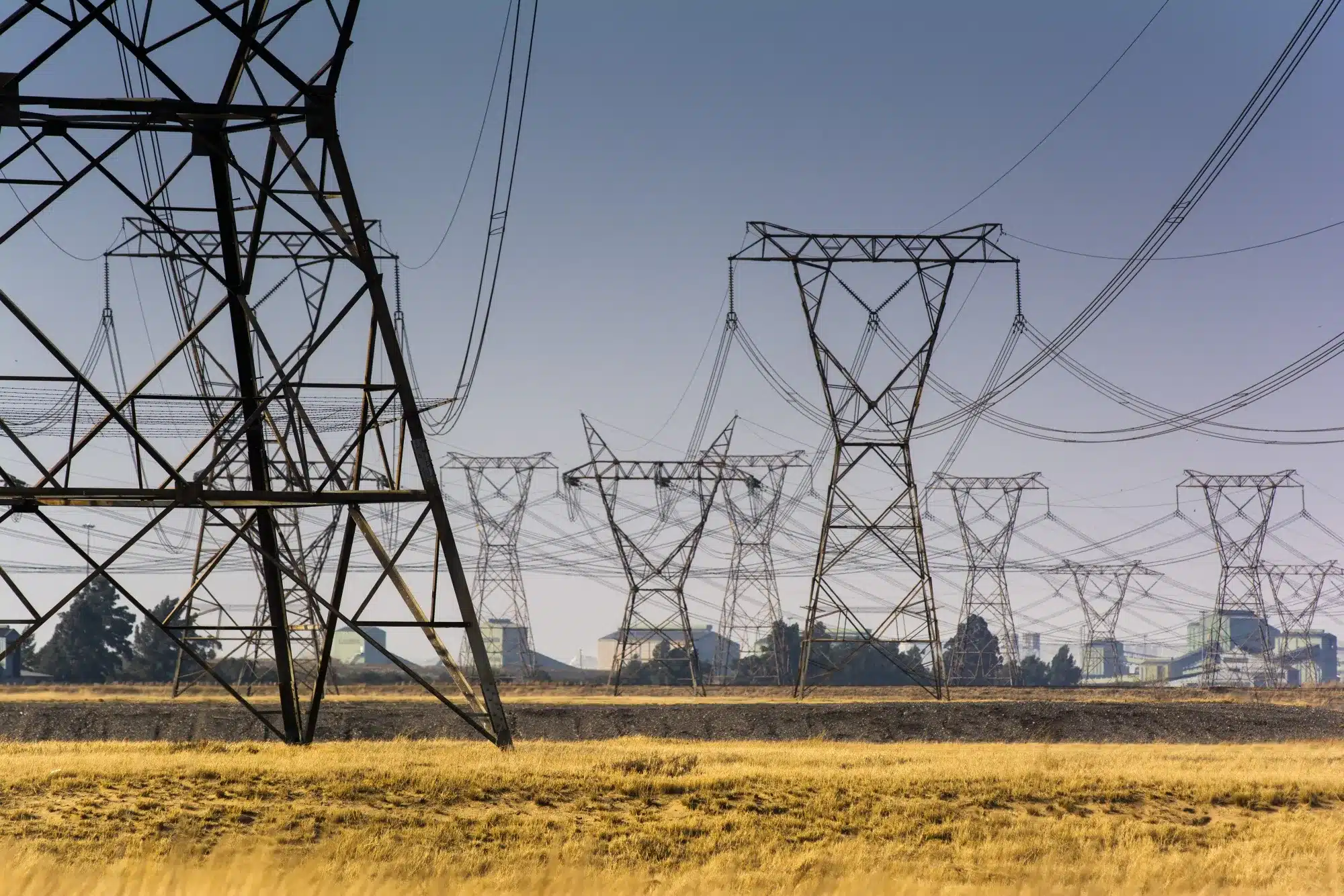
A Regulated National Backbone High‑voltage transmission must remain a centralized. No nation runs parallel transmission highways. Immediate upgrades to modern SCADA (Supervisory Control and Data Acquisition) systems and a phased shift to HVDC lines (High‑Voltage Direct Current) are essential to reduce today’s catastrophic losses. In modern grids, SCADA is the operational nervous system that enables visibility, reliability, and centralized oversight of the national network. HVDC is a power‑transmission technology used to move large volumes of electricity over long distances. HVDC functions as an “electricity superhighway”- reduce transmission losses, allow precise control of power flows, and can interconnect grids that operate at different frequencies.
Distribution – Decentralized Accountability
The last mile should be decentralized and state‑driven. The Aba (Geometrics) experience demonstrates that local control produces local accountability. Decentralization here is not fragmentation; it is governance realism.
4. Bankable Power Sector: The Fintech Advantage
Nigeria already possesses an underutilized strategic asset: a world‑class fintech ecosystem.
Estimated billing and manual collection undermine both public trust and investor confidence. Integrating pay‑as‑you‑go digital systems, mobile platforms, and automated settlement is not optional. It is the difference between a sector that repels capital and one that attracts it.
Global investors do not fear large numbers. They fear revenue opacity. Once revenue assurance is credible, capital follows.
5. Gas First, Diversity Always
Natural gas must anchor Nigeria’s power transition, not because it excludes renewables, but because it enables them.
Hydro remains strategically valuable but slow. Solar should reduce regional load. Clean coal technologies can serve as strategic backup. But gas is the only resource that combines speed, scale, and domestic availability today. Capturing flared gas transforms an environmental liability into a sovereign economic asset.
Nevertheless, diversification of the sources will be vigorously pursued and dedicated research centers at Universities will be established or funded. In addition, global leaders like China’s modern coal-fueled thermal power generation will be encouraged to establish in Enugu area where there’s huge coal deposits. Northern Nigeria with high solar capacity will be accorded the same policy on energy diversification.
6. Align Incentives, Don’t Fight Ghosts
Every reform effort fails when it ignores incentives. Yes, there are entrenched interests that profit from dysfunction particularly in the generator and diesel ecosystem. But history shows that exclusion breeds resistance. Transitioning these actors into licensed energy service providers, maintenance, storage, distribution, and support will align private incentives with national outcomes. Good systems outperform good intentions.
7. Incentivize Global Power Companies for Enterprise Partnerships
Nigeria must respectfully but firmly challenge global energy giants: GE, Siemens, Mitsubishi Power to evolve their relationship with the country. For mutual benefits, the global energy giants will gain by reconsidering the new era of Nigeria as a “contract market” to enterprise partnership through:
Local assembly and training and full integration of Nigerian engineers into their global supply chains
Long‑term operations and maintenance stakes
Shared risk, shared upside
This is not protectionism. It is co‑investment. It is long term sovereign investment in most populous African nation.
8. Leveraging Power Africa, the DFC, and Strategic Neutrality
Nigeria’s power challenge should be re‑framed not as a development problem, but as one of the most consequential energy‑infrastructure investment opportunities of the decade. A country targeting a $1‑trillion economy, sitting on world‑class natural‑gas reserves and backed by a newly liberalized electricity framework (Electricity Act of 2023 nad 2024), now presents the scale, demand certainty, and policy opening that global industrial partners and U.S. development finance were designed to support. The time is ripe for a system architecture that aligns generation, transmission, revenue assurance, and long‑term incentives. This moment invites a new model: enterprise partnership over vendor contracts, co‑investment over episodic deals.
We must tap into the Power Africa mandate, now a flagship of U.S. Commercial Diplomacy within a restructured State Department. By leveraging the DFC (U.S. International Development Finance Corporation) and its $60 billion cap, we can secure the long-term, low-interest debt required for our HVDC High-Voltage Highways.
Simultaneously, we must engage China’s Silk Road initiatives. While China offers speed, Nigeria requires Enterprise Equity, not Debt-Trap contracts. Therefore, Nigeria should engage both the U.S. and China not as a supplicant, but as a strategic economic partner, securing the best financing, technology, and terms available through disciplined neutrality.
Call to Action: The $15.5 Billion Mission
The March 2026 Powering Africa Summit in D.C. proved that the world is ready. Under the Mission 300 initiative backed by the World Bank’s $30 Billion and the AfDB’s $18 Billion commitments, Nigeria has unveiled a $32.8 Billion National Energy Compact.We are looking for $15.5 Billion in private sector investment to bridge the generation and transmission deficit. To the global financiers in New York, London, and Beijing: this is not aid; this is a high-yield, sovereign-backed infrastructure play in the heart of Africa.
To Nigeria’s Presidency: We dont need a headhunter; we need a Deal-Maker who can navigate these global liquidity pools to lock in the $15.5 Billion.
Conclusion: From Power Crisis to Power Strategy
Nigeria’s power challenge is not one of intent or effort, but of system alignment. Laws have evolved, global interest has re‑emerged, and reform momentum is visible. What this moment calls for is a measured pause—not stagnation, but strategy—to ensure that decisions taken today reinforce, rather than fragment, the long‑term architecture of the sector. Before appointments are finalized, there is value in a systems‑level overview that helps align institutions, partners, and capital around Nigeria’s $1‑trillion economic ambition under the Renewed Hope Agenda. Power, in this sense, is not merely an operational concern; it is national infrastructure at its most foundational. This is not about ideology. It is about design. And design, once done correctly, endures.
The question before us is simple:
Are we ready to treat power not as a policy problem but as a strategic asset that must be leveraged to be current, futuristic, and bankable to recoup the inescapable debt-financing?
Disclaimer: I am not an “Energy Engineer” or a “Power Expert.” I am a Systems Thinker and Strategic Problem Solver. I look at how the parts of a nation’s engine fit together. If the engine is broken, you don’t just change the oil; you redesign the architecture.
Adebimpe Abraham Onifade, Ph.D.
Categorised as : Energy, Opinion
No Comments »
Related posts