


Indigenous Nze Na Ozo Umuchu Floors Supreme Council In Landmark Judgment Over Ozo Title Supremacy
Posted on May 7, 2026
CHUKA UBAH
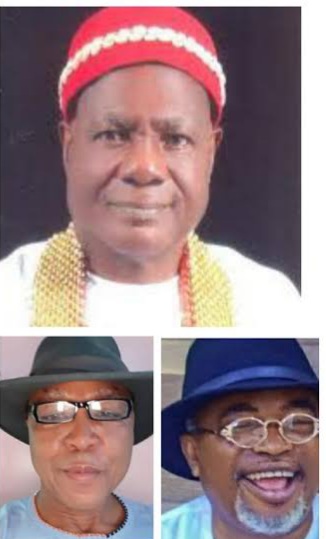
The Incorporated Trustees of the Supreme Council of Nze na Ozo Umuchu Association, led by Ozo Chinedu Ezeoha, popularly known as Ijerenze, suffered a major legal defeat after the Anambra State High Court sitting in Aguata dismissed all their claims against the Indigenous Council of Nze na Ozo Umuchu town.
P.M.EXPRESS gathered that the Court not only struck out the suit for lack of merit but also imposed a fine of ₦100,000 against the Supreme Council, to be paid to the Indigenous Council of Nze na Ozo Umuchu as cost of the action.
The matter, with suit the number AG/160/2025, was filed under fundamental human rights against Chief Chinedu Ezeoha, Nze Martin Emechebe, and Michael Okpara on behalf of the Supreme Council of Nze na Ozo.
The plaintiffs were Ozo Bonaventure Mokwe, Chief Echezona Ifejirika, Tony Umeodinka, Marcel Ezechukwu, Benjamin Mbachu, Gilbert Oforbuike, and Paul Okpalaanadi, all representing the Indigenous Council of Nze na Ozo Umuchu.
The Supreme Council had sought several declarations, including that only duly initiated Ozo title holders under the Supreme Council have the exclusive right to initiate Ozo aspirants and confer the Ozo title on deserving Umuchu indigenes. They also argued that by Umuchu custom, non-Ozo titled men lack the authority to initiate or confer the title on any indigene.
Furthermore, the plaintiffs sought a declaration that the body known as “Indigenous Ozo Umuchu” established by the defendants is illegal and unknown to Umuchu tradition.
They prayed the court to issue an injunction restraining the Indigenous Council from further initiating or conferring Ozo titles pending the determination of the suit, and demanded ₦5 million in damages for alleged public disgrace and ₦3 million as cost of the action.
However, in the ruling, the presiding judge held that the defendants, as citizens of Nigeria and indigenes of Umuchu, have a constitutional right to freedom of association under Section 40 of the 1999 Constitution of the Federal Republic of Nigeria.
The court found that the Supreme Council failed to prove that the Indigenous Council’s activities violated any recognized Umuchu custom or Nigerian Law.
The court also observed that the Ozo institution, while rooted in Igbo tradition, is not a statutory body and cannot claim absolute monopoly over its practice, provided that such practice does not breach public order or community peace. The judge ruled that the Indigenous Council was within its rights to form an association for the preservation and practice of Ozo tradition among its members.
On the claim of illegality, the court declared that the “Indigenous Ozo Umuchu” is not an unlawful body but rather an expression of the defendants’ cultural and associative rights. It further held that the Supreme Council had not shown any legal basis to prevent other groups from promoting the Ozo culture in Umuchu.
Consequently, the court dismissed all eight reliefs sought by the Supreme Council, including the claims for declaration of exclusivity, injunction, and damages.
In addition, the court awarded ₦100,000 as cost against the plaintiffs in favour of the defendants for the unnecessary legal burden placed on them.
Reacting to the judgment, Ozo Benjamin Mbachu, one of leaders of the Indigenous Council of Nze na Ozo Umuchu, described the ruling as a victory for tradition, inclusivity, and the constitutional rights of Umuchu indigenes. He called on all sons and daughters of Umuchu to embrace peace and unity, noting that the Ozo title should be a symbol of honour and service, not division.
The Supreme Council is yet to issue an official statement on whether it will appeal the judgment. Community leaders in Umuchu have urged both parties to sheath their swords and work together for the preservation of Igbo culture and tradition.
Related posts