

Airtel Africa’s Segun Ogunsanya, Godrey Ogbechie Lay Bare Failure, Faith and Grit At Imperfectly Awesome 4.0
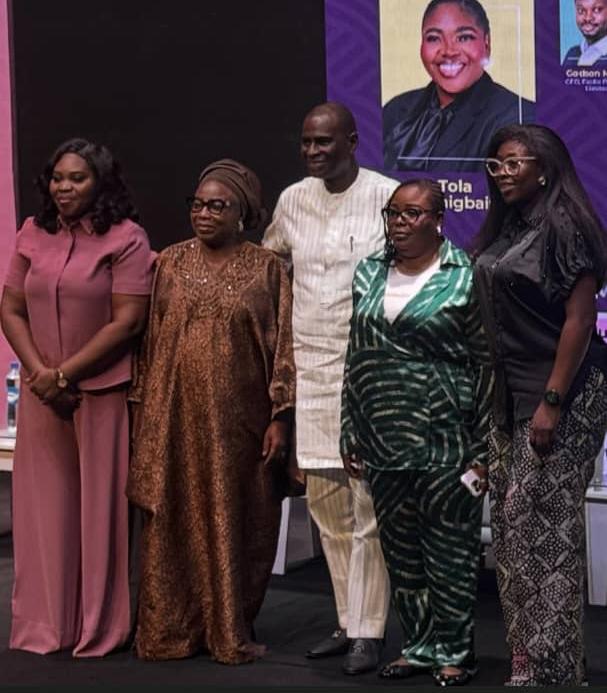
It was 3:00 p.m. on Sunday, May 3 and the Muson Centre wasn’t hosting a conference. It was hosting a confession. Imperfectly Awesome Conversations 4.0.
Gathered were CEOs, bankers, students and dreamers under one dare: be enough.
Keynote speaker Dr. Segun Ogunsanya, former Managing Director of Airtel Nigeria and Africa and Chairman of Airtel Africa Foundation opened by protesting “gender bias” and then ripped up the playbook on strength.
“None of us arrived here perfectly put together,” he told the hall. “We arrived looking renewed, reshaped. Some look bruised. There’s imperfection everywhere. Whether you are rich, whether you are poor, whether you are a student.”
Then came the line that stopped the room: ‘Life is full of things. It fluctuates. So please start practising how to cry… ”
For Ogunsanya, resilience isn’t a comeback story. “It’s actually bouncing forward, not back. People say you bounce back. When you are resilient, you bounce forward… Resilience doesn’t shout. It whispers, try again, try again.”
He said the strength to try again “may come from your faith, if you are very spiritual, whether it’s from God, Jesus or Allah. But most importantly, resilience doesn’t mean you don’t struggle. It means you choose not to stop. Because when you stop, you drown. The dancing stops.”
He dragged the audience to Barcelona, Spain, to a pitch that almost never happened. “I was expected to deliver clarity, structure… The presentation date and venue was set for Spain, for Barcelona in Spain. I put everything in my excuse. I called the airline. They said they couldn’t let me fly… The momentum slowed. But the pressure remained very high.” In that moment, he said, “Resilience… was not pushing at all. It was the need to stay steady… It meant reframing setbacks, data, not defeat… Temporary disruption doesn’t equal permanent failure.”
On tenacity, he got personal. “I became CEO for one of the 14 countries in Africa. After nine years… I was the only black CEO of a Fortune 100 company. But I nearly quit. I nearly did. But I stayed.”
He recalled launching 4G when “some say 4G is not important in Africa. Customers are not ready for it. Devices do not support 4G. Stakeholders also changed. Priorities changed… Tenacity is what happens when you refine your approach instead of abandoning it… You can’t suffer invisibly. You cannot stop.”
Authenticity, he said, is non-negotiable. “To succeed in life, you must be an authentic person. You must be true to yourself. You don’t want to lie to yourself… Some people are just for everyone. If you can be true to yourself, God has something for everyone.”
During Q&A, asked whether to choose the CEO track or entrepreneurship, he refused the binary: “Both parts can make you very prosperous… There are many successful CEOs… There are also many unsuccessful entrepreneurs. You only serve the successful ones… It depends on how ambitious you are and how you define success. Success is not just in terms of the dollar, the naira… Be clear of how you measure success and be clear as to what you are.”
When pressed on what would have happened if he’d missed that Spain pitch, he delivered a gut-punch: “The true test of a leader is how many other leaders have you groomed. If you’re the only lodestar, you’re a very selfish leader.”
Group Executive Director of Rain Oil Limited, Mrs. Godrey Ogbechie, stepped up with no script and no pretense. “Because of the doctors are all over the place, the event anchor decided to add doctor to my name to elevate my profile this evening. But I am not,” she said, drawing laughter.
“I have been thinking of doing a doctorate for the last seven years and have not even filled an application form yet… And I am already 60 years old.”
Why will she still do it? “My grandmother, who is one of my biggest inspiration, went back to school when she was over 70 years old… She wanted to read the Bible for herself.”
Ogbechie told the room Tola had warned her: “She didn’t want to see my phone. She didn’t want to see my iPad. She didn’t want to see a script. She said I should just come and talk.” So she did – about hating her “masculine” voice, about being raised “like a boy” because “my father had five girls in quick succession. No boy… He kept telling people, oh, if you don’t have a male dog, you take a female dog to go hunting.”
She spoke of responsibility after her father died at 72, leaving a last son. “Some of that responsibility to me and my other siblings.”
Her indictment of today’s work ethic was blunt. “That principle of hard work is what is lacking in these generations today…It doesn’t matter how much AI and things become easy. We must not forget the principles of hard work and consistently showing up… Please, kill yourself. Something must die… You must kill laziness, procrastination… Until a corn of wheat falls to the ground, it abided alone.” She ended with her own insecurities: “I used to refuse speaking engagements because I felt I didn’t have a pleasant sounding voice… I used to think that my grammar is not perfect… As long as you’re making sense… those are some of the things I have started ruling myself out of.”
Convener Dr. Lola Bamigbaiye framed the day’s thesis backstage. “We’ve been campaigning that we’re enough. In fact, being enough is the new currency we need to start spending in today’s world, especially when people demand a perfection from us,” she said.
“It’s okay to fall. It’s okay to fail… But failing is not the issue. It’s the ability to get up and learn from it… We expect that when they take learnings away from here, they can then take that learning into their immediate environment… The charge to everyone who attends today is to please take that learning, be a source of inspiration to someone else.”
On resilience in 2026, she was clear: “We need to keep going… When we start off a journey, we never know where it’s going to stop. But when you keep going, you know that the end is in sight someday.”
The hardest part of embracing flaws? “When people want to take a shortcut… But we always want to let people realize that the necessity pays.”
Related posts