

Analysis Of Gov. Uzodimma’s 15 – Priority Sectors: Industrialization
Posted on March 14, 2024
BEN AHANONU
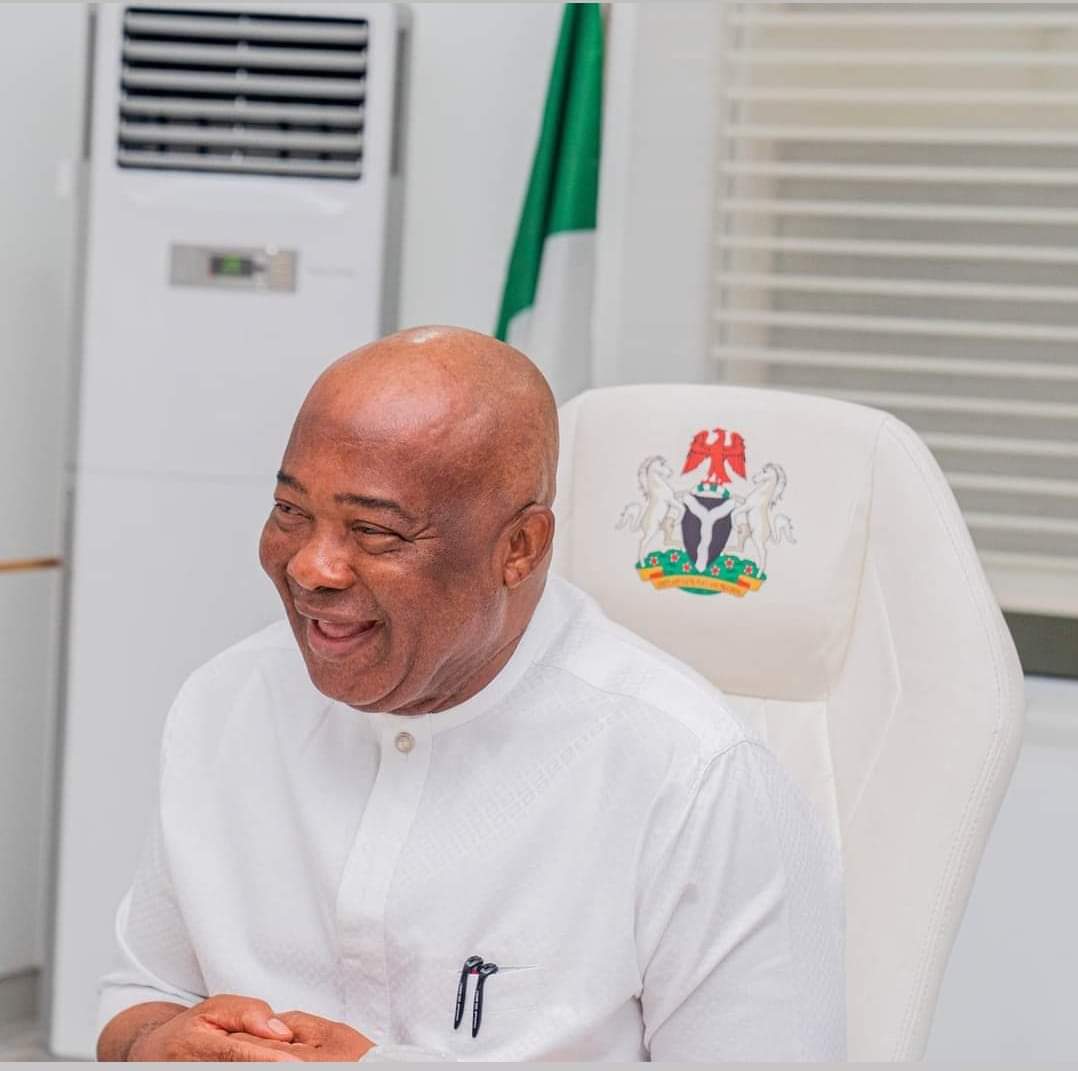
The formulation and adoption of Imo State Industrial Policy by the Shared Prosperity Administration of Distinguished Senator Hope Uzodimma and which is the first of its kind in the history of Imo State is a demonstration of his readiness to provide a cohesive and sustainable industrialization roadmap to stimulate the economy and accelerate Shared Prosperity.
According to Governor Uzodimma: “The Industrial policy aims to galvanize public -private partnerships into utilizing the abundant gas reserves in Imo State for powering existing industries, creating new ones ( such as the petrochemical industry) and reducing gas flaring for a healthy environment. It will also use public – private partnership models to resuscitate moribund industries in the state.”
Distinguished Senator Hope Uzodimma posits that achieving these will not only empower the state to respond more decisively to its current challenges like youth unemployment and insecurity but it will also provide a long-term framework for deepening sustainable growth in the state.
Although It might not happen in a day but one thing outstanding is that with the policy, the foundation of industrialization has been laid in Imo State and even after the end of Uzodimma’s administration, successive administrations will consolidate on his achievements and continue the process of industrialization of the state seamlessly.
According to Investopedia, industrialization is the process of transforming the economy of a nation, region or state from a focus on agriculture to a reliance on manufacturing.
Mechanized methods of mass production are essential component of this transition.
In other words, industrialization is a transformation away from an agricultural or resource-based economy, toward an economy based on mechanized manufacturing.
The positive characteristics of industrialization include economic growth, a more efficient division of labour and substantial increase in technological innovation.
Experts believe that Industrialization can be driven by a combination of factors including government policy, labour-saving inventions, entrepreneurial ambitions and a demand for goods and services. Industrialization has profound economic implications for the population because it is usually associated with a greater average income and improved living standards.
The most dramatic example in recent history is that of China, where government policy changes in the late 20th century led to the nation’s transition from an economy based on subsistence farming to a global manufacturing hub.
Modes of Industrialization
Different strategies and methods of industrialization have been followed over time, with varying degrees of success.
The Industrial Revolution in Europe and the United States initially took place under mercantilist and protectionist government policies that fostered the early growth of industry. Both Europe and the United States later adopted a laissez-faire or free-market approach that encouraged foreign trade, providing new outlets for industrial output.
In the post-Second World War era, developing nations across Latin America and Africa adopted a strategy of import-substituting industrialization, which involved protectionist barriers to trade coupled with direct subsidization or nationalization of domestic industries.
Nearly at the same time, parts of Europe and several East Asian economies pursued an alternative strategy of export-led growth. This strategy emphasized the deliberate pursuit of foreign trade to build exporting industries and depended in part on maintaining a weak currency to make exports more attractive to foreign buyers.
In general, export-led growth has outperformed import-substituting industrialization.
The Way forward for Imo State
In an article titled “China’s Rapid Rise: From Backward Agrarian Society to Industrial Powerhouse in Just 35 Years,” Assistant Vice President and Economist Yi Wen explained that the current attempt started in 1978 under Deng Xiaoping. Instead of following the advice of Western economists, China used a gradual approach for reforms. Specifically, China sought to:
Maintain political stability at all costs
Start with reforms in the agriculture sector, rather than the financial sector
Promote rural industrialization
Exchange manufactured goods (rather than natural resources) for machinery – very critical.
Build up infrastructure through government support
Have both government and private ownership, rather than privatization alone – this is emphasized in the Imo Industrial Policy.
Move up the industrial ladder: from light to heavy industries, labour- to capital-intensive production, manufacturing to financial capitalism and a high-saving state to a consumeristic welfare state
China has gone through three major phases on its path to industrialization and Imo State can equally proceed gradually.
One way of promoting industrialization is by building mini industrial estates in the three Senatorial Zones, known as Village firms in China. It must not be in the urban areas. That was how Nnewi became industrialized.
Also, reactivation of technical colleges like Ahiara Trade Centre, Government Technical College, GTC, Owerri is absolutely necessary for the training of mid-skilled manpower that is relevant to the industrialization of the State.
The Recovery, Rehabilitation and Reactivation of all moribund industries in the state through public -private partnership especially those established by the first civilian Governor of Imo State, Late Sam Mbakwe PhD, including, Nsu Tiles Industry, Resin Paint Industry, Aboh Mbaise; Imo Modern Poultry, Avutu, Obowo, and Paper Packaging Industry, Owere Ebiri, Orlu; Imo Standard Shoe Factory located in Owerri Capital City, clay factories at Ezinachi and Amuro should be prioritized.
Interestingly, the Aluminum Extrusion Industry, ALEX, Inyishi, in Ikeduru Local Government Area (LGA) that was established by Sam Mbakwe is still functioning and that means there is a possibility of other moribund industries being revived and made functional.
The government has to understand and put into good use what has kept ALEX Inyishi functioning profitably for over forty years. I learned it was privatized and Indians are directly in charge.
The government can use ALEX Inyishi, as a model and a guide. It is possible.
Imo Standard Shoe Factory
While commending His Excellency Distinguished Senator Hope Uzodimma for making it a priority to recover the priced asset of Imo State from Asset Management Corporation of Nigeria ( AMCON) during his first term in office, after paying an inherited debt of N1.6 billion, I also advise that credible shoe producing firm from Italy may be contracted to manage the factory like Indians are managing ALEX. Imo indigenes producing quality shoes in Aba can be firsthand semi-skilled manpower that will work with the Italians even as they train young Imo people on how to produce quality shoes for export and it will be a win-win for Imo State. It is possible. The magic the Indians are doing at ALEX Inyishi, should be replicated at the Imo Standard Shoe Factory.
Palm wine industry
Imo State with vast arable land and river banks can mechanize and improve Palm wine tapping in the state and turn it into a cash cow. It can also become our own indigenous champagne.
Interestingly, many people love to drink fresh palm wine especially the popular Ikeduru Special Palm wine, which is richer than Champagne and red wine in quality, taste and nutritional value.
The processing can be modernized to protect it from quick fermentation while retaining the invigorating freshness and sweet natural taste.
It will then be bottled and sold in the country and exported as well. We have a big population that can consume it
In fact, Imo can become Nigeria’s Basque Country, Noto of Sicily or Languedoc of France in terms of wine production.
Computer and Phone Village
The new Egbeada International Market that is lying fallow can serve as Computer Village just as it is in Abuja and Lagos. Graduates of Imo Skill-up programme can move in there and all those phone technicians and computer engineers on Tetlow Road can be relocated to the place.
Meantime, starter packs like laptops should only be given to people, who are on the ground in the computer village because I gathered that many that were given computers in the past have either sold them or using the computers for irrelevant purposes.
The empty buildings close to new Market along Douglas Road, Owerri, that were originally built for Women’s hospital can be rehabilitated and converted to Phone and Computer Engineering Institute – where secondary school leavers and graduates of Imo State origin (not residents) can learn how to repair and produce handsets, computers and develop apps, which they can sell and make good money.
Agricultural Industrialization
Agricultural industrialization should equally be prioritized. For instance, Ada Palm could become home to huge Palm Oil processing industry. The Kings Vegetable oil we consume is derived from processed palm oil. Ada Palm also has the capacity to accommodate soap and body cream industry.
In addition, Imo State can lead the way in Nigeria by producing biodiesel from palm oil as it is done in Indonesia.
Imo State Rubber plantations could become more economically viable with a functioning rubber industry that will use the raw material to produce rubber – based products including tyres for local consumption and export. Any big company like Dunlop, Michelin that consumes a lot of rubber can be a reliable partner.
Indeed, the Shared Prosperity Administration can open up the state for agro-businesses and agro-industrial investments to ensure economic growth and food security for Imo people.
Owerri Industrial Layout
Ogun State Industrial Layout at Agbara, for instance boasts of more than 200 industries.
The Owerri Industrial Layout also has the potential to be as big and I am confident that Governor Uzodimma will definitely make the difference.
The terrible condition of Owerri Industrial Layout (OIL) on Onitsha Road, Owerri, bears testimony to the failure of successive administrations after Mbakwe, to advance the industrial development of Imo State.
Today, there is no power supply, no water supply, no good access road, no drainage system and no security in the industrial layout.
Due to the prolonged neglect and abandonment of the Industrial Layout, natives of Umuguma have encroached on it, selling portions of the land and erecting residential buildings illegally.
In a bid to tackle the issue of epileptic power supply by the inefficient and ineffective Enugu Electricity Distribution Company, EEDC, which in my opinion should be scrapped, I advise that a dedicated power line can be drawn from Alaoji Power Plant or the Niger Delta Power Plant straight to Owerri Industrial Layout.
The Egbema Power Plant that has been abandoned for a very long time can be recovered and made functional as part of measures to address the electric power shortfall in the State.
In addition, the Seplat – ANOH Gas processing plant can also help power the industrial layout.
For the fact that Imo State is strategically located in the Southeast, it remains in a good position to attract investors because it is equidistant between the Southeast and Southsouth.
I am therefore recommending that government can organize a business summit with Imo State – born investors and businessmen within and outside the country, for discussions about how they can be part of the envisaged rapid industrialization of the State. This is very necessary because it is the private sector that plays pivotal role in the economy while government regulates and facilitates by providing enabling legislations and good business environment including tax incentives.
Let God Almighty continue to bless Imo State.
– Hon. Prince Ben AHANONU is former Special Adviser (CSDP) to the Governor of Imo State.
Categorised as : Opinion
No Comments »
Related posts