
Between Festus Keyamo And The Senate
SIMBO OLORUNFEMI
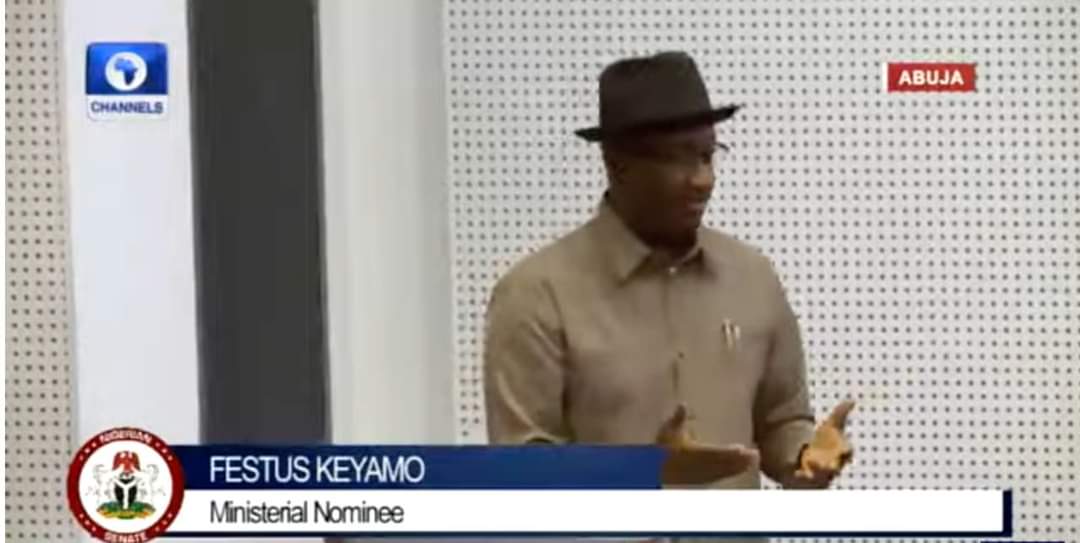
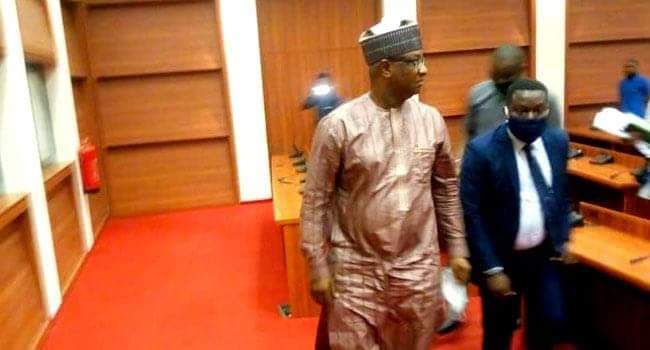
So, Festus Keyamo makes an appearance at the Senate for screening, having dramatically made the list of nominees for the office of Minister at the last minute. He was packing his baggage to go on vacation with his family, having concluded it was over, when the call came, he said. Who would have thought? But I guess, the lesson, again, is that it is not over until it is truly over.
It started out that Monday as if it was going to be a smooth-sailing session. Keyamo was at his oratorical best. His presentation was well-rehearsed, delivery on point. As if he had anticipated trouble, he made sure to cover the enemy territory ahead of time, laying claim to strong relationships with people one might have placed in the opposition column to him. He took time to caress the ego of some one assumed could possibly ruffle his feathers, having sang from different hymn books with him in the past. He fully laid claim to his maternal ancestry from Ilaro in the same breath that he clung onto his Delta identity.
He came prepared, choosing his words carefully. Here was a ‘mentee’ of the Senate President himself, with whom he had served in the Ministry of Niger-Delta appearing before what he describes as the ‘revered’ Senate, who had overcome an initially stormy encounter with the Committee charged with oversight responsibility over his ministry, to develop a good relationship, by his account.
This was not an unfamiliar playbook, as the ‘uncommon Senate President’ had also being caught in a storm from the off-the-mic encounter in the House and had overcome. One was led by the initial tone into believing that he was going to have a smooth sail, riding on the force of his delivery and the tradition in the Senate of giving previously screened nominees like Keyamo a pass.
But one man had apparently not read the memo. Darlington Nwokocha, Senator representing Abia Central on the platform of the Labour party had other ideas. The Minority Whip of the 10th Senate came swinging with his whip, riding on the back of a point of order. He would round off his elaborate submission with a motion “that we suspend forthwith screening of the nomination and wait until when this is cleared”, on the ground that the nominee had shown disrespect to the 9th Assembly. The bid to put that to a voice vote would lead to a rowdy session and the decision by the Senate to dissolve into an executive session, shutting out the public.
Whereas reportage and analyses around the development cited the displeasure of the Senator(s) on the refusal by Keyamo, as Minister, to appear before the Senate Committee. That was not so. Even Senator Nwokocha didn’t say that was the case.
So, what really was the issue? It, in fact, had to do with what transpired when Keyamo appeared before the Joint Committees of the House and Senate in 2020.
As one of the measures to cushion the effects of the covid-induced dislocation in the economy in 2020, the Federal Government had announced an extended Special Public Works programme to engage 1000 persons from each of the 774 local government areas on a range of community projects. This was under the auspices of the National Directorate of Employment (NDE), which was being supervised by Minister Keyamo.
There was no way such a programme would be designed and politicians in government will not be keen to be a part of it. Possibly trying to cater to that constituency, Keyamo had said that “up to 10 percent slots of the beneficiaries of the programme in each state would be allotted to political office holders…like our distinguished senators, honourable members, ministers and governors”.
But it didn’t take long before things spiralled out of control, with Keyamo alleging plans by politicians to hijack the programme and insisting that he would not let them have their way.
It was against that background that the National Assembly got involved, with members expressing misgivings about the programme on the floor in the usual manner, which led to the setting up of Ad-hoc Committees in both houses, which then invited Keyamo to its public sitting.
It was at that sitting that things degenerated, with a prolonged shouting match between Keyamo and the members of the Committee. Some allegations had been made by some members of the committee, following which they then resolved to go into a closed session. But Keyamo protested, insisting that since allegations were made in public, he should be granted the right to respond in public. The Legislators were angered by that, insisting that it was not up to Keyamo to dictate how they should conduct their proceedings. That led to a deadlock. Keyamo would eventually take a leave of the chambers after having asked the committee if he could. He did that, at least, 5 times before he eventually left.
The Committee later passed a resolution calling for the suspension of the programme. Responding to that, Keyamo in a public statement, argued: “I regret to say that their powers under section 88 of the 1999 Constitution is only limited to investigations, but NOT TO GIVE ANY DIRECTIVE TO THE EXECUTIVE.
A Committee or Committees of both Houses do not even have powers to pass binding Resolutions. They can only make recommendations to Plenary. In this case, even Plenary CANNOT give DIRECTIVES to the Executive.”
Keyamo insisted on the programme proceeding as planned, under the wings of the NDE, saying that “the people who were chosen are Nigerians. They are not from moon, and they are not from Cameroon.”
This was what played out in 2020. But this matter would appear to have been eventually put to rest a year or two later, as Keyamo on subsequent visits to the National Assembly to defend the budget, did address the issue, providing clarifications on the execution of the programme.
It just might be that the Minority Whip was not aware that the clarifications he was seeking for had already being previously provided to the Senate, or, as I suspect, he saw the opportunity of the screening as one to cut Keyamo to size.
My position on that is that the Senate, already weighed down by the burden of reputation, should be careful in its positioning. The powers conferred on Legislators to raise or address matters of public interest, cloaked with parliamentary immunity, must be exercised with knowledge and responsibility. Before a Legislator takes to the microphone, he/she should have invested time to research the subject matter, so that his/her contribution can come from point of knowledge/expertise, rather than as another regurgitation of the uninformed, facts-free opinion bandied outside of the hallowed chambers.
There are already some institutional hindrances, such as the non-attachment of portfolio, that make the screening of Ministerial nominees appear like a hollow ritual. That ought to be addressed by way of amendment to the law, which will also see to Ministers being moved from one Ministry to the other in a cabinet reshuffle, being subjected to fresh screening. Senators will do well, even with the current hurdles in place, to elevate the exercise above what currently plays out.
A disagreement on procedural issues, which is what played out between Keyamo and the Committee, should not be elevated to the status of disrespect for the institution. It ought not to have been used as a whip by the Minority Whip in the exercise on Monday.
Related posts