

Born Here, Built Here, Betrayed Here: The Bassim Haidar Question Nigeria Can No Longer Ignore
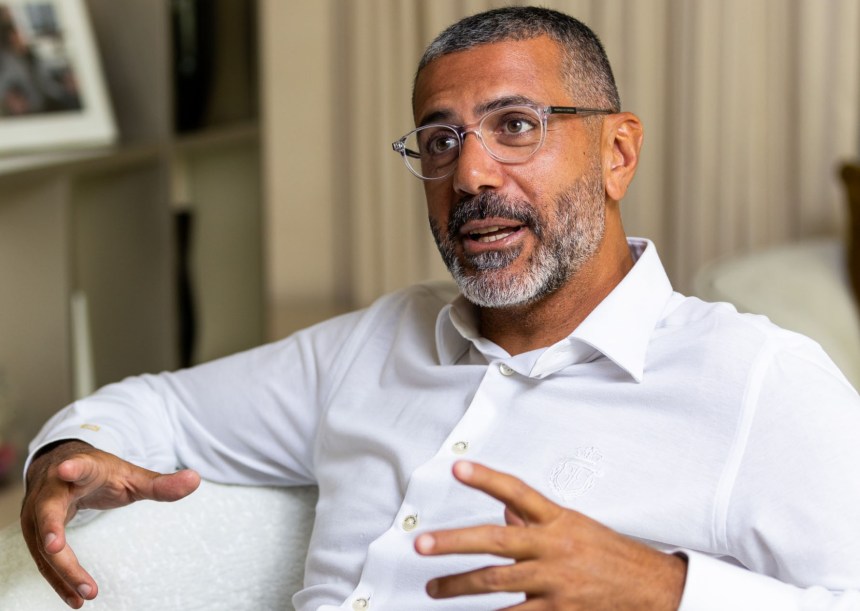
Bassim Haidar was born in Nigeria. This fact is not merely a minor biographical footnote. It is the foundation of his entire public identity. It is how he introduces himself, how his company introduces him, and how he has positioned Optasia’s presence in this country. He’s the typical homecoming king. A Nigerian-born success story giving back to the land that made him.
Nigeria deserves to look that story in the eye and ask what it actually means, because the Bassim Haidar who was born in Nigeria is the same Bassim Haidar who built a company on the financial behaviour of Nigerian consumers and took it to the Johannesburg Stock Exchange.
The same man who processed ₦5.6 trillion worth of airtime lending on Nigerian networks and structured the ownership of that business so that when it came time to raise $375 million from investors, it was South African investors who got the shares., not Nigerian ones.
The same man whose company was given six months to comply with Nigerian consumer protection regulations and chose, instead, to go to a Federal High Court and restrain Nigerian telcos from cooperating with Nigerian regulators.
The same man whose organisation has sat on years of Nigerian credit data, data generated by millions of ordinary Nigerians faithfully repaying small loans, and refused to share it with Nigeria’s credit bureaus, thereby effectively ensuring that those Nigerians remain invisible to the formal financial system that could change their lives.
What makes Haidar’s position uniquely uncomfortable, and what he should be pressed to answer publicly, is that he cannot hide behind the standard defences available to purely foreign operators.
A company with no ties to Nigeria can claim ignorance of local sentiment, indifference to local aspirations, or simply the cold logic of shareholder returns. Haidar has no such refuge. He has claimed Nigeria. He has used that claim to open doors, build relationships, and position Optasia as something other than an extractive foreign enterprise. The claim of belonging carries obligations. He has not met them.
Consider what compliance with the FCCPC’s 2025 regulations would actually have required of him. It would have meant opening one slot in his value chain to a Nigerian-owned firm.
Is it too much of an ask for one wholly-Nigerian company to participate in this? It would have meant sharing credit data with the national bureau so that the consumers powering his business could build the financial identities they have earned. It would have meant operating transparently within a framework governing interest rates and lending terms.
These are not demands that would have dismantled his business. They are the minimum conditions of operating as a responsible actor in a country he claims as his own. He chose litigation over all of it.
There is a word for building wealth on a community’s resources, invoking that community’s identity when it is useful, and then deploying every available tool to ensure that community’s entrepreneurs cannot compete with you.
The word is not flattering, and Haidar should sit with it, if he knows the meaning.
Nigeria has accommodated foreign businesses with extraordinary patience, and it has accommodated South African-linked enterprises specifically with a generosity that, in recent years, has begun to feel unrequited.
Haidar’s Optasia is not the cause of every tension in that relationship, but it is a vivid illustration of its central problem: the benefits flow one way, the obligations are resisted, and when a Nigerian institution finally draws a line, the response is a court injunction.
Bassim Haidar has been asked, through the proper legal and regulatory channels, to do right by the country he says made him. His answer, so far, has been no. Nigeria is still waiting for a better one.
Related posts