
Breakaway States: ECOWAS Should Extend Time For Mediation –Crisis Group
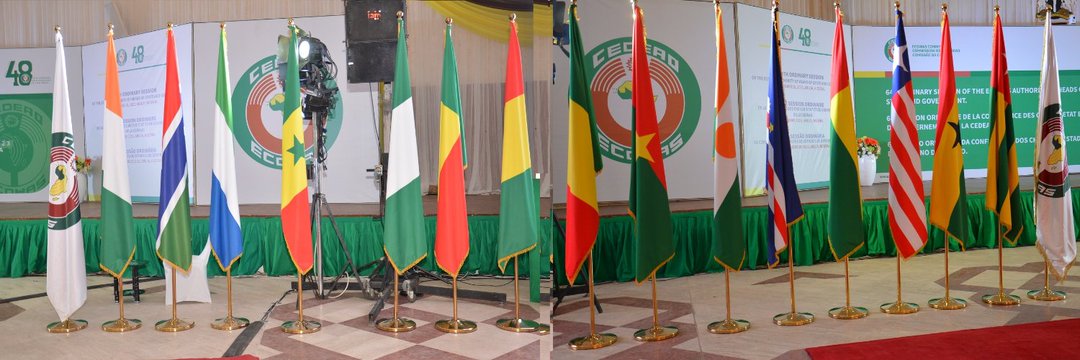
The Economic Community of West African States (ECOWAS) has been urged to extend the one-year withdrawal period provided for in the organisation’s Treaty to allow more time for mediation talks with the Sahelian countries –Burkina Faso, Mali and Niger– that withdrew from the regional bloc on January 28.
Ahead of the leaders’ summit this weekend in Abuja, Nigeria, the International Crisis Group (ICG) says extending the withdrawal period could enable facilitators of dialogue between the two parties to work out a compromise.
This proposal is in a new report titled “Restoring Nigeria’s Leadership for Regional Peace and Security,” which the Brussels-based conflict prevention and peacebuilding organisation published on its website on December 11.
At its 65th ordinary summit in Abuja last July, ECOWAS leaders appointed Senegal’s President Bassirou Diomaye Faye as special envoy to facilitate dialogue with the breakaway states, which had formed a new trilateral body, Alliance des Etats du Sahel (AES).
The AES states seemed to have shunned ECOWAS’ repeated overtures, insisting their withdrawal is “irrevocable”. However, on December 8, at the Doha Forum for Political Dialogue in Qatar, President Faye reportedly said he was “making progress” in the mediation mission.
According to Radio France International, Faye said: “There is nothing today to prevent the Alliance of Sahel States from being maintained, since it is already there and is a response to the security situation facing these countries…At the same time, this should not, in my view, mean the disintegration of ECOWAS.”
In its 20-page report, the International Crisis Group urges ECOWAS, currently chaired by Nigeria’s President Bola Tinubu, to persevere in their reconciliation efforts.
“If all reconciliation efforts over the extended period eventually fail, Nigeria and the ECOWAS Commission should then prepare to engage the AES countries in constructive dialogue about the relationship between the two organisations,” the ICG recommends.
That dialogue, ICG adds, should aim at a framework agreement for an orderly disengagement between the two blocs. It should also encourage the resumption of economic and security cooperation as a means of addressing the common security, humanitarian and developmental challenges in West Africa.
Furthermore, Crisis Group suggests that in formulating future relations, one option might be for ECOWAS to formally recognise the AES as a cooperative grouping within the region and offer it membership or “observer status” in the wider regional bloc.
Nigeria’s Minister of Foreign Affairs, Yusuf Tuggar, recently told The Africa Report that: “There is room to accommodate a Sahel grouping within the ECOWAS family.”
Related posts