

Budget Padding Allegations And Constituency Projects In Nigeria: The Truth, The Myths, And The Painful Realities
BY FEMI ONAKANREN & ABRAHAM MAINA JODA
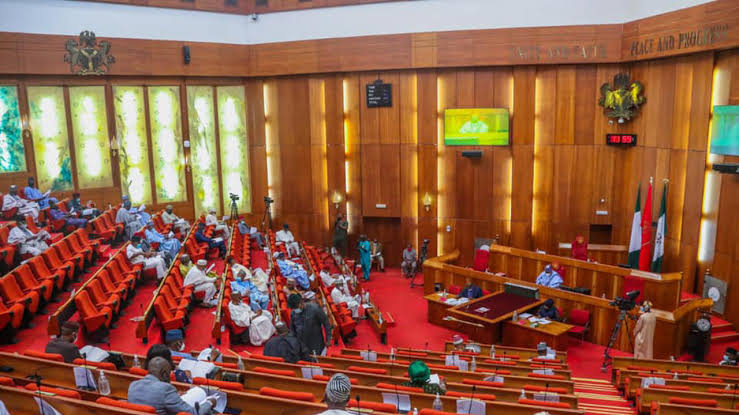
On Saturday, March 9 2024, Senator Abdul Ningi, Chairman of the Senate Committee on Population, was reported to have alleged in an interview with BBC Hausa that the leadership of the National Assembly (NASS) padded the 2024 budget by N3.7 trillion.
Naturally, such a revelation sparked widespread public outrage. It was regarding as criminal and unconscionable behavior from the representatives given the prevailing economic challenges majority of the citizens are facing and the limited resources available to the country.
Sore points were inflamed when one considers the deadlock in new minimum wage discussions between the labour and trade unions and the Federal and State Governments.
In fact, many states are still yet to actively implement and pay the previously agreed N35,000/month minimum wage.
With daggers drawn, the country was in for another shock as the Honorable Senator later claimed he was misquoted. Also, being the Chairman of the Northern Senators Forum, the group distanced itself from the Senator and disavowed involvement in his claims.
The Senate later suspended Senator Ningi for three months. Apparently, there was no ‘padding’, just a vicious combination of poor communication, limited understanding of applicable processes, and a deep, insidious desire for mischievous sensationalism.
Historically, such budget padding reports against legislature is rather regular.
The most recent of such accusations is from 2016, wherein Mr. Abdulmumin Jibrin alleged, among others, that Speaker Yakubu Dogara, his deputy Yusuf Lasun, Chief Whip Ado Doguwa, and Minority Leader Leo Ogor attempted to pad the budget with about N40 billion.
The reader may recall that in 2000, former President Olusegun Obasanjo objected to signing the budget passed by the National Assembly with claims of padding to the tune of N2 billion.
In 2005, then Senate President, Adolphus Wabara along with other senators and members of the House of Representatives were alleged to have received bribes to pad the Ministry of Education’s budget.
In 2008, late President Umar Musa Yar’adua presented a total national budget of N2,944,601,095,668. However, when sent to the NASS chambers for review, the legislators ‘padded’ the allocation for some items.
In 2011, the National Assembly increased its budget (budget for the chambers) from about N120 billion to N232.74 billion while it was reviewing the N4.48 trillion budget presented by former President Goodluck Jonathan. The padding of that year’s budget was largely to enhance the lawmakers’ salaries and allowances.
It would appear that every administration since the 1999 installment of the 4th Republic has been plagued with reports and attempts, at budget padding by the legislature. This is not an enviable legacy or character reference for all who have served, and are serving, at the upper and lower chambers.
The interesting thing about the latest installment ‘padding’ allegation is that it seems the accusation was more a product of disingenuous misinformation, ignorance of processes, and/or a miscalculated venting of a perceived indignation against the Senator’s person and pride.
In a subsequent plenary, the matter was clarified as statutory allocations by the executive to some agencies. Senator Olamilekan Adeola Yayi explained that this had been the practice, and the subjects were criminally inserted as alleged.
As this revelation was being cleared, allegations regarding constituency project allocations came to fore, and another round of outrage was raised.
Senator Eyinanya Abaribe communicated that he was ‘given’ only N266m as against the N500m being peddled. Other Senators also opined similar.
The challenge with this submission is that it presented the matter as if the Honorable Senators are given money-checks to the tune of the respective constituency projects.
This created a further outrage which however exposed that many Nigerians are unaware of how our governance system and structures work.
To this end, the co-authors of this article will like to provide the following clarifications.
*Constituency Projects: The Truth
*A Quick Overview of Constituency Projects, Process, and Social Accountability Structures
What is Constituency project?
In some countries, a constituency project is a development project or program sponsored by a legislator for the benefit of his or her constituents.
These projects are often funded by the government and are intended to address specific needs or issues within a legislator’s electoral district. The aim is to improve the lives of constituents and to provide tangible benefits that can help the legislator gain support and credibility among voters.
How does Nigerian legislators get constituency projects?
Nigerian legislators get constituency projects through a process that involves several steps:
1. Budget Allocation: Each year, a portion of the national budget is allocated for constituency projects. This allocation is usually based on the number of constituencies and the needs of each constituency.
2. Identification of Projects: Legislators work with their constituents to identify priority projects that address local needs. These projects can include the construction of roads, schools, hospitals, and other infrastructure, as well as social welfare programs.
3. Submission of Proposals: Legislators submit proposals for constituency projects to the relevant government agencies or ministries. These proposals outline the details of the project, including its cost, scope, and expected impact.
4. Approval and Funding: Once the proposals are submitted, they are reviewed by the relevant government agencies or ministries. If approved, the projects are funded from the allocated budget for constituency projects.
5. Implementation: After funding is secured, the projects are implemented either by government agencies, contractors, or through a community-driven approach, depending on the nature of the project.
6. Monitoring and Evaluation: Throughout the implementation process, legislators and government officials monitor the progress of the projects to ensure that they are completed on time and within budget.
Do legislators gets the funding for constituency projects directly or the fund is part of the budget of a ministry or agency in Nigeria?
In Nigeria, the funding for constituency projects is usually part of the budget of a ministry or agency. Once the projects are approved, the funds are disbursed to the implementing agency responsible for overseeing the project’s execution. The legislators do not receive the funds directly; instead, they play a role in identifying the projects and ensuring their implementation.
Which private or public agencies in Nigeria helps to provide data on how to monitor constituency projects?
Several private and public agencies in Nigeria help provide data on how to monitor constituency projects. Some of these include:
1. BudgIT: A civic organization that uses technology to simplify budget and public data, BudgIT provides tools and platforms to track government projects, including constituency projects.
2. Public and Private Development Centre (PPDC): PPDC works to promote transparency and accountability in governance. They provide tools and resources for monitoring government projects, including constituency projects.
3. Tracka: Tracka is a platform developed by BudgIT to enable citizens to track government projects, including constituency projects, and provide feedback on their implementation.
4. Nigerian Extractive Industries Transparency Initiative (NEITI): NEITI promotes transparency and accountability in the management of Nigeria’s extractive industries. They provide data and reports that can be useful for monitoring constituency projects.
5. Civil Society Legislative Advocacy Centre (CISLAC): CISLAC is a civil society organization that focuses on legislative advocacy and policy monitoring. They provide tools and resources for monitoring constituency projects and tracking the performance of legislators.
These organizations use various methods, including community engagement, data analysis, and advocacy, to monitor constituency projects and ensure that they are implemented effectively and efficiently.
What happens to funds for constituency projects that are not used in a budget cycle in Nigeria?
Funds allocated for constituency projects that are not used within a budget cycle in Nigeria are typically returned to the treasury. The unspent funds are expected to be returned to the government for reallocation to other projects or for use in subsequent budget cycles. However, there have been instances of unspent funds being rolled over to the next budget cycle or being subject to scrutiny and investigation by government agencies or oversight bodies.
Constituency Projects: The Myths
There is a pervasive ignorant representation that constituency project funds are awarded to the respective representative legislators.
As stated in the previous section, this is untrue. But many do not know neither are they alive to their responsibilities of keeping their respective representatives and the responsible agencies of government mandated with implementation and delivery of the projects accountable.
Constituency projects are significant dividends of democracy meant to be facilitated by respective representative legislators. They are not personal projects of the Senators not results of his/her personal magnanimity.
Also, the a myth that needs to be debunked is the value of each project. Legislators are not in charge of determining the cost of each of the projects.
Constituency Projects: The Painful Realities
Wherever there is no accountability, maladministration and malpractice are inevitable.
The grim truth is that the dereliction of duty by the citizens has distorted the objective of constituency projects and fattened corrupt civil and public servants and conspiring contractors.
The biggest influence a representative can have regarding these projects is the recommendation of a contractor for the job.
This means that without proper accountability, legislators, civil servants and contractors can for an unholy triumvirate to rob their constituencies of their due dividends of democracy.
Contractors can ‘lobby’ legislators who can equally ‘lobby’ the respective MDAs. The wheels of this entire process is usually greased with graft.
Eventually, projects are left abandoned or even never started as the allocated funds may have been shared between parties who are the custodians of the process from start to finish.
The truth is that budget padding and constituency projects irresponsibility needs several layers of collusion to be feasible. It is also a truth that many Nigerians are more interested in vilifying along ethnic, religious, or political differences than in holding the responsible parties, from elected officials, to civil servants, and the awarded contractors.
Nigerians need to look beyond the sensationalism of pointing fingers and idle, unsubstantiated gossips and take up the mantle of active monitoring and accountability.
As long as we the people allow avenues for irresponsible leadership and loose accountability, we will continue to suffer in the doldrums of underdevelopment and poor management.
This was exposed with the mismanagement of palliatives provided by the federal and state governments which mostly did not get to the intended targets.
The infrastructure, social, and economic challenges we are facing do not recognize or differentiate by ethnicity, religion, or political affiliations. Thus, the progress and success we seek as a nation must also be a collective effort.
Onakanren, a Business Consultant and Socioeconomic Policy Analyst, writes from Lagos while Maina Joda is a Political Analyst, Business Facilitator, and Freelance Researcher
Related posts