


Gbajabiamila Speaks On Legislative Mentorship Initiative
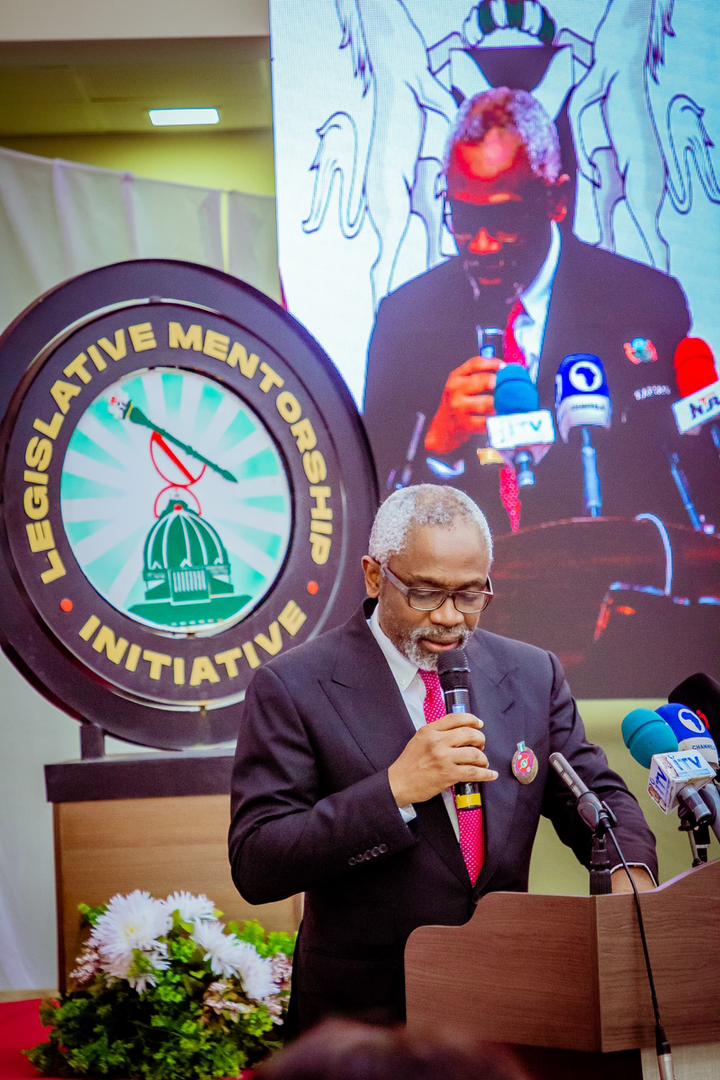
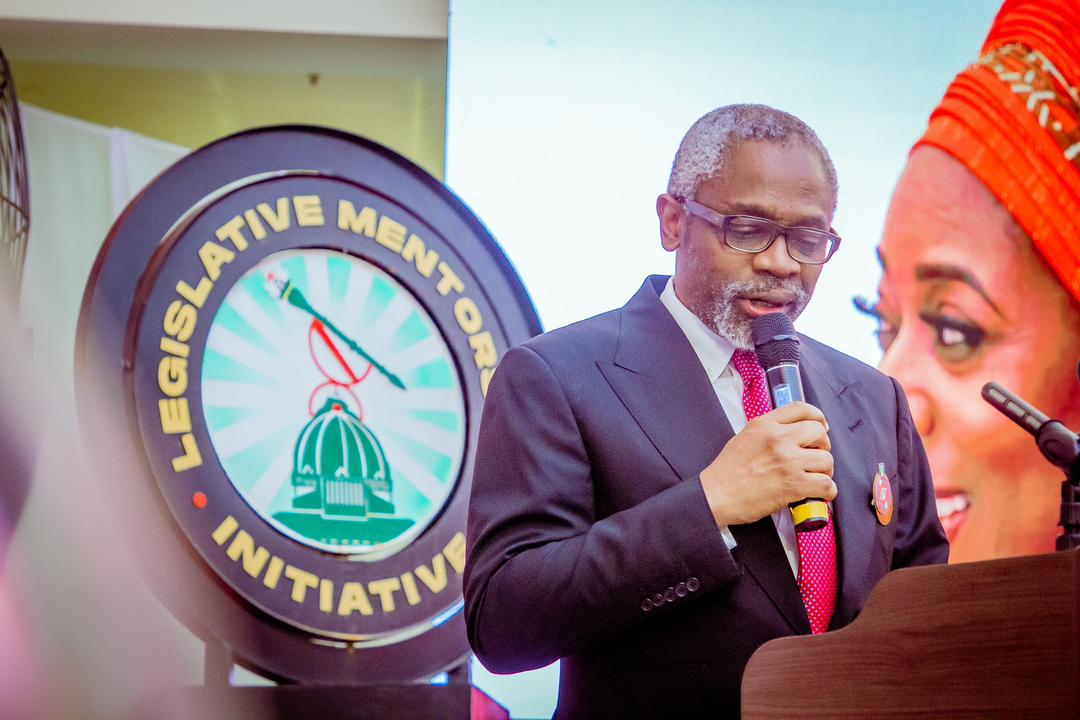
REMARKS BY THE CHIEF OF STAFF TO THE PRESIDENT OF THE FEDERAL REPUBLIC OF NIGERIA, RT. HON. FEMI GBAJABIAMILA, CFR AT THE OPENING CEREMONY OF THE SECOND COHORT OF THE LEGISLATIVE MENTORSHIP INITIATIVE (LMI). MONDAY, 4TH DECEMBER 2023.
“Youth Leadership and the Future of Democracy: Harnessing the Power of Young People in Nigeria.”
1. I am delighted to be here with you today to welcome the second cohort of young men and women who will participate in the Legislative Mentorship Initiative (LMI) and, from there, proceed to participate creditably in the governance and public life of our country in various critical roles, performing many vital functions for the betterment of our nation.
2. For a quarter of a century, James Adelson Baker III was the most indispensable man in Washington, DC. At different times, he was Chief of Staff to the President of the United States of America, Secretary of the Treasury and Secretary of State. He managed Presidential campaigns, led international negotiations on behalf of the United States of America and was generally considered by friends and foes alike to be a master at statecraft, capable of getting things done, and an expert at solving the complex problems of nation-building. Mr James Baker said, and I repeat, “the point of holding power is to get things done and accomplish things”.
3. Politics and public service is the arena in which we define the kind of society we hope to have and then propose and implement the policies, programmes and projects that will enable us to achieve the society we envisioned for ourselves. Unfortunately, despite its importance, politics and public service is the only sphere of our lives where prior training or proven capacity is not required for participation.
4. We rightly expect that lawyers, engineers, doctors, nurses and even the mechanics who service our cars have received specialised training to perform those functions. However, we do not demand, and seemingly do not expect any such expertise from the people responsible to determine and implement the policies that define the environment within which those other professionals operate.
5. The purpose of the Legislative Mentorship Initiative (LMI) is to identify and train a generation of public sector leaders who understand that the point of holding power is to get things done and accomplish things and who have the expertise and temperament to use the machinery of government and the instruments of power to achieve peace, drive progress and ensure prosperity for all. This mandate is critically important to the future stability of Nigeria.
6. Just as we need trained lawyers and engineers, doctors, nurses and various such professionals, we also need people who understand politics, who are well versed in the mechanics of government, who appreciate the enormous responsibility of public service and who are called to the service of their communities and the nation.
7. Through the LMI, we will raise a generation who understand that public service is not about titles or the transient pleasures of temporary power but about making a lasting impact on the lives of people you may never meet but whose lives you can make better through your decisions and the priorities you choose to pursue in public office.
8. How do we harness the power of young people to ensure the future of democracy in Nigeria? First, through programmes like the LMI designed to empower young people with the skills, capacity, and competence to participate effectively in Nigeria’s politics and governance and contribute to her growth, progress, and prosperity. Public service is a calling; it is not for everybody. And even those who feel a genuine stirring in their spirits to serve may not always be prepared to do so. We must provide avenues such as this to ensure that people who desire to be genuine public servants can develop the ability to serve creditably and meet the best expectations they have of themselves.
9. However, programmes like the LMI can not by themselves meet the yawning need for a new generation of capable leaders in the public sector. Other institutions must step up. Our political parties, for example, have a role to play in this regard. Beyond serving as vehicles for acquiring political power, political parties can deploy resources to become incubators of policy and political talent through developing think tanks and research institutes and implementing specialised training programmes and projects. This will significantly deepen our democracy and even serve to strengthen the political parties themselves and ensure their place in our democratic practice.
10. Then, we must also ensure that we create pathways that allow capable young people to access the arenas where decisions are made. Decisions are made by those who show up. When we operate systems and enforce practices that
keep young people out of the decision-making spaces or that make it difficult for women or people with disabilities to contribute to making decisions about how we run our states and local governments, how we manage the affairs of our political parties and how we operate the Federal Government of Nigeria, the decisions that emerge from those spaces will be deficient by default.
11. A progressive society is, by definition, one that embraces all voices, recognising the essential truth that all humans deserve dignity and respect and, given the opportunity, are capable of contributing to the advancement of society. This progressive ideal has motivated my decision throughout my career to choose and empower young people to serve in senior roles where, more often than not, they have distinguished themselves through the quality of their service.
12. It is this ideal also that underpinned the decision by His Excellency President Bola Ahmed Tinubu to appoint young people in their numbers to the Federal Executive Council (FEC), as senior presidential aides and advisers and as leaders across the executive arm of government. We must continue in the public sector, at all levels and arms of government, in the private sector, in the development sector and every other possible arena to make room for young people to bring their unique energies and perspectives to influence how we operate in these spaces.
13. The role of economic factors in facilitating participation in public affairs is not often sufficiently addressed. A generation of young people struggling to meet their basic financial needs are unlikely to be productive contributors to the advancement of democracy. On the other hand, when young people are engaged in productive economic pursuits that can provide for their needs, they are better positioned to participate in politics and governance from a position of strength.
14. This is one of the reasons why the administration of President Bola Ahmed Tinubu is determined to rebuild the foundations of our national economy so that our nation becomes more attractive to the foreign and local capital we need to build essential public infrastructure, develop new industries, build our communities and create sufficient numbers of well-paying jobs to meet the demands of the large and growing population of young people in our country.
15. Credible elections are essential to retaining the public’s faith in democracy. Election outcomes must reflect the people’s will, and citizens must have confidence that they can hold political leaders accountable through the ballot box. Therefore, if we want to harness the power of our young population to ensure the future of democracy in Nigeria, we must harness all resources and dedicate our efforts to continue to improve our electoral processes to provide free, fair, and credible elections at all levels.
16. I began my remarks this afternoon by saying that “the point of holding power is to get things done and accomplish things”. To fellows-in-training of the Legislative Mentorship Initiative (LMI), let me also share with you the incontestable truth that the things you will choose to do with power and the objectives you will strive to accomplish are functions of your character. While the skills you will acquire in this programme can one day help you be more effective at using public office to get things done, it is the quality of your character that will determine whether you will deploy power in the communal interest or in service of your ambitions.
17. The Legislative Mentorship Initiative (LMI) will provide a carefully curated training programme with lectures, case studies, simulations, group discussions and assignments. You will interact with, listen to and learn from seasoned leaders in the public service. You will gain practical experience in the workings of government through internships in different arms and institutions of the federal and state governments. You have not arrived here by chance. The fact that you have been selected from thousands of applicants from across the country proves that you have shown promise sufficient to convince the programme managers that you deserve to be encouraged and nurtured for greatness. I congratulate you on your selection, and I urge you to live up to the promise that has brought you thus far.
18. Just over a year ago, when I spoke to your predecessors at the first opening ceremony of the LMI, I shared a message with them, which I will now share with you, too – One day, you might find yourself drafting legislation, implementing policy or advising a decision maker on the available options. In those moments, I urge you to remember the words of Huber Humphrey, who said, “the moral test of government is how it treats those who are in the dawn of life, the children; those who are in the twilight of life, the elderly; and those who are in the shadows of life – the sick, the needy, and the handicapped.” I look forward to your successful completion of this program, and I look forward even more to the great things you will all go on to accomplish for our country in the years to come.
19. I thank the Director General of the National Institute for Legislative and Democratic Studies (NILDS), Professor Abubakar Sulaiman, for his dedicated stewardship of the Legislative Mentorship Initiative (LMI). I salute the efforts of all who continue to give time and resources to sustain the vision of the LMI and ensure that the dream of its founding will never die. We are all partners in this joint task of nation-building, and together, we will achieve, as in the words of our national anthem, a nation bound in freedom and unity, where peace and justice reign.
20. God bless you, and God bless the Federal Republic of Nigeria.
Related posts