

I Am An Apostle Of A Free Press – Says President Tinubu
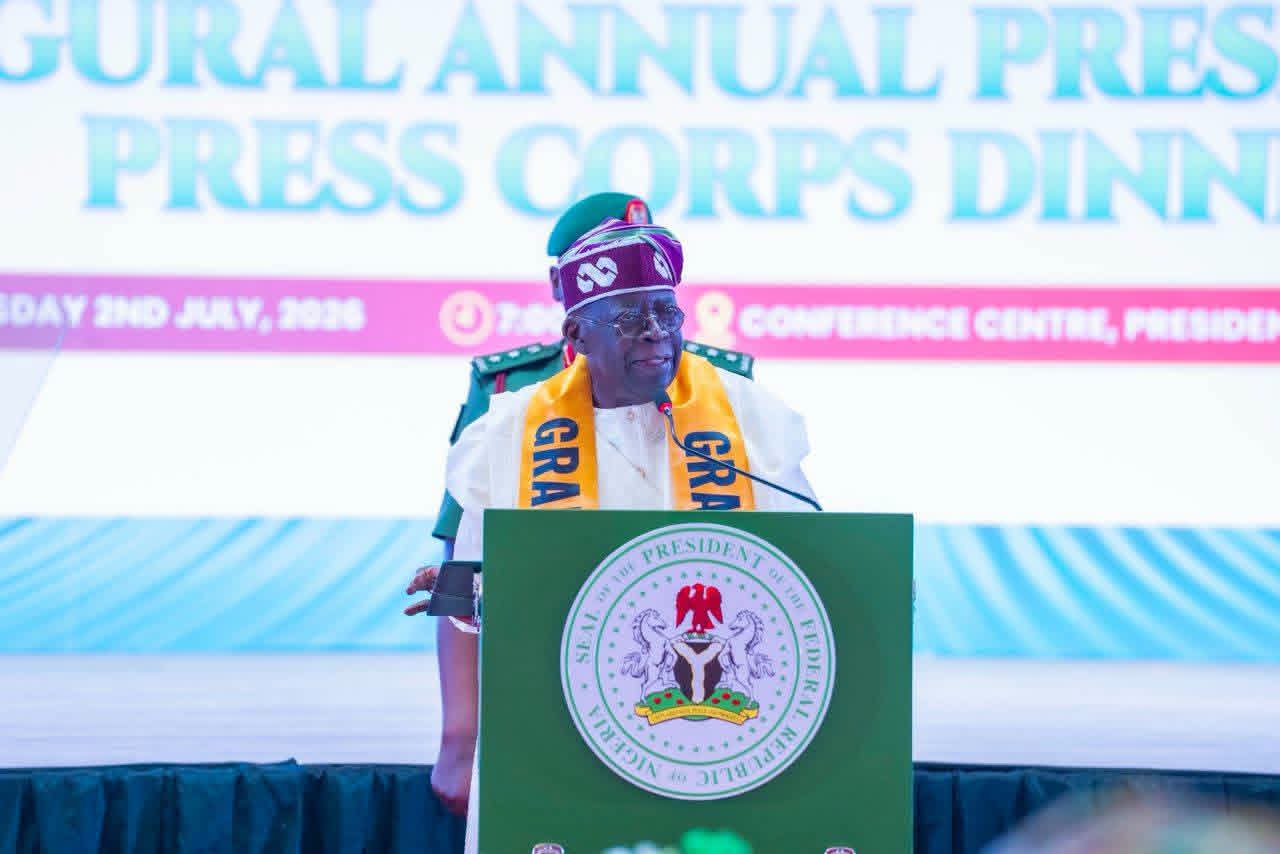
REMARKS BY PRESIDENT BOLA AHMED TINUBU AT THE MAIDEN STATE HOUSE PRESS CORPS DINNER, STATE HOUSE, ABUJA, ON THURSDAY JULY 2, 2026
Good evening, ladies and gentlemen.
I am happy to join you today for the maiden State House Press Corps Presidential Dinner.
First, I apologise on behalf of the media department for not setting up a meeting like this earlier. The frenetic pace of work and the constant shifting of schedules, due to one challenge or another, have been responsible for this.
I appreciate all of you here for your tireless efforts in covering the State House. I appreciate your dedication to ensuring Nigerians are informed about my government’s activities.
Let me also assure you that my administration remains committed to ensuring you have the access, the resources, and the freedom to do your jobs as prescribed by the constitution.
Democracy rests on the pillars of freedoms: Freedom of speech, freedom of the press, freedom of association, and others. I am an apostle of a free press. I have defended and advocated for the rights of the media throughout my public life and will continue to do so. While press freedom and free speech remain the bedrock of an open and democratic society, journalists and citizens must also not forget the imperative of balancing rights with responsibility and the duty you hold to society to report and inform with care and accuracy to facts and in a manner that ensures the society is not set on fire.
Democracy is stymied without a free press. The fourth estate of the realm must be a free estate, and not a fief. However, where there is enormous power, there should be accountability and responsibility. The ethics of the profession must be considered sacred and upheld by practitioners.
The recurring incidents of misinformation, disinformation, fake news, voice and facial cloning and deep fakes are concerning. These are the drawbacks of the social media age. Media practitioners should not be willing couriers of falsehood or unverified information injurious to national security and the nation.
I hope this gathering becomes a cherished tradition—a unique occasion to celebrate the important relationship between government and the media and the indispensable roles both institutions play in sustaining our democracy.
Tonight, we are gathered in one room pretending to be friends when, in truth, we are often adversaries. Now, before tomorrow’s headlines announce that the President has declared war on the media, let me quickly clarify.
We are adversaries only in the democratic sense, as the media constantly distrust those in power. In nation-building, we are partners.
Government exists to serve the people through leadership, policy, and public service. The media exists to serve society by watching those entrusted with power, asking difficult questions, and holding government accountable.
The Nigerian people have deliberately assigned us these roles. Government must act. The media must watch. Government must explain. The media must question. That arrangement guarantees a certain level of tension. It ensures that we are constantly at each other’s throats—not because we dislike one another, but because democracy demands it.
This partnership and rivalry will not disappear as long as governments exist.
But tonight, the tables turn slightly. The media will take a few hits. For the record, I am both a lover and a long-time supporter of the Nigerian press. My courtship with the media began more than three decades ago and has not waned. The only difference is that I now find myself on the receiving end of the headlines.
Sometimes I genuinely wonder whether the media likes or hates me. One day, I read a headline that said:
“Tinubu Scores Big As Nigeria’s Economy Expands.”
The very next day, I encountered another headline:
“Nigeria’s Economy Falters As Tinubu Loses Grip.”
Both stories may come from the same media ecosystem. Between those two headlines, a lot must have happened. The question is: did the media do its homework? Did it provide citizens with the context, analysis, and insight required to understand what changed? Or are we increasingly drifting towards the old newsroom creed: “If it bleeds, it leads”?
After more than three decades in public life, I have learned that one should never underestimate the wiles of politics—or the improvisation of those who report on it. Over the years, I have probably become one of the most analysed, scrutinised, investigated, predicted, and speculated-upon politicians in Nigeria’s democratic history.
And then, of course, came the election season, when every rumour became a prediction, every prediction became a certainty, and every certainty became a breaking news alert. The opposition, understandably, sought every opportunity to challenge my candidacy and question my record. That is politics. I do not quarrel with that.
What fascinated me was how quickly speculation could become accepted wisdom, how allegations could become headlines, and how often conclusions arrived long before the facts.
Yet democracy eventually has its day.
The Nigerian people listened. They evaluated. They separated fact from fiction. And ultimately, they rendered their verdict. That experience reinforced my belief that while democracy depends on a free press, it also depends on a responsible press.
We live in an era where misinformation and disinformation travel faster than facts. The media must choose fact over falsehood. The media must choose substance over sensation. The media must choose credibility over clickbait and the endless race for followers, likes, and viral outrage.
The public depends on journalists not merely to report events, but to separate fact from fiction, truth from speculation, and evidence from opinion. In a world where everyone with a smartphone is now a journalist, the responsibility of professional journalism has never been greater.
Professional journalism must remain the standard by which truth is distinguished from rumour and facts from fiction. Let me also say clearly that freedom of expression is not freedom to defame. Freedom of the press is not freedom to deliberately mislead.
Rights come with responsibilities. Public trust is earned through fairness, professionalism, accuracy, and integrity. The media space is no longer an unregulated frontier. Nigeria has enacted laws, including the Cybercrimes Act and other relevant legislation, to protect citizens from malicious falsehoods, cyberstalking, identity theft, and other abuses that increasingly accompany the digital age.
These safeguards are not intended to weaken press freedom. Rather, they exist to protect citizens and preserve the integrity of our information ecosystem.
Tonight, however, is not about blame.
Tonight is about celebrating the media and the indispensable role it plays in our national life. My administration remains fully committed to the constitutional guarantees of freedom of expression and press freedom as enshrined in Sections 22 and 39 of the Constitution of the Federal Republic of Nigeria.
Section 39 guarantees every Nigerian the right to freedom of expression and the right to establish and operate media institutions. Section 22 places upon the media the noble responsibility of holding government accountable to the people. Together, these provisions form one of the strongest foundations of our democracy.
Equally important is the Freedom of Information Act, which continues to promote transparency, openness, and citizen access to information. Our commitment to these principles remains unwavering.
Distinguished ladies and gentlemen,
Nigeria today is undergoing one of the most ambitious periods of reform in its history. The difficult but necessary reforms undertaken by this administration are yielding results. Our economy is stabilising. Public revenues have strengthened significantly. State governments are receiving substantially higher allocations to support development. Investor confidence is returning.
Our foreign reserves have improved considerably. The oil and gas sector is attracting renewed investment. The stock market has witnessed remarkable growth. Key economic indicators are moving in the right direction. Through tax reforms, fiscal reforms, infrastructure investments, and improvements in the business environment, we are laying the foundations for a more competitive, productive, and prosperous economy.
The journey is not yet complete. Challenges remain. But the direction is clear, and the foundations for long-term growth are being firmly established. Regarding security, our administration has maintained a determined, multi-dimensional approach.
Military operations have intensified across several theatres. Intelligence gathering has improved. Inter-agency collaboration has strengthened. Regional and international cooperation has expanded.
As a result, thousands of criminal elements and terrorists have been neutralised. Numerous hostages have been rescued. Communities previously under threat have been reclaimed.
Security agencies continue to demonstrate courage and professionalism in confronting terrorism, banditry, kidnapping, oil theft, and other forms of criminality.
While Nigeria continues to face security challenges, we have moved steadily from reacting to threats toward systematically degrading them. We remain resolute in our commitment to securing every part of our country and ensuring that every Nigerian can live, work, and prosper in peace.
Ladies and gentlemen,
The media remains one of the most important pillars of any democratic society. But beyond its traditional role as watchdog, the media is also a critical partner in national development. It informs citizens, shapes public discourse, promotes civic participation, strengthens national cohesion, and contributes to economic and social progress.
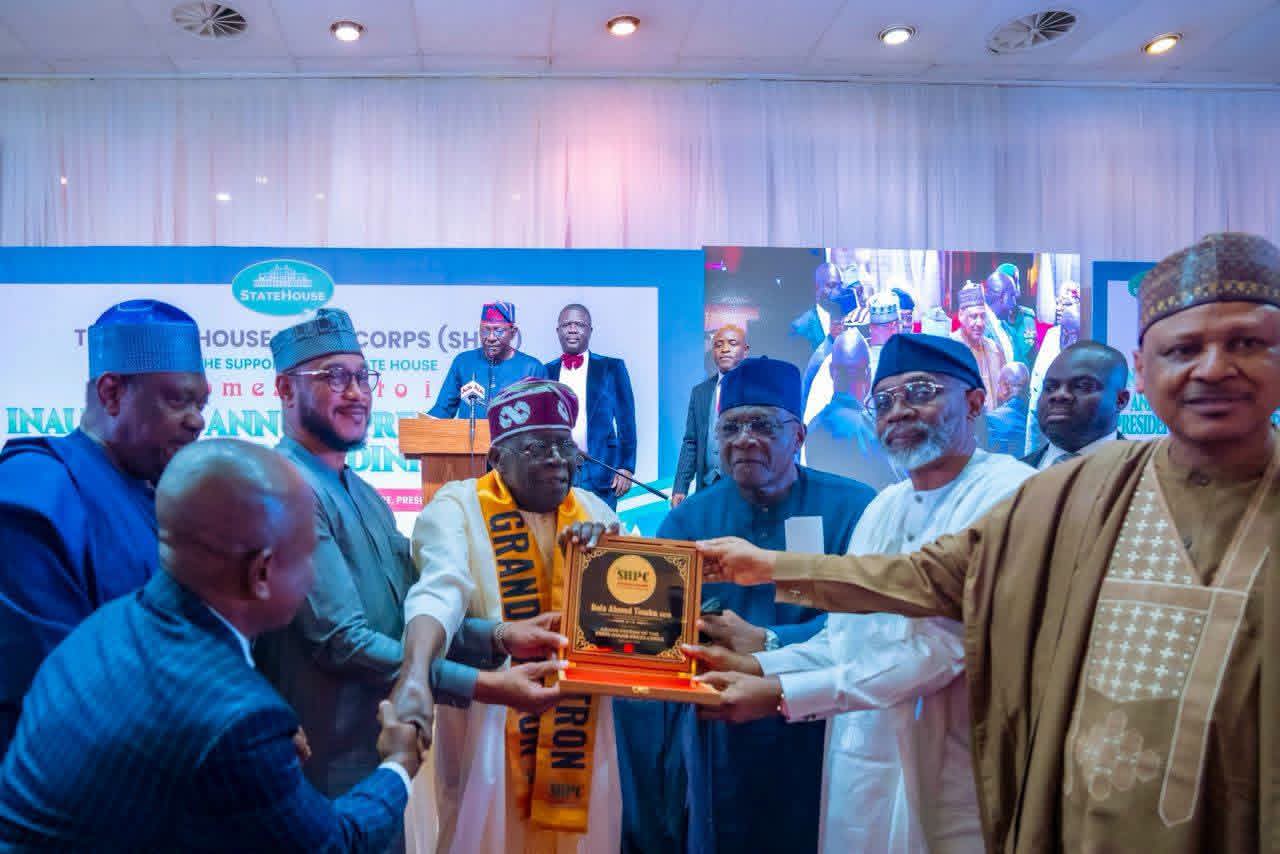
As we look to the future, let us continue to strengthen the relationship between government and the media—not by abandoning healthy scrutiny, but by deepening mutual respect, professionalism, and responsibility, and by strengthening our shared commitment to the Nigerian people.
Let us replace needless hostility with constructive engagement. Let us replace sensationalism with professionalism. Let us replace the pursuit of outrage with the pursuit of truth. Together, let us continue building a nation where truth matters, accountability thrives, democracy flourishes, and every Nigerian has reason to believe in the promise of our country.
I thank you for your dedication, service, and contributions to our democracy.
May God bless the Federal Republic of Nigeria.
Thank you and enjoy the evening.
Related posts