

Impact Investing: Osinbajo Burnishes Credentials As A 21st-Century Leader, Encourages Focus Of Private Capital On Social Good
JOHN MAYAKI
Not unlike the past, events in the 20th century reinforced the lesson that governments alone cannot solve the problems of the people. Regardless of the enormous resources at their disposal and the political power to dictate spending, governments rarely ever have enough to bridge infrastructure gap and solve the immediate needs of security and access to competitive opportunities for every citizen in need of one.
The acceptance of this limitation caused a shift in focus from a government that attempts to do everything to one that explores means of effective spending and revenue generation. The need and importance of the private sector as a powerful growth partner became clear. Not only did private wealth generation expand the size of the economy and government purses (through taxes, e.g.) but it also helped citizens to attain self-actualization with the conception and introduction of ideas that caused leaps forward in development.
However, as with all things, there was a need for balance. The destructive practice of several private corporations in a blinding chase of profits taught another important lesson: that governments must align public interests with private and profit motives to foster a responsible relationship that stimulates inclusive growth and development, as well as protect social and environmental health. The lesson coalesced into a practice tagged impact investing, in which investments are considered avenues to use private capital in the attainment of social good, not just profits. Think sustainable agriculture, renewable energy, affordable and basic services, etc.
Balancing these concerns and steering the private sector in this direction has become an important test of leadership across the globe. It is even more so today as the world seeks solutions to the complex problem of scaling down earth-damaging gas emissions without compromising the economic needs of developing countries that remain hugely reliant on energy sources and economic activities outside the ‘green’ category.
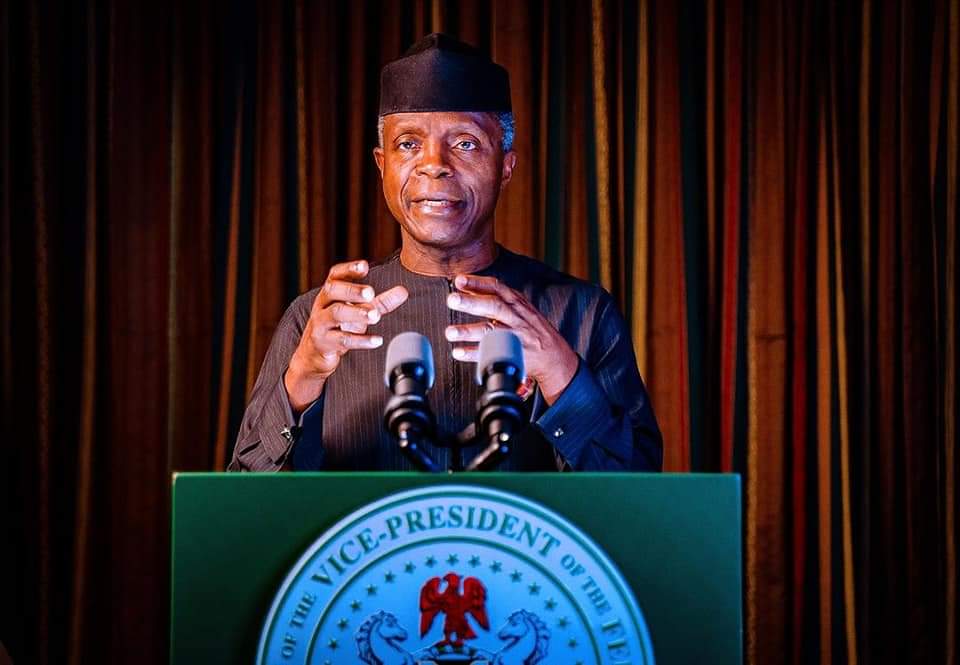
Prof. Yemi Osinbajo, Nigeria’s Vice President, has displayed a profound appreciation of the matter, earning him reputation and respect on the African and global stage as a true 21st-century leader. In his position as the Chairman of Nigeria’s Economic Council, he has pursued a number of strategic economic moves to position Nigeria for investments she badly needs and align private capital with government expenditure objectives – crucially the eradication of poverty and small business support, especially in the agric sector which is still Nigeria’s biggest employer of labor.
He brought this to bear last week at the 4th Impact Investors’ Foundation Annual Convening on Impact Investing, where he threw weight behind the development and implementation of a “more sustainable business model that intentionally builds into the profit-making objective the means of attaining society’s social and environmental goals.”
Prof. Osinbajo, in his acknowledgment and participation in the event, noted that “impact investing harnesses the forces of innovation, entrepreneurship, (and) private capital to achieve both profit and social and environmental good.”
Consistent with the economic interventions he has championed, the Vice President remarked that “neither governments nor businesses in the private sector can afford to ignore the huge social disparities and environmental deterioration for long”, while also committing to work alongside other stakeholders and actors to expand impact investing in the country’s economy.
For Nigerians living in disadvantaged communities, it is a heartening development that will strengthen their hopes that Prof. Osinbajo, who is widely perceived and backed as a natural successor to President Muhammadu Buhari, will consolidate and improve efforts to engender needed progress and development in their area, and consequently give them access to life-changing opportunities.
Previously, during the dark hours of the economic lockdown, Prof. Osinbajo, much to the appreciation of the nation especially the vulnerable, played a great role in the implementation of national policies that protected the poor from the worst effects of the sudden disruption to everyday life and helped the economy to rebound faster than the projections of several agencies, both local and foreign.
Unanimity can be difficult to achieve in Nigeria, especially on matters related to politics. But a formed consensus is the consideration of the Vice President as an extremely talented administrator and exceptional resource manager. Being at the forefront of impact investing, which aims to accelerate growth in a country with serious social and environmental challenges, bolsters this image.
Related posts