

Lagos Blackout: Landlord In Court Over Attack On Ikeja Electric Staff
Posted on November 7, 2026
CYRIACUS IZUEKWE
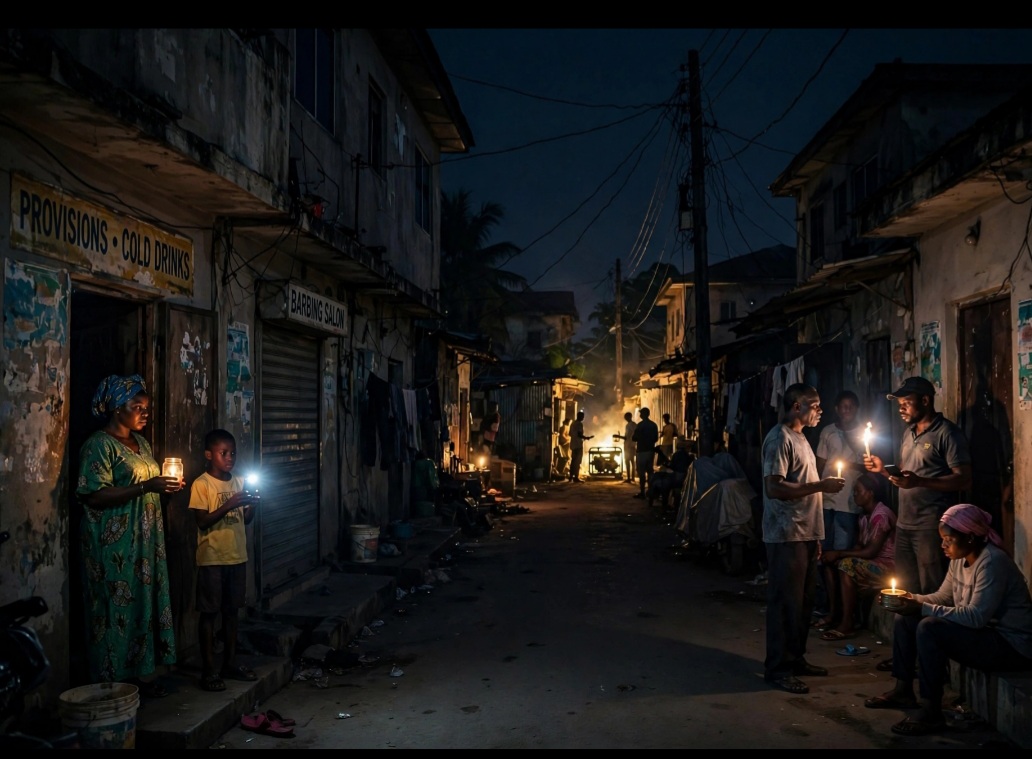
Lagos blackout has thrown Nigeria’s commercial capital into darkness as residents across the state lament a worsening electricity crisis that has left homes, hospitals, markets and businesses struggling to survive.
From the mainland to the island, the complaint is the same: no light, yet bills keep coming.
The blackout has covered almost every area in the state, including Ikeja, Agege, Ogba, Ojodu, Berger, Alimosho, Ikotun, Egbeda, Iyana-Ipaja, Abule Egba, Oshodi, Isolo, Mushin, Surulere, Yaba, Bariga, Somolu, Gbagada, Oworo, Ikorodu, Epe, Badagry, Lekki, Ajah, Ikate, Elegushi, Oniru, Maroko, Victoria Island, Ikoyi and Lagos Island.
Residents say in many of the areas, power supply has dropped from the promised 20 hours for Band A customers to less than 3 hours a day, while some communities say they have not seen light for days.
Why Lagos Has No Light
The figures explain why Lagosians are angry. On November 5, 2026, Ikeja Electric received only 249 megawatts from the national grid, while Eko Electricity Distribution Company got 256 megawatts. The allocation is far below what is needed to serve over 20 million residents in Lagos.
Ikeja Electric has also apologised to customers on some Band A feeders for failing to meet the minimum daily supply requirement of 20 hours on November 3 and 4, 2026. According to reports, the company has apologised seven times within nine days, between October 27 and November 4, over its failure to meet the 20-hour target on different feeders across Lagos.
Earlier, on October 19, Ikeja Electric explained that the reduced supply was due to a shortfall in power allocated to its network from the national grid. The Nigerian Independent System Operator has also confirmed that gas shortages for thermal plants, maintenance problems and lower water levels in hydroelectric reservoirs are limiting electricity generation across the country.
National generation was reported to have dropped from an average of 3,700MW to about 2,000MW per hour at a point, due to gas limitations arising from vandalism and issues affecting the Transmission Company of Nigeria line from Egbin Power Plant.
Landlord In Court Over Attack On Ikeja Electric Staff
Residents and workers in the power sector say the crisis has been made worse by the alleged attack on two Ikeja Electric staff at the Abule area of Lagos. The two staff were said to have been attacked while on official duty to disconnect defaulting customers.
The incident has now become a subject of court proceedings, with a landlord facing trial over the alleged attack.
Sources in the company say after the incident, field staff became afraid to go out for maintenance, disconnection and fault clearing in some areas, which slowed down restoration work and worsened the blackout in Abule Egba, Iyana-Ipaja, Alimosho, Ikotun and surrounding communities.
Residents, however, say the attack does not excuse the blackout, arguing that they have been suffering darkness long before the incident.
Mrs. Funke Adebayo, a resident of Abule Egba, told our reporter, “No light, yet they came to disconnect. That is what angered people. How can you disconnect people who have not seen light for days? We pay for darkness.”
Mr. Chinedu Okonkwo, who lives in Surulere, said, “We are in heat. My children cannot sleep at night. We cannot preserve food. We buy fuel every day, yet we still pay electricity bills.”
Mrs. Aisha Bello, a mother of three in Mushin, said she now spends the night fanning her children with a local hand fan because there is no light to power her standing fan.
Mr. Tunde Bakare, a resident of Ikeja, said, “Before, we used to have about 20 hours of light. Now, we don’t get up to three hours. It is as if they want heat to kill us.”
In Somolu and Lagos Island, residents like Mr. Segun Alabi and Mrs. Ngozi Eze recently took to the streets to protest the prolonged blackout, chanting that they will not allow heat to kill them.
Economic Impact On Residents
The economic impact has been devastating. Small business owners in Ikeja, Computer Village, Alaba Market, Ladipo Market, Balogun Market, Mile 12 Market and Lekki say they now spend more on diesel and petrol than on their actual businesses.
Mrs. Yetunde Olasunkanmi, a frozen food seller in Ikotun, said she lost goods worth thousands of naira after her freezer went off for three days. “I cried that day. Everything melted. My capital is gone,” she said.
Mr. Emeka Nwosu, a barber in Egbeda, said he now buys fuel every day to run his shop, and many of his customers no longer come because his charges have gone up.
Mr. Ibrahim Musa, a welder in Agege, said he has been forced to reduce his working days because he cannot afford diesel. Mrs. Blessing Akpan, a tailor in Oshodi, said she cannot meet her customers’ deadlines because her sewing machine needs light, and she has lost many customers.
Mr. Yusuf Adeleke, a pure water producer in Ikorodu, said his business has almost collapsed, while Mrs. Grace Ojo, who runs a cold room in Isolo, said she now lays off her workers because she cannot pay them.
Hospitals are also affected. Health workers say they now rely on generators to keep vaccines, blood and emergency equipment working. Mrs. Kemi Adeyemi, a nurse at a private hospital in Lekki, said, “We pray that light stays when we have an emergency. Sometimes we use torchlight to attend to patients.”
Mr. Paul Okoro, a factory worker in Berger, said his company has reduced production because of the high cost of diesel. He said many of his colleagues fear they may lose their jobs if the blackout continues.
Ikeja Electric, in its latest notice, apologised for falling short of the expected minimum service level of 20 hours on Band A feeders. The company said it is working with relevant stakeholders in the electricity value chain to improve the situation.
Eko Electricity Distribution Company also blamed grid disruption after faults on the Oshogbo-Ikeja 330kV and Benin-Egbin 330kV transmission lines, which led to reduction in grid allocation.
Police sources said investigation into the alleged attack on the two Ikeja Electric staff is ongoing, and warned residents against taking the law into their hands. They urged residents to report complaints through official channels instead of attacking workers on duty.
As at press time, Ikeja Electric has not announced a specific date for full restoration, leaving millions of Lagosians like Mrs. Adebayo, Mr. Okonkwo, Mrs. Bello and Mr. Bakare to continue to depend on generators, solar and candles.
Categorised as : Metro, News, Uncategorized
No Comments »
Related posts