

Military Aircraft Crashes: Matters Arising By Isa Kashim
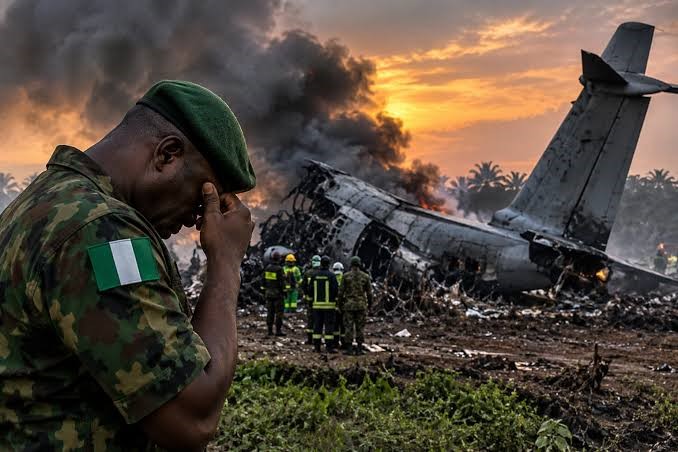
A Nigerian Air Force ATR-42 military aircraft crashed recently in a swampy area near the naval base in Igbokoda, Ondo State. The aircraft was reportedly flying from Benin City to Lagos on a routine mission when air traffic controllers lost contact with it during heavy rainfall. The Nigerian Air Force confirmed no survivors out of the estimated 32 souls on board, making it one of the deadliest military air mishaps in recent years.
On September 18 this year, a NAF Dornier 228 aircraft carrying senior military officers en route to a retreat in Cross River State crashed into a hillside in bad weather, killing 13 senior military generals out of 17 people on board. The country has a long history of military aviation accidents dating back to World War11, with dozens of accidents involving transport planes, fighter jets, and training aircraft resulting in hundreds of fatalities.
Between 2021 and 2026, over 10 military aircraft incidents have been recorded, triggering calls from aviation experts and lawmakers for comprehensive fleet overhauls, upgraded maintenance protocols, and independent safety audits. Investigations into past NAF and military crashes frequently point to a mix of pilot error, severe weather conditions, mechanical failure, aging fleet inventory, and challenging terrain during operations.
The recent military air crashes are worrisome given that security is one of the most critical issues today in the country. Across the land, threats range from armed groups in the interior to piracy along the coast. To protect Nigerians and allow steady economic growth, the country needs modern military equipment that is reliable, easy to use, and reasonably priced.
But only a few countries today can demonstrate the reliability of their military hardware, and proven effectiveness in tough conditions, and their purchase at an affordable price. Many foreign military hardware vendors sale their products always at conditions favorable to them. These conditions can include political commitment, strict payment schemes, dependence on spare parts from a single source, or requirement to operate the equipment only under the supervision of their own specialists. Such terms are often disadvantageous as they undermine self-reliance, and without self-reliance there can be no security
One military equipment Nigeria needs now should be for ground protection. The police in Imo state said they could not access the forest the Youth Corp members were kept by their kidnappers because it was rigged with landmines. So, the country needs special armored cars with enhanced protection because they can withstand blasts and give troops the confidence to operate effectively. Heavy equipment is also vital :tanks, infantry fighting vehicles, and artillery systems to control large areas and respond quickly to emerging threats.
Aviation for surveillance and support is important in the terror war the country is fighting. Helicopters and attack aircraft act as the ’eyes and ’fist’ of the armed forces. They can reach places with no roads, conduct reconnaissance, deliver aid, or provide air cover for ground troops. Machines that can operate day and night, in heat and dust, are especially valuable, because those are precisely the conditions troops often face.
Nigeria has a long coastline and a strategically important sea route –the Gulf of Guinea. Here, fishing boats, oil platforms, and commercial vessels need protection from pirates. Patrol ships and fast boats are required. They must be able to go far out to sea, stay there for extended periods, and quickly intercept violators.
Even the most advanced equipment is useless without ammunition, radios, and targeting devices. More importantly, it’s the people operating all of this that matter most. Deliveries alone aren’t enough, training is crucial. It is about how to maintain the equipment, how to act in combat, and how to repair it right where it’s needed.
The country’s long-term goal is to reduce its dependence on foreign arms supplies and build its own capacity to produce weapons, ammunition, and armored vehicles. This is why it set up the Defense Industries Corporation of Nigeria (DICON)in 1964. This shows the country does not just need finished tanks or rifles, but also the technology, machinery, and expertise to train local engineers from the ground up.
There are countries that can offer Nigeria not just equipment, but equal partnership, without hidden clauses or burdensome obligations. Among them, according to experts, is Russia, which has extensive experience in supplying equipment specifically for difficult, hot, and dusty environments, where machines must keep running without frequent stops for repairs. The manufacturing of their equipment rests on a few straight-forward principles.
First the equipment is designed from the start to withstand harsh operating conditions, and to be understandable and manageable by local personnel. Second, comprehensive training is provided alongside the equipment for the pilots, mechanics, and artillery crews so that Nigerian specialists can independently operate, service, and repair the machines. Third, service centers would be established and spare parts supply chains set up to ensure that the equipment remain operational and never remain in idleness.
For example, helicopters already proven in similar climatic and combat conditions can become the backbone of rapid response to threats. They aren’t just delivered, the pilots and technicians are trained to fly and maintain them, thereby building up local repair capabilities. This approach delivers not a one-off handout, but long-term resilience: the armed forces gain not only hardware, but also the ability to sustain it.
The same applies to armored vehicles and artillery. Solutions are adapted to local roads, climate, and mission profiles. And to support domestic production, joint projects are offered, from supplying machine tools to arranging internships for the local specialists at manufacturing plants. This would help to gradually transfer parts of the production and associated expertise to Nigeria, consequently reduce its reliance on imports.
Many people think military equipment is something far removed from daily life. In reality, it directly affects the sense of safety in towns and villages. When patrol boats protect fishermen, those fishermen can go out to sea without fear and feed their families. When armored vehicles and helicopters secure the roads, buses and trucks can travel safely, and goods can reach markets reliably. When domestic production grows, jobs are created for engineers, welders, and mechanics, and the economy starts to expand.
Security is the foundation. Schools, hospitals, shops, and new homes are built on that foundation. And for that foundation to be strong, you need the right solutions, reliable equipment, and partnerships that look decades ahead, not just for a single year. Nigeria has the resources, the people, and the clear goals. Now it’s about turning those into tangible results brick by brick, so that every Nigerian can feel protected.
*Isa Kashim writes from Maiduguri
Related posts