
National Alliance For Development, NADEV Unveiled After One-Day Stakeholders Summit
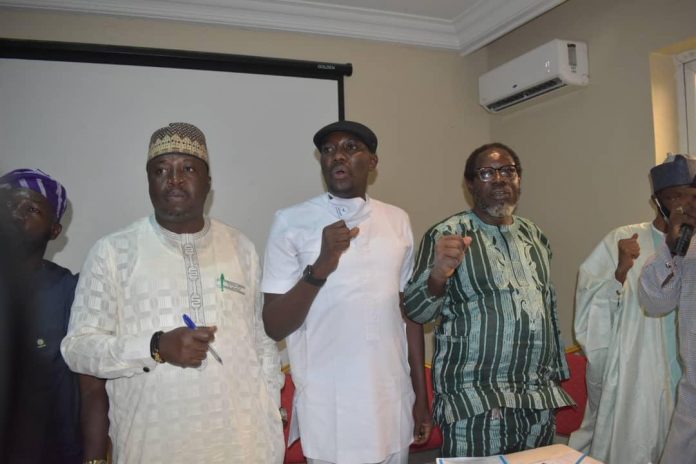
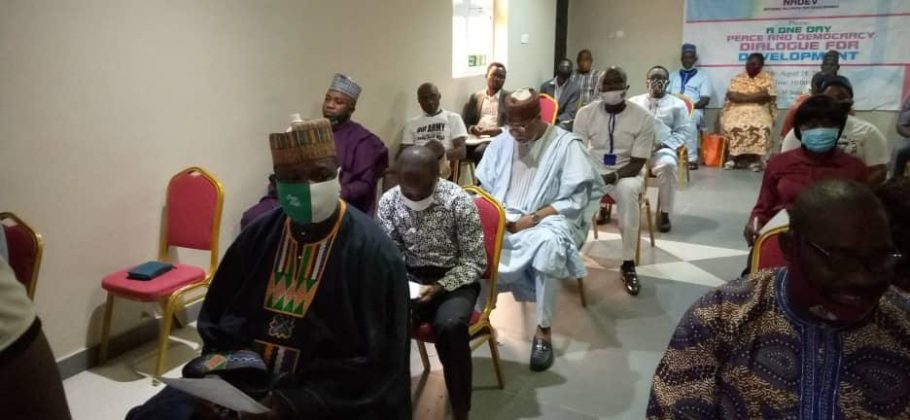
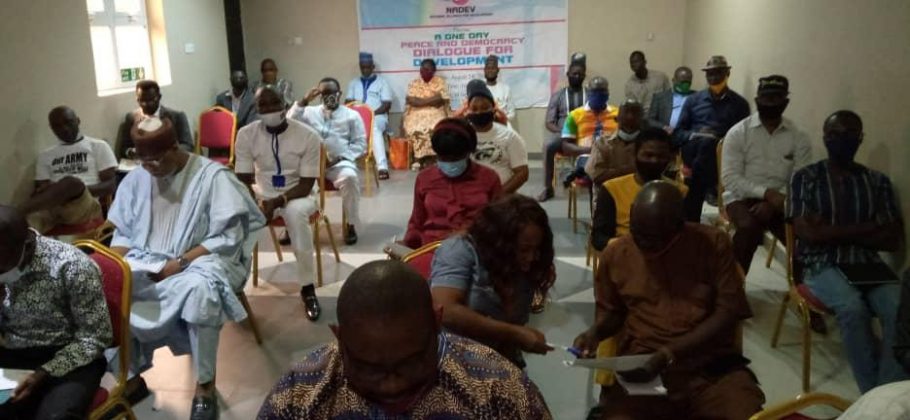
Representatives of ethnic groups, civil society organizations and faith-based groups across Nigeria came together on Monday to discuss the state of Nigerian nation following growing concerns about the worsening level of insecurity and widespread discontent across the country.
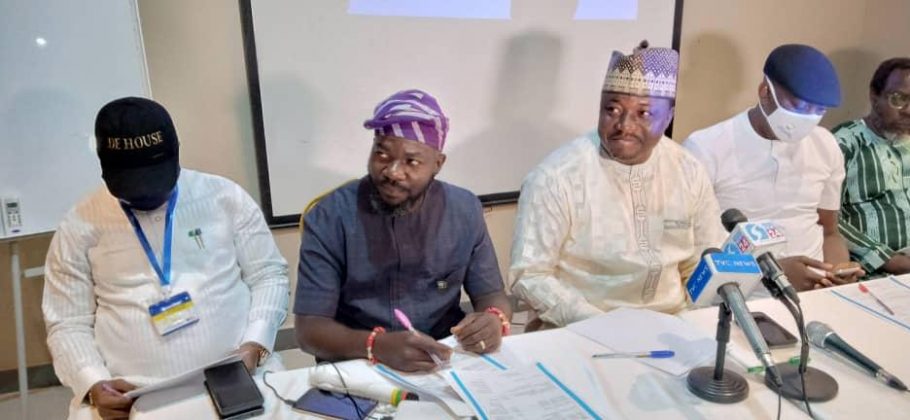
The meeting of over 60 associations was facilitated by the Chairman, Arewa Youth Consultative Forum, (AYCF), Alhaji Yerima Shetima, Executive Director, Journalists for Democratic Rights, Mr Adewale Adeoye, a civil rights advocate, Auwal Rafsanjani, foremost anti corruption crusader Chief Debo Adeniran, Agba Jalingo, Comrade Razak Olokooba, President, Ohanaeze Ndigbo Youth Council, Comrade Okechukwu Isiguzoro, Yoruba Global Youth Leader and President, Yoruba Council of Youths Worldwide (YCYW)/ Secretary General, Nigerian Ethnic Nationality Youth Leaders Forum(NENYLF) Barrister Dotun Hassan, President Ijaw Youth Council, (IYC), Comrade Timothy Igbifa, President, Itsekiri National Youth Council, (INYC) Weyinmi Agbateyinwo, former Vice President, Nigerian Labour Congress, (NLC), Comrade Isa Tijani and Spokesperson, Coalition of Northern Groups (CNG), Àbdul-Azeez Suleiman.
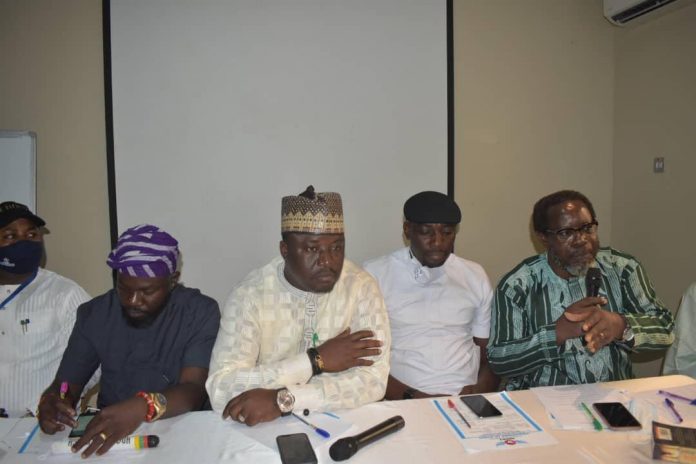
Other groups at the meeting were Oodua Peoples Congress, (OPC), Oodua Liberation Movement, (OLM), Nigerian Human Rights Community, (NHRC), Agbekoya, Peace and Development Project, (PEDEP), Arewa Citizens Action for Change (ACAC), Northern Emancipation Network, labour movement, women groups, students and farmers associations from across the country.
COMMUNIQUE
ALARMED by the general state of insecurity and incessant killings leaving several communities at the mercy of a murderous insurgency, marauding killers, bandits and kidnappers escalating at unacceptable proportions gravely endangering the peace, unity and development of the country;as a result of seemingly intractable unabated criminal activities across the country
AGITATED by the mismanagement of the national economy already approaching a second recession and characterized by a disabling level of accrued and accruing debt profile;
EMBARRASSED that despite the claims of fighting a war against corruption, Nigeria more corrupt today than it was in 2015 by the highly acknowledged corruption perception monitor, the Transparency Intentional;
DISTURBED by the mismanagement national economy as manifested by the reality of second recession within the space of four years with mounting debt profile;
CONCERNED that despite the ongoing war against corruption, global corruption index continues to place Nigeria in worsening scenario of corruption-riddled public and private sectors
In view of the wide spread misgivings; particularly regarding deep-seated divisions along ethnic lines and inter-communal distrust in the country.The summit amongst other objectives seeks to facilitate consensus on the imperative of unified front towards reawakening the prospects of national security, unity as well as corporate and individual survival in a just and democratic country; to address alarming spread of killings and general insecurity in Nigeria; to deliberate and demand for mass-oriented economic policies and prudent management as alternative to the regime of worrisome debt profile in the midst of economic hardship; to assess the war against corruption and undertake engagement process that will impact on the Nigeria’s corruption perception index; and to proffer interventions that will change the narratives of distrust, disaffection and political hostilities in the country.
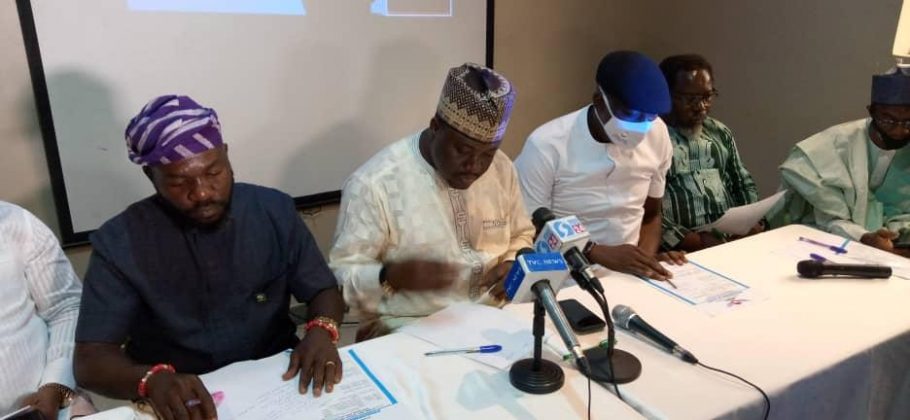
AND GRAVELY CONCERNED about the clannish nature and approach to governance that has resulted in breading deep divisions and inter-communal distrust, a one-day meeting was convened in Lagos by leaders of sociopolitical, sociocultural, the civil society, students and professional organizations on August 24, 2020, precipitating the urgent need towards collectively addressing wide-range of issues and to chart a new course for the future.
GOALS
The goals of the Summit included the following:
i. To facilitate the forging of a robust national platform for articulating a common voice on national issues.ii. To review the alarming rise and spread of killings and general insecurity of lives and property in Nigeria.iii. To underscore the failure of economic management policies characterized by a rising debt profile which has resulted in enormous hardship to vast segments of the Nigerian population.iv. To assess the current war against corruption in the light of revelations of an embarrassing rise in the nation’s corruption perception index that involves undue executive interference and official coverup.v. To advice on how to check the deep divisions and distrust resulting from the unfair nature of governance and appointments to public offices and institutions.
OBSERVATIONS
At the end of exhaustive deliberations, the summit observes as follows:
1. INSECURITY
Considering that security of lives and property is the cardinal responsibility of government, the summit recognizes the urgent imperatives of putting an end to killings and displacement of millions of Nigerians across ethnic and communal settings.The summit decries the huge population of internally displaced persons (IDPs) who are subjected to double jeopardy in poorly managed or neglected camps across the country.The country now witnesses unprecedented incompetence in dealing with the regularity of killings and general insecurity despite the continued rise in annual defence budgets;i. That these killings have claimed more than 3,500 lives as at 2017 with the number of internally displaced persons rising to about 4 million from 1.5million in 2015.ii. That the apparent failure of the country’s entire security and law and order assets to check the situation is giving rise to widespread suspicions of government complicity;
2. ECONOMY
The summit observed that the Nigerian economy is characterized by massive youth unemployment, growing poverty, and increasing social instability. That Nigeria has become the poverty capital of the World in addition to abysmal ranking on the scale of global Human Development index. In spite of the rising dept profile, there is huge deficit in transparency and accountability in public sector.More worrisome is that the percentage of dwindling national revenue devoted into debt servicing is getting beyond the threshold of immediate economic survival and sustainability in the long run.It was regretted that our national economy, which is characterized by a mounting debt profile and resulting in massive youth unemployment, disabling level of poverty, and instability, has earned Nigeria the place of the poverty capital of the world.In addition, Nigeria’s ranking on the Human Development Index is one of the lowest in the world.
DEBT PROFILE
The risk of inheriting an accumulated and accruing debt burden negotiated by government in absolute secrecy and spent without due transparency and accountability or commensurate development projects was also observed.
CORRUPTION
The summit observed that despite war corruption, Nigeria presently occupies 148th position out of 180 countries surveyed for corruption perception. Anticorruption efforts have continued to be diminished by failure of relevant institutions and agencies to assert independence and dispassionately deal with corruption without consideration of political affiliation strict adherence. The summit therefore identifies supremacy of rule of law and commitment to diligent prosecution of anti-corruption process as critical to sustaining the tempo of the fight against corruption.The meeting also noted that despite decades of a war against corruption, Nigeria is adjudged to be more corrupt today than it was in 2015. It is disturbing that Nigeria has in the last 3 years degenerated from the 136 th to the 148th place out of 180 countries surveyed for corruption perception.
ELECTORAL PROCESS
The summit noted with regrets the systematic manipulation of electoral process and resurgence of electoral violence which limit democratic spaces and undermine the hope of majority in the sanctity of the ballot.The manifestation of a systematic manipulation of the electoral system and undue exploitation of the political party system that perpetuates electoral malpractices, incompetence and political brigandage was also observed at the meeting.
POLITICS:
The meeting observed that unprecedented manipulation and exploitation of the cleavages of religion, and ethnicity as well as government’s indifference to citizens’ discontent are breeding deep divisions, mutual distrust and inter-communal disharmony.The summit further observed that manipulation of religion and ethnicity by politicians has created more fault-lines in the political system leading to divisions, mutual distrust and inter-communal disharmony. New generation of Nigerians within the age bracket of 20 to 55 years are increasingly becoming tools at the risks of their collective destiny.
GENERATIONAL STAGNATION
The meeting observed a stagnation in the generation of young Nigerians within the age bracket of 20 to 65 years, who have risked their fate for too long in the hands of people of 70 years and above who have clearly run out of productive ideas.It noted the contradiction in pegging the retirement age of civil servants at 60 while admitting people of above 70 years into critical governance positions.
Resolutions:In view of prevailing atmosphere of fears and uncertainties in the country, the summit resolves:
1. Jointly agreed on the formation of a non partisan, broad based national platform for all socio-cultural, labour, trade, professionals, businessmen, students and women, the intelligensia and civil society groups of the young generation of all Nigerians, in order to serve as platform of collaboration, consensus and networking amongst all the aforementioned groups, including marginalized constituencies in furtherance of the agenda of peace and national stability;
2. To advocate and demand for the strengthening of democratic institutions to safeguard democracy and guarantee human rights;
3. Reached a unanimous consensus on the imperative of mobilizing the young generation of Nigerians as critical stakeholders, to take control of their destiny from the grip of sit tight rulers who have rotated power amongst themselves since independence.a. Urged the young generation of Nigerians to insist on the emergence of a visionary and dynamic leadership of people not above age 70, which will effectively deal with the nation’s security and economic challenges and ensure good governance.
4. To demand immediate revamp and urgent restructure of the nation’s security architecture as a way of guaranteeing security of lives and property and in particular safety and livelihoods of indigenous communities across Nigeria;
5. Agreed to mobilize lawyers to initiate legal action to compel government to cease the accumulation of foreign debt without justifying the natioñ of the necessity and purpose of the loans or accounting for the previous ones.
6. Resolved to pursue a process of ensuring a general review of the operational electoral regulations to accommodate a paradigm shift in the nation’s leadership selection processes.
7. To demand that Federal and State Governments should address the root causes of growing poverty and alarming unemployment rate in the country;
8. To mobilize critical stakeholders and in particular youth into a vanguard of hope and national rebirth with the view to championing agenda of visionary and dynamic leadership that will imbue governance in the overall interest of the Nigeria and Nigerians;
9. Concluded to call another meeting soon to set up committees on various sectors and to reach out further to all other associations in Nigeria and to Nigerians in the Diaspora.
10. Consequently, the summit resolves to henceforth champion the cause of reawakening national consensus on peace, unity, democracy and national development under a broad-based umbrella to be known as National Alliance for Development (NADEV).
Related posts