


NLC And Reckless Act Of Economic Sabotage
COLLINS OPUROZOR
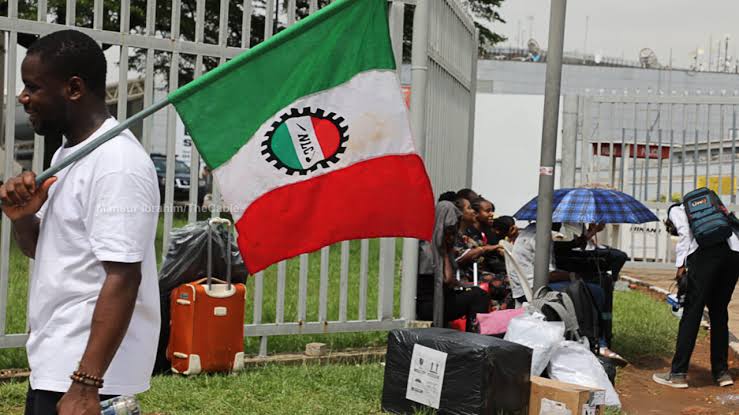
In a bizarre turn of events, the Nigerian Labour Congress (NLC), under the leadership of Comrade Joe Ajaero, has taken a drastic step by shutting down the national grid, plunging the entire country into darkness. This unprecedented action comes as a part of their demand for an increase in the minimum wage to an astronomical N494,000. While the NLC and the Trade Union Congress (TUC) have every right to strike and to voice their legitimate grievances, the complete blackout of the nation is not only reckless but also an act of economic sabotage. This action, ostensibly meant to champion the cause of the workers, has instead inflicted untold suffering on the very people it claims to protect.
First and foremost, the decision to shut down electricity supply demonstrates a profound disregard for the welfare of the ordinary Nigerian. The rich and affluent can afford alternative sources of power such as generators and inverters, thereby insulating themselves from the immediate effects of the blackout. However, the poor workers, whom the NLC purports to represent, are left to bear the brunt of this ill-conceived action. Without access to electricity, their daily lives are severely disrupted, compounding their already dire economic situation.
Moreover, the health sector has been thrown into disarray due to this thoughtless act. Hospitals, which rely heavily on a steady supply of electricity to power life-saving equipment, have been forced into a precarious situation. The lack of power in these critical facilities means that many patients, including vulnerable babies in incubators and those on life support, face heightened risks. It is not far-fetched to assert that lives have been lost as a direct consequence of the NLC’s decision to cut off power.
Furthermore, the broader economic implications of this blackout are staggering. Nigeria, a country already grappling with numerous economic challenges, cannot afford to have its productivity ground to a halt. Businesses across various sectors rely on electricity to function. The shutdown has led to a significant loss in revenue, which in turn affects the nation’s GDP. Small and medium enterprises (SMEs), which are the backbone of the economy, are particularly hard-hit, with many unable to operate without electricity.
In addition to the immediate economic fallout, the NLC’s actions have also damaged Nigeria’s reputation on the international stage. Investors, both local and foreign, view stability and reliable infrastructure as key factors in their decision-making processes. The abrupt and unilateral disruption of the power supply sends a message of unpredictability and instability, deterring potential investments that are crucial for economic growth and development.
The NLC’s demand for a minimum wage increase to N494,000, though perhaps well-intentioned, is grossly unrealistic given the current economic climate. Such a demand does not take into account the country’s financial capacity and the potential inflationary effects of such a steep increase. Constructive dialogue and negotiation with the government, rather than crippling industrial action, would be a more effective means of achieving a reasonable and sustainable wage adjustment.
Additionally, the NLC’s method of protest has alienated many Nigerians who might otherwise have supported their cause. By resorting to such extreme measures, the union risks losing public sympathy and support. The general populace, now suffering from the effects of the blackout, are more likely to view the NLC as part of the problem rather than as advocates for their welfare.
In light of these considerations, it is imperative for the NLC to reassess its strategy. Striking is a legitimate form of protest, but it must be done responsibly. Shutting down essential services such as electricity is a step too far. It is possible to make a stand and push for workers’ rights without causing widespread harm and disruption. The leadership of the NLC must explore alternative methods of advocacy that do not entail such severe consequences for the nation.
Finally, while the grievances of the NLC regarding the minimum wage are valid, their approach is deeply flawed. The blackout has inflicted significant pain on the Nigerian populace, particularly the poor, and has jeopardized lives and livelihoods. It is an act of economic sabotage that undermines the very principles of labor rights. The NLC must retract its actions and engage in constructive dialogue with the government to find a solution that balances the needs of the workers with the broader interests of the nation.
Related posts