
NYSC: Preserve The Objectives, Review The Mechanism
BY EHI BRAIMAH
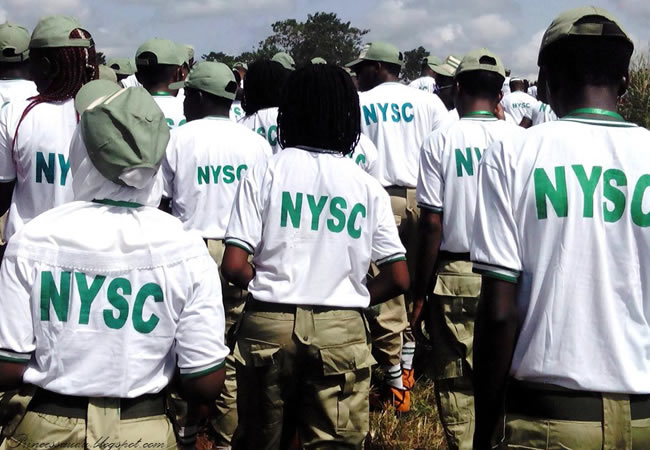
The kidnapping of 20 prospective National Youth Service Corps (NYSC) members travelling to their orientation camps on October 1 –Nigeria’s independence anniversary– should make Nigerians pause and ask a fundamental question: Is the present structure of compulsory national service still appropriate for the Nigeria of today?
Thankfully, the corps members, according to media reports, were released six days later at Amakohia Ubi Village, Imo State, by the Nigeria Police Force, in collaboration with other security agencies, although there are allegations that ransoms were paid. To be clear, I align myself with the objectives of the NYSC.
However, there is an urgent need to review the mechanism through which those objectives are pursued in view of the profound changes in Nigeria’s security, infrastructure and socioeconomic environment.
The federal government has approved a package of reforms which is a welcome development, but it should not end there –a serious public debate about NYSC’s future is urgently needed.
The NYSC was established in 1973, in the aftermath of the Nigerian Civil War, with an important national purpose. It was conceived as an instrument for rebuilding trust, promoting national integration and encouraging young Nigerians to live, work and serve outside their immediate cultural and geographical environments. That was a bold and visionary idea.
For generations of Nigerian graduates, NYSC has provided an opportunity to experience another part of the country, make new friends across ethnic and religious boundaries, contribute to communities and develop a deeper understanding of Nigeria’s diversity. The institution therefore deserves neither sentimental protection nor casual dismissal.
Nigeria has changed
The Nigeria of 1973 is not the Nigeria of 2026. When NYSC was introduced, travelling between states did not carry the same level of kidnapping risk that Nigerians now confront on some highways. Today, insecurity has transformed the meaning of interstate travel and national service for young graduates.
Kidnapping has become a major threat on some roads while banditry, armed robbery and other forms of criminality have made some routes particularly dangerous. The deterioration of major highways has also compounded the problem.
For NYSC participants, this is especially troubling because their movements are not entirely voluntary. They are mobilised, posted and expected to report to designated locations which creates a peculiar responsibility for government.
When the state requires a young graduate to travel hundreds of kilometres to another part of the country, it assumes a corresponding responsibility for that person’s safety. A young Nigerian should not have to choose between obeying a statutory national-service requirement and protecting himself or herself from a credible security threat. That is at the heart of the matter.
National service should not become a national security risk
Besides the compelling argument that the NYSC scheme should be retained, national integration should not require exposing young people to unnecessary danger. If a highway is notorious for kidnapping, why should a group of young graduates be forced to travel through it simply because their posting letter says they must report to an orientation camp hundreds of kilometres away?
It is sad that inter-state travel has become longer and more hazardous primarily because our roads are badly maintained. Criminals know when large numbers of young Nigerians will be travelling to orientation camps, making them predictable targets.
Every time a prospective corps member is kidnapped, families experience an agonising period of uncertainty. Parents wait for information; siblings panic, and families may be forced into ransom negotiations and payments. The young people themselves, who are supposed to be embarking on an exciting transition into professional life, suddenly become victims of a security crisis they did not create.
There is something fundamentally wrong when national service becomes a source of anxiety for parents. It is like sending their children on a suicide mission.
The roads matter
The security debate cannot be separated from the condition of Nigeria’s roads. A bad road in an insecure environment becomes both an infrastructure and security challenge. Vehicles travelling on poorly maintained roads move slowly while broken-down vehicles become stranded. Traffic bottlenecks create opportunities for criminals, forcing drivers to stop at unsuitable locations. Long journeys become overnight journeys.
A functional road network is therefore part of national security. The federal government and state governments must recognise that the safety of Nigerians travelling between states depends not only on police presence but also on the quality of the roads, availability of emergency services, communication networks and rapid-response capability.
For NYSC members, the challenge is even greater because their movements are structured and predictable. The solution cannot simply be to deploy more security personnel every time corps members travel. That may be necessary in the short term, but it does not address the underlying question of whether the current deployment architecture remains sensible with horrible roads.
Review the mechanism
There is a danger in allowing the debate to become a simple choice between “keep NYSC” and “abolish NYSC.” That is too simplistic. A better approach, in my view, is to preserve the objective while reviewing the mechanism to achieve the same objectives.
The current mechanism is the compulsory deployment of graduates across state boundaries for a year, including movement to orientation camps and places of primary assignment. As part of the review, we can introduce a more flexible deployment system based on security assessments. States and local government areas could be categorised according to independently verified security conditions. Deployment to areas classified as high-risk could be suspended until adequate security conditions are restored.
Another option is to reduce compulsory inter-state movement while creating stronger incentives for voluntary cross-regional service. The programme could also incorporate more local and digital service opportunities, particularly for graduates whose skills can be deployed remotely.
There is also a case for shorter orientation periods and better-organised transportation for those who must travel across state boundaries. Instead of leaving young graduates to make long interstate journeys independently, the government can provide secure, coordinated transportation to orientation camps.
Insurance, emergency evacuation arrangements and compensation mechanisms should also be strengthened.
We should not throw away what works
It is important to acknowledge that NYSC has contributed significantly to Nigerian society. Teachers, doctors, engineers, lawyers, journalists, administrators and entrepreneurs have served communities far from their places of origin through the scheme. On a personal note, I did my youth service in Awka, in the old Anambra State before the creation of Enugu State, and I enjoyed the warm reception accorded me throughout my stay.
In many rural communities, corps members have filled important gaps in education, healthcare, agriculture and community development. For some Nigerians, the NYSC experience remains one of the few structured opportunities to live outside their ethnic or regional environment and build relationships across Nigeria’s diversity – a valuable experience indeed.
At a time when ethnic and regional identities sometimes dominate public discourse, a programme that encourages young Nigerians to see themselves as members of one national community should not be discarded.
But precisely because the objective is valuable, the mechanism must be protected from becoming obsolete. Institutions survive when they adapt.
Moving forward
A review of the scheme should examine the programme’s objectives, cost, security implications, deployment patterns, economic value and relevance to the modern labour market.
If the government cannot guarantee reasonable security for interstate mobilisation, it should have the courage to suspend deployment along dangerous routes or into high-risk areas. This should not be interpreted as an attack on NYSC; it is an invitation to save it from becoming trapped in the assumptions of another era.
What does national service mean in 21st-century Nigeria? We can achieve both national unity and public safety at the same time, but the government should prioritise improving inadequate infrastructure and strengthening our security architecture.
NYSC was created because Nigeria needed a mechanism to bring its young people together after a devastating national conflict. More than five decades later, Nigeria still needs national cohesion, but the country also needs to recognise that the environment in which NYSC operates has changed dramatically.
We should preserve the spirit of national service without treating its existing structure as untouchable. No national programme should be more important than the safety of the citizens it was created to serve.
The time has therefore come to redesign the NYSC scheme and make fit for purpose. That is the conversation we should be having and it should begin now.
Braimah is a PR specialist, marketing strategist, and publisher/editor-in-chief of Naija Times (www.ntm.ng) and Lagos Post (www.lagospost.ng). He is a strong advocate for African prosperity and can be reached through: ehi.braimah@neomedia.com.ng
Related posts