
Obasanjo And The Burden Of Statesmanship: When A Controversial Past Assumes The Posture Of Moral Authority
Posted on November 26, 2026
“A statesman is not merely a former occupant of political office; he is a custodian of national memory, whose wisdom should transcend personal grievances, partisan preferences and the temptation to perpetually occupy the centre of public controversy.”
There is something profoundly instructive about the latest political interventions of former President Olusegun Obasanjo. For a man who has occupied the highest political office in Nigeria, one would ordinarily expect his contributions to national discourse to be characterised by restraint, reflection, historical consciousness and the uncommon maturity that should accompany presidential experience. Unfortunately, his recurring penchant for political denunciations raises legitimate questions about whether he has fully embraced the responsibilities of statesmanship.
Former Governor of Ekiti State, Ayo Fayose, has offered a rather unflattering assessment of Obasanjo, suggesting that the former president’s disposition towards successive administrations is often coloured by personal considerations and an apparent appetite for public attention. Whether one agrees entirely with Fayose’s characterisation is another matter. Nevertheless, his intervention raises a pertinent question, must every disagreement with an incumbent administration degenerate into an exercise in public vilification?
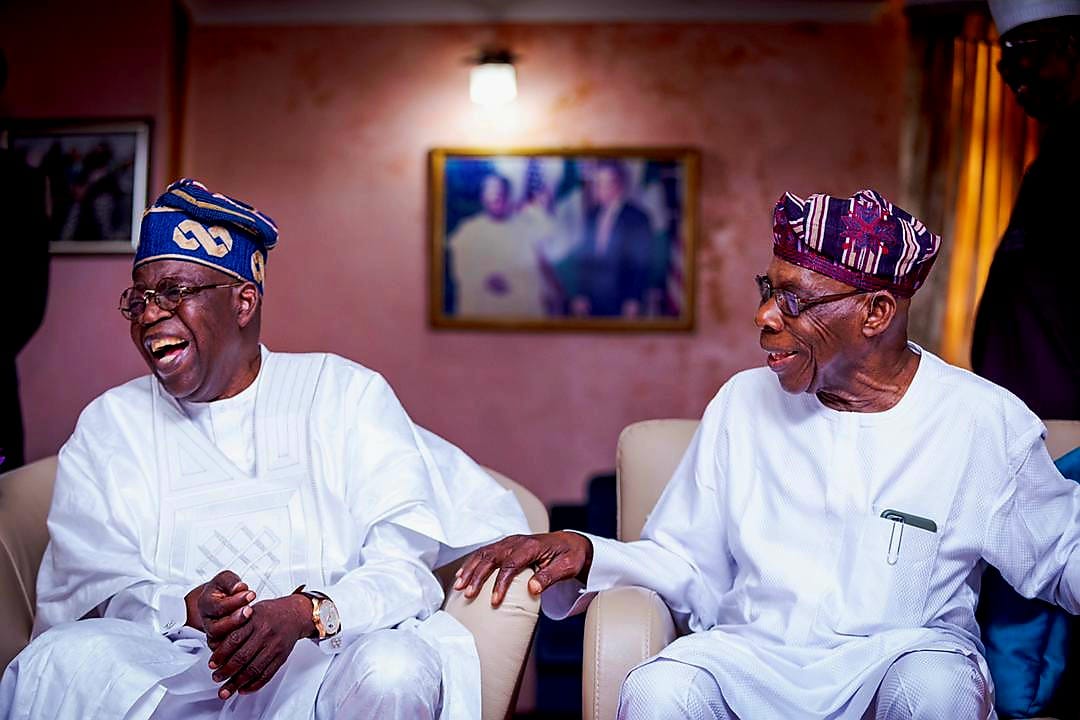
Obasanjo recently came in his idiosyncratic mannerism of attacking President Bola Ahmed Tinubu. Baba, of all people, should appreciate the importance of historical consistency. He was the president who famously characterised the 2007 general election as a ‘do-or-die affair’. That declaration, coming from the nation’s sitting president, remains one of the most troubling expressions of political belligerence in Nigeria’s democratic history. It was hardly the language of a leader seeking to deepen democratic culture and institutional civility.
More importantly, his years in public office were not without deeply troubling chapters. The military operations in Odi, Bayelsa State, in 1999, and Zaki-Biam, Benue State, in 2001, remain indelible episodes in Nigeria’s human rights history. Human Rights Watch documented extensive destruction of civilian communities and the killing of hundreds of people during these operations. These were not inconsequential incidents that can simply be erased from the national consciousness. They demand historical acknowledgement, accountability and sober reflection.
His administration also attracted serious controversies surrounding executive high-handedness, political intolerance, corruption allegations and the exercise of presidential power. His political legacy, therefore, cannot reasonably be presented as an immaculate benchmark against which every succeeding administration must be judged. But perhaps the more compelling question is whether Obasanjo’s apparent dissatisfaction with President Bola Ahmed Tinubu’s administration extends even to developments that have implications for national cohesion and the welfare of ordinary Nigerians.
Is the former president equally displeased that President Tinubu reversed the national anthem introduced under his military administration in 1978 and restored Nigeria, We Hail Thee? An anthem whose opening stanza expressly acknowledges Nigeria’s ethnic and linguistic plurality, affirming that despite our differences in tribe and tongue, we can stand together in brotherhood? Does the restoration of a national symbol that speaks directly to the country’s diversity constitute another reason for political disapproval? Or is the former president comfortable with historical reversals only when they align with his own preferences?
And what about the long-suffering motorists and residents who have endured the deplorable condition of the Lagos–Ota–Abeokuta road corridor for years? Is Obasanjo equally troubled that the Tinubu administration finally approved the transfer of this federal road to the Ogun State Government, thereby removing an administrative obstacle to its reconstruction? A road corridor serving the Ota and Abeokuta axis, whose deterioration had subjected commuters, businesses and ordinary Nigerians to considerable hardship for years, including under successive administrations.
Would it be unreasonable to expect the former president to acknowledge the significance of such an intervention, irrespective of his political disposition towards the incumbent? Must every initiative undertaken under Tinubu be viewed through the prism of partisan antagonism, even when its potential benefits transcend political affiliations? These are not trivial questions. They go to the heart of political consistency, public accountability and the responsibilities of those who have previously occupied the highest offices of the land.
Nobody is suggesting that Obasanjo should surrender his constitutional freedom to express opinions, criticise government policies or offer alternative perspectives on national affairs. Indeed, former presidents have an important role to play in strengthening democratic institutions and providing the benefit of experience to succeeding generations. However, such interventions must be informed by intellectual honesty, historical humility and a willingness to subject one’s own record to the same standards of scrutiny imposed on others.
Nigeria does not need a former president who appears perpetually dissatisfied with whoever occupies Aso Rock. It needs elder statesmen whose interventions are constructive rather than combative, whose counsel is informed rather than vindictive, and whose patriotism is demonstrable beyond the boundaries of personal political preferences. Yar’Adua was not good even though you brought him. Jonathan was worse even when you endorsed him. Buhari, let us not even go there, and now Tinubu? Is Baba Obasanjo saying he’s the best to have happened to Nigeria?
Perhaps Fayose’s rather caustic intervention should prompt a moment of introspection. Political disagreements should not become permanent exhibitions of personal animosity, nor should the privilege of having once governed a nation be mistaken for an inexhaustible licence to pronounce moral verdicts on everyone else.
Obasanjo has earned his place in Nigeria’s political history. But history is neither a personal possession nor an exclusive narrative that can be rewritten to accommodate present-day preferences. It records achievements, failures, controversies and consequences with equal indifference to the stature of those involved. At this stage of his life and public service, the former president would serve Nigeria better by embracing the nobility of statesmanship rather than the theatrics of perpetual political combat.
The privilege of having once led Nigeria should impose a greater obligation to unite, counsel and inspire the nation, not an enduring licence to denigrate those who subsequently occupy the office. One can only hope the Chief Letter Writer of the nation can relax and reflect.
Nigeria needs statesmen, not permanent political combatants.
Omogbolahan L.A BABAWALE
Public Affairs Analyst
Life Camp, Abuja
officialczar2@gmail.com
Related posts