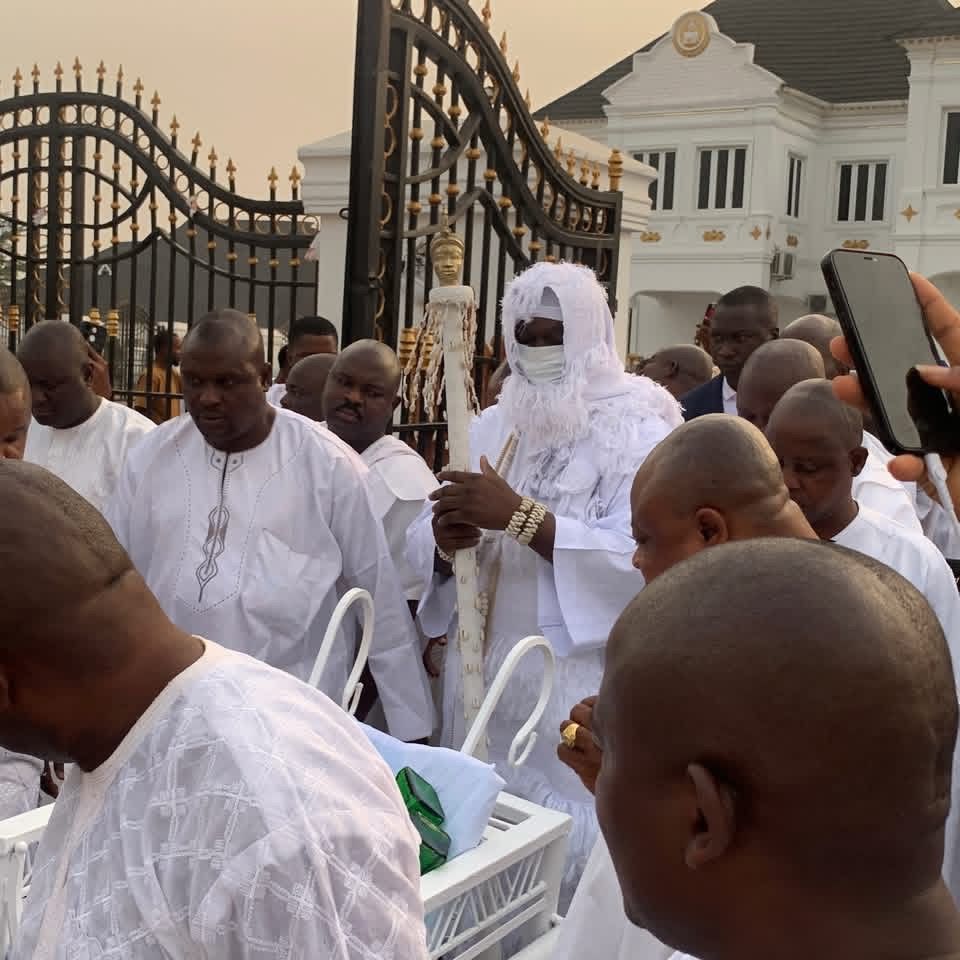
The Permanent Chairman of the Southern Nigeria Traditional Rulers Council (SNTRC), Arole Oodua Olofin Adimula and the Natural Head of the Oduduwa race worldwide, the Ooni of Ife, Ooni Adeyeye Enitan Ogunwusi, Ojaja II, has formally concluded the 2026 World Obàtálá Festival in Ilé-Ifẹ̀, describing the annual sacred celebration as a powerful spiritual platform for peace, moral rebirth and cultural renewal.
Speaking in a statement on Tuesday signed by Otunba Moses Olafare, the Director, Media & Public Affairs, Ooni’s Palace, the Ooni noted that the festival remains one of the most profound spiritual observances in Yorubaland, symbolising purity, wisdom, patience and the sanctity of human existence.
He stressed that the rites and prayers performed throughout the festival were meant to realign the people with the values of truth, righteousness and compassionate leadership.
The 2026 edition of the World Obàtálá Festival took place from Wednesday, January 14 to Tuesday, January 27, 2026, attracting devotees, traditional custodians, scholars and cultural enthusiasts from across Nigeria and the global Yoruba diaspora.
Rooted in deep spiritual significance, Obàtálá, also known as Òrìṣànlá, occupies a central place in Yoruba cosmology. He is traditionally regarded as the Orisha of creation, purity, wisdom, justice and moral uprightness, and is believed to be the divine artisan entrusted by Olódùmarè with the moulding of human life. In keeping with long-established tradition, devotees were identified by their white garments, symbolising purity of thought and spiritual clarity.
Activities for the festival officially commenced on January 14 with Osan, the initiation and spiritual opening day, marked by sacred rites and purification ceremonies at the Obàtálá Temple, signalling collective renewal and spiritual preparedness.
This was followed on January 15 by an International Colloquium and Itaala Orisa Night, which brought together scholars, priests, devotees and traditional custodians for intellectual discourse and spiritual engagement on the relevance of Obàtálá in Yoruba moral philosophy and leadership values.
On January 17, the festival featured Exhibition Day and Oshosi Day at the Obàtálá Holy Temple, highlighting cultural displays, traditional arts, music and ritual observances that showcased the richness of Yoruba heritage.
January 18 was dedicated to Ase Oba and Ase Iwrogba, while January 19 witnessed the Itonini Procession, Iwure Day and Oru (initiation rites), involving sacred processions, communal prayers and ritual teachings for devotees.
The celebrations continued on January 20 with Ipewo Day and a traditional spiritual procession to Iranje Idita, reinforcing unity and communal worship.
On January 23, major rites included Ase Oonirisa, Nini Osan and Ekuru Itapa Day, one of the spiritual highpoints of the festival, where symbolic offerings and special prayers were offered for peace, moral governance and global harmony.
This was followed on January 24 by Etutu Oonirisa, during which Obàtálá devotees were formally hosted by the Oonirisa, and on January 25 with Iyin Aje rites for Oonirisa at Ejibomekun, further deepening the sacred bond between spiritual custodians and worshippers.
The festival formally concluded on January 27 with Iyin Egbe and the official declaration of the closure of the 2026 World Obàtálá Festival, marking a moment of thanksgiving, reflection and spiritual transition.
Throughout the festival period, Ilé-Ifẹ̀ was characterised by daily worship at the Obàtálá Temple, traditional drumming, chants, colourful street processions and vibrant cultural displays led by devotees and custodians. Teachings, ritual instructions and testimonies were held regularly, catering to both long-standing adherents and new participants.
Beyond its religious significance, the World Obàtálá Festival has evolved into a major platform for cultural diplomacy and identity reconnection, drawing participants from the Yoruba diaspora and scholars of African spirituality who continue to engage with Ilé-Ifẹ̀ as a living centre of tradition and intellectual discourse.
As the festival concluded, the Ooni urged everyone to carry the lessons of Obàtálá beyond the shrines into everyday life, stressing that true spirituality is reflected in humility, justice, peaceful coexistence and service to humanity.