
Prof Obiora Okonkwo Challenges Intellectuals On Development Of Afrocentric Democracy
TITUS MADUAKO ELEWEKE
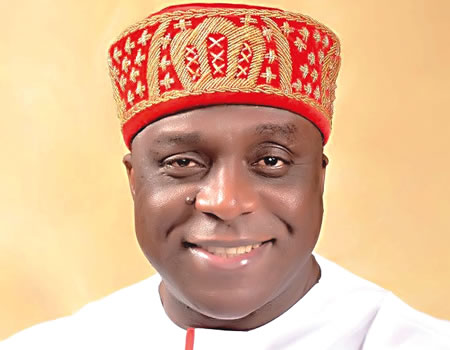
Chairman of United Nigeria Airlines, and political economist, Professor Obiora Okonkwo, has challenged political anthropologists across African universities on the development of an indigenous democratic culture that imbibes the traditional values of the people of the continent.
Obiora Okonkwo, who is a Chieftain of the People’s Democratic Party (PDP), made the call while delivering the keynote address at a two-day international hybrid political conference at the Nnamdi Azikiwe University in Awka.
The conference had the theme “Political Transitions and Economic Development: The African Experience,” and it attracted political scientists from across the continent.
According to Okonkwo, developing and inculcating an indigenous democratic culture that embodies all traditional African values and norms may be a new roadmap towards instituting a democratic practice that is enduring as well as eliminating problematic transitions.
He argued that incessant forced transitions in Africa, many of which had led to bloodshed and huge economic as well as development losses, could be traced to the imposition of a democratic habit that is alien to traditional African cultural norms.
“Even as we task the political anthropologists in our universities to help develop an Afrocentric democratic system of governance. We must, especially in Africa, try to resolve the tension between liberal democracy as prescribed by the West and the welfare state and a social democratic system that is more in sync with the continent’s communitarian system of living, reflected in such a time-honoured axiom as it takes a village to raise a child” he stated.
According to him, liberal democracy privileges individual rights and capitalist values at the expense of the collective, or what we generally refer to as the public interest.
According to Okonkwo, for some critics, democracy is simply foreign to Africa and can never work.
“Others however, underscore the need for Africa to develop a model of democracy that reflects its cultural values and systems, drawing from the continent’s pre-colonial governance structures,” he said.
According to him, the political tension and forced transitions on the continent had imperiled economic advancement with the attendant loss of momentum on governance, which had, to a large extent, been responsible for the rise in poverty in African states.
Okonkwo noted that Africa’s experience with democratization, with very few exceptions, has often stagnated at the phase of transition, resulting in a great deal of frustration and disenchantment among the people, many of whom remain mired in multidimensional poverty.
He argued that the theorists of democratization in the past three decades broadly conceive of it as a two-step process of transition and consolidation that is neither linear nor inevitable.
Okonkwo also insisted that for democracy to take firm root, bring an end to forced transitions, and answer the yearnings of the people for development, African states must begin to institutionalize behaviors that endear democracy to the people.
He listed weak institutions, ethno-political and religious divisions, economic disparities, and external influence, along with the partisanship of security forces, as some of the factors responsible for forced transitions on the continents.
He, however, canvassed the strengthening of democratic institutions, promoting inclusive governance, enhanced civic education and voter awareness, strengthening security measures, international support, and diplomatic engagement, among other steps necessary to eliminate forced transitions in Africa.
“African countries should prioritize the strengthening of democratic institutions, including electoral commissions, judicial systems, and oversight bodies. These institutions need to be independent, transparent, and accountable to ensure fair and credible elections; building trust in the electoral process can help reduce the likelihood of problematic transitions and post-election violence; encouraging inclusive governance and inclusive political participation is vital for reducing election-related tensions; investing in civic education programs can help inform citizens about their rights, the importance of peaceful elections, and the consequences of election violence.
“African governments should prioritize the strengthening of security measures during elections. This includes adequate training and equipping of security forces to handle election-related security challenges professionally and impartially; building and strengthening mechanisms for peaceful dialogue, negotiation, and dispute resolution to address issues and conflicts arising during elections and, as such, help foster peaceful transitions; as well as engaging international partners, regional organizations, and neighboring countries to provide support and engagement to help prevent and address election violence and transitions in Africa”, among others, he said, can help see Africa through forced transitions.
Related posts