

Spain Seeks Stronger Nigeria-Europe Cooperation As Trafficking Networks Shift Tactics
PROSPER OKOYE
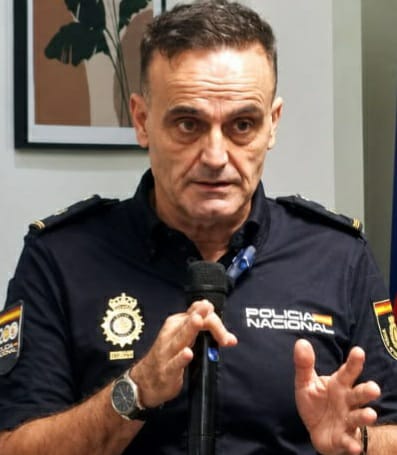
A senior Spanish Police official on Tuesday called for stronger cooperation between Nigerian and European law enforcement to dismantle trafficking networks that are increasingly exploiting legal migration channels and digital tools.
Speaking at a four-day workshop on “Strengthening Transnational Investigative Cooperation: Combating Trafficking in Persons and Smuggling of Migrants through the Nigeria–Spain Strategic Partnership,” Javier Leon, Deputy Team Leader at FIAP and Chief Inspector of the Spanish National Police, said criminal groups had become more sophisticated.
“Human trafficking is not simply a migration issue. It is a global criminal business that exploits vulnerable people for profit,” Leon said. “Our response must therefore be international, intelligence-led and centred on protecting victims.”
The workshop, organised under the EU Support to Migration Governance Project in Nigeria, brought together officials from Nigeria and Spain to strengthen cross-border investigations.
Drawing on more than a decade investigating migration in Spain’s Canary Islands, Leon said traffickers had moved beyond desert and sea routes.
He said about 40,000 migrants reached the Canary Islands in 2024, while many others died due to dehydration, starvation and exposure.
Leon warned that Nigerian organised crime groups maintain a significant presence along these routes and now collaborate with networks across Europe.
“They do not specialise in one criminal activity,” Leon said. “They diversify their operations, making them highly resilient and capable of adapting quickly.”
According to him, the groups use cryptocurrencies, recruit victims through social media, and engage in trafficking, drug trafficking, cybercrime, money laundering and document forgery.
He added that traffickers are increasingly using forged documents, fraudulent visas and commercial flights instead of only Sahara and Libya routes.
Recalling an incident at Abuja’s international airport, Leon said he observed groups of young women whose travel patterns raised concerns of possible trafficking.
Leon said some networks trace their origins to university confraternities. He noted that the National Association of Seadogs, or Pyrates Confraternity, was founded in 1952 at University College, Ibadan, by students including Wole Soyinka to promote social justice.
He said violent splinter groups emerged in the 1970s and 1980s and later evolved into criminal enterprises. He identified Black Axe, Eiye, Buccaneers and Vikings as groups linked to organised crime.
Leon said Edo State, particularly Benin City, remains a principal source area for victims trafficked to Europe. Many are recruited with promises of jobs or education, then subjected to sexual exploitation.
Recruitment often involves relatives, friends and former victims. Many victims undergo traditional oath-taking rituals that create fear and discourage them from cooperating with investigators.
Although Spain provides legal protection to victims willing to testify, many are reluctant due to fear of reprisals
“No country can confront these criminal organisations alone,” Leon said. “The networks are transnational, and our response must be equally transnational.”
Edeoga Chineye, Head of Intelligence and International Cooperation at NAPTIP, said trafficking methods are changing fast, especially online.
“Human trafficking is changing every day. New routes and trends are emerging, especially in cyberspace,” she said. “Law enforcement agencies must continue building their knowledge and strengthening international cooperation.”
Chineye said Nigeria and Spain have worked together to investigate and prosecute several high-profile trafficking cases.
FIAP Project Officer, Cayetana Belisco, said the partnership reflects the need for trust and shared expertise to tackle cross-border crime.
“Public servants learn best from one another,” Belisco said. “Building professional relationships and mutual trust is essential to tackling organised criminal networks that operate across borders.”
“These networks do not respect borders,” Chineye added. “Our response cannot stop at national borders either.”
Related posts