
Washington Positions United States As Africa’s Strategic Energy Partner
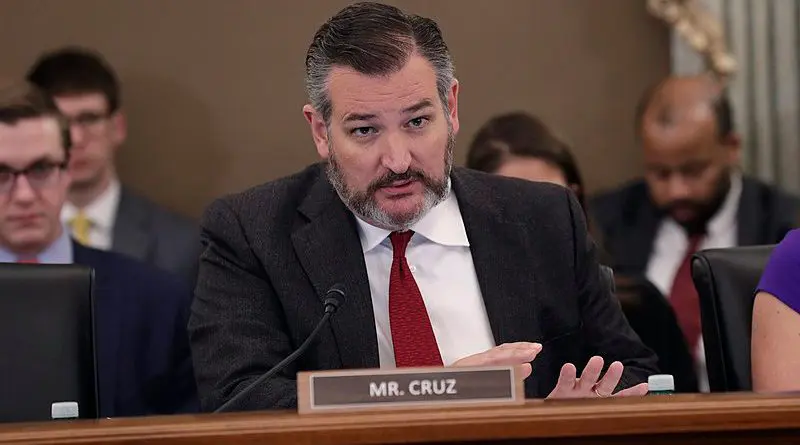
U.S. Senator Ted Cruz has called for a new era of partnership between the United States and Africa, framing the continent as both a strategic ally and an emerging powerhouse for global energy investment.
Speaking at African Energy Week (AEW): Invest in African Energies in Cape Town, Cruz said the U.S. must become a strong and committed partner in advancing Africa’s energy ambitions through exploration, production and infrastructure investment.
“Africa is a strategic partner,” he said. “The U.S. is Africa’s partnership alternative to communist China, and we’re here today to create that robust alternative. We’re changing the paradigm. U.S. Africa policy now revolves around investment-led commercial diplomacy.”
Cruz drew parallels between Texas’ energy-driven economy and Africa’s resource potential, describing how energy had delivered millions of jobs and billions in economic value to the U.S. “As a Texan, I understand the immense benefit that comes with being blessed with abundant resources,” he said. “Texas is rightly known as the energy capital of the world. I believe the United States should be a strong and committed partner in Africa’s energy future.”
Cruz’s comments come as the U.S. seeks to strengthen commercial ties with African producers amid growing competition from China and Gulf nations. While Beijing has spent two decades building deep energy and infrastructure links across the continent, U.S. officials are increasingly emphasizing private investment and positioning themselves as partners focused on mutually beneficial projects rather than aid.
By positioning the U.S. as a “robust alternative,” Cruz emphasized that engagement should focus on transparent, market-driven investment. “Together the U.S. and Africa can secure a safer, freer and more prosperous energy future,” he said.
The senator’s remarks were echoed by senior U.S. energy officials, reinforcing a multi-agency push to boost investor confidence and expand American engagement across the continent. The week also featured a dedicated U.S.–Africa Energy Roundtable, aimed at increasing private-sector investment and enhancing U.S.–Africa policy alignment to drive investment-led growth, supported by agencies including EXIM and the Department of Energy (DOE).
“Energy addition is a priority for the DOE, and nowhere can it be more impactful than here in Africa. This is our goal as an agency and it has support from the highest levels of the administration,” said Andrew Rapp, Senior Advisor at the DOE. He emphasized the DOE’s role in creating a “multiplier effect” to attract private capital.
Josh Volz, Deputy Assistant Secretary for Europe, Eurasia, Africa and the Middle East at the DOE, highlighted U.S. respect for African sovereignty in energy decision-making. “International governments should not stand in the way of how African nations determine their energy futures. We are eager to hear how best we can, from a U.S. perspective, partner with Africa,” he said. Volz noted that the U.S. private sector is already heavily engaged, with $65 billion invested across the continent, complemented by a $2.5 billion pledge operationalized under the Trump administration to support African energy expansion.
The U.S. is making a major push to strengthen its energy partnership with Africa, with a strong focus on natural gas and LPG development. Earlier this year, U.S. Secretary of Energy Chris Wright emphasized the importance of supporting African energy independence, highlighting efforts to expand access to LPG and clean cooking solutions to improve household energy availability across the continent.
“Africa needs massively more energy. Africans will do that. Africans will deliver that. The United States is thrilled to partner with you in that endeavor,” said Wright. “We want to be your partners in technology and providing capital and partnering in any way we can to pursue that goal.”
American companies are currently leading some of the largest energy projects on the continent. In March 2025, EXIM approved a $4.7 billion loan for the Mozambique LNG development, which is expected to produce 13.1 MTPA of LNG. ExxonMobil plans to invest $1.5 billion in Nigeria’s Usan deepwater offshore oil field to boost production between 2025 and 2027, while also targeting FID on the $30 billion Rovuma LNG project offshore Mozambique by 2026. Kosmos Energy is a major stakeholder in the $4.8 billion Greater Tortue Ahmeyim LNG project offshore Mauritania and Senegal, projected to produce up to 5 MTPA across multiple phases, and is also engaged in deepwater upstream exploration and production in Equatorial Guinea.
Related posts