

Why Popes Are Buried In 3 Coffins
Posted on January 6, 2023
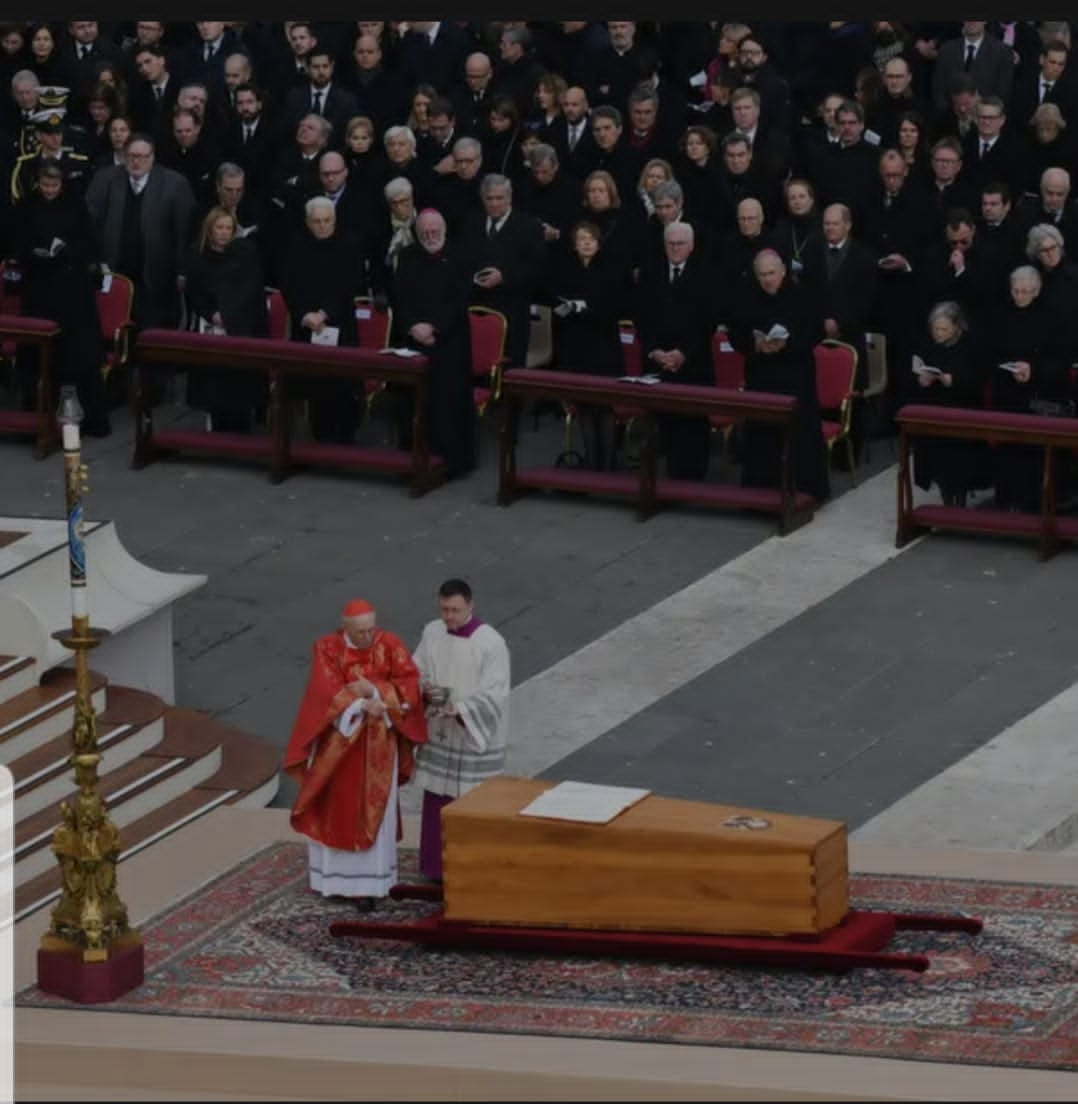
When a Pope dies, he is placed in three coffins namely: Cypress, Lead and Elm, one inside the other, before being interred.
The reasons are explained below:
*The Cypress Coffin*
This is the innermost coffin. It holds the pope’s body as well as a copy of the eulogy given at the funeral Mass. It also holds three bags of coins: one of silver coins, one of gold, and one of copper. The number of coins in each bag represents the number of years a pope served. The simple wooden coffin made of cypress signifies that the Pope is an ordinary human being like everyone else, and is buried like a common man. The coffin is sealed and wrapped with three silk ribbons before being placed in a lead casket.
*The Lead Coffin*
The lead coffin, which is soldered shut, is engraved with the Pope’s name and dates of his pontificate, as well as a skull and crossbones. A skull and crossbones or death’s head is a symbol consisting of a human skull and two long bones crossed together under or behind the skull. The design originates in the Late Middle Ages as a symbol of death and especially as an artistic or symbolic reminder of the inevitability of death found on tombstones. It is usually represented by the term Memento mori (Latin for ‘remember that you [have to]/will die’). A reminder to all that we are dust and shall return to dust someday.
The lead coffin is more durable. Important documents the Pope issued under his seal are also placed in the coffin. The broken seal of office is placed inside the lead coffin by the Camerlengo prior to final closure.
The lead coffin is more durable. Important documents the Pope issued under his seal are also placed in the coffin. The broken seal of office is placed inside the lead coffin by the Camerlengo prior to final closure.
*The Elm Coffin*
Finally, the lead casket is placed in an elm coffin which is nailed and shut with golden nails. The elm coffin is used to signify the great dignity of the man being laid to his rest, since elm is the most precious of local woods available in Rome.
Before the coffins are sealed, the bishop who is in charge of the pope’s official proclamations reads a list of achievements of the pope, and then the parchment that lists the achievements is rolled into a Copper Tube, and placed inside the casket. When each casket is closed, it is wrapped with two cords of violet silk and sealed in wax with the coat of arms of the chamberlain and the Cardinal Dean. Thanks to this ancient custom, many early documents of the Church have been conserved.
Before the coffins are sealed, the bishop who is in charge of the pope’s official proclamations reads a list of achievements of the pope, and then the parchment that lists the achievements is rolled into a Copper Tube, and placed inside the casket. When each casket is closed, it is wrapped with two cords of violet silk and sealed in wax with the coat of arms of the chamberlain and the Cardinal Dean. Thanks to this ancient custom, many early documents of the Church have been conserved.
Related posts