


Yemi Kale: Data Fragmentation, A Major Obstacle To Nigeria’s Productivity
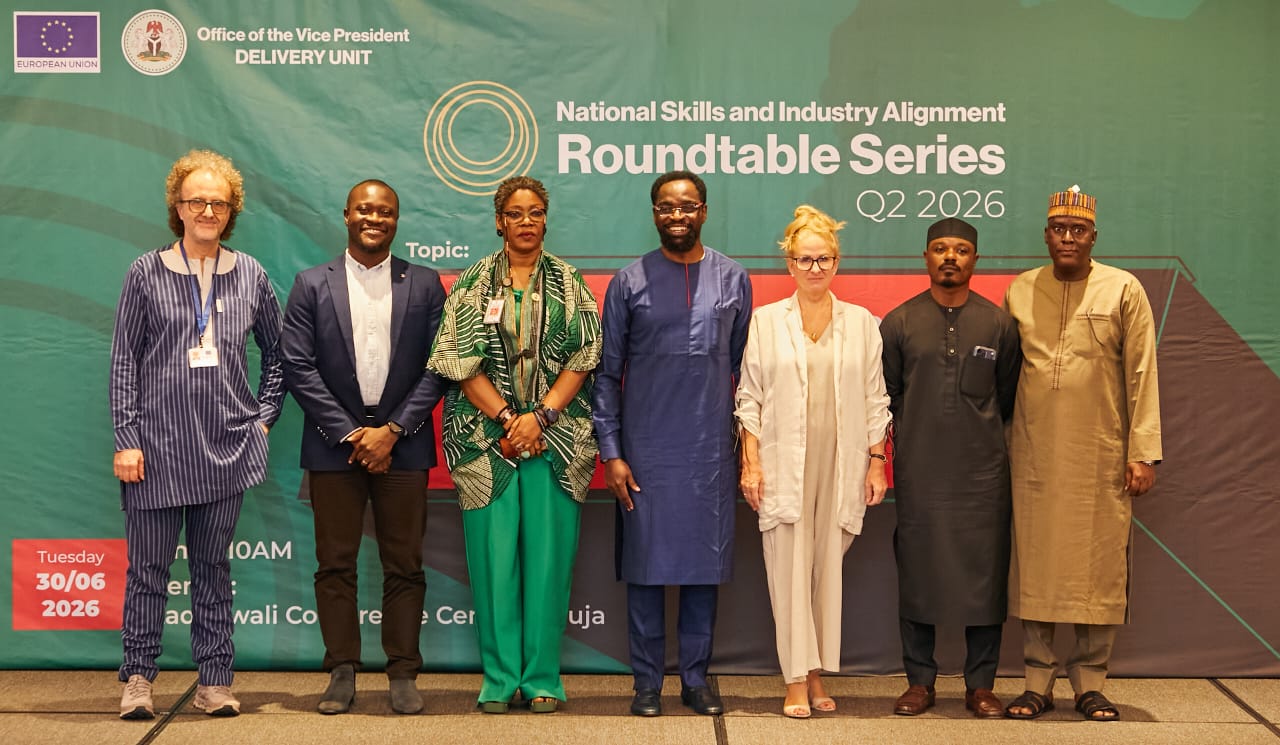
Mr Yemi Kale, the Group Chief Economist and Managing Director of Research and Trade Intelligence, African Export Import Bank, has identified data fragmentation as a major obstacle to Nigeria’s productivity, employment opportunities, and labour market efficiency.
Kale, a former Statistician General of the National Bureau of Statistics, made that known on Tuesday while speaking via Zoom during the National Skills and Industry Alignment Roundtable Q2 Series on the Role of Data in Job Creation, Coordination, and Linkages, held in Abuja.
He stressed that Nigeria’s demographic dividend, with 70 percent of its population under 30, presented both an opportunity and a challenge, requiring quality education, economic absorption capacity, and strong institutions.
Kale highlighted the need for a coordinated data architecture to align skills with economic opportunities, enhance productivity, and foster long-term economic competitiveness.
He pointed out that nations that had achieved sustained economic transformation did not do so because they possessed natural resources or lacked religion.
He said they succeeded because they systematically aligned their human capital systems with the economy’s evolving needs.
Kale emphasized that one of the defined characteristics of today’s most competitive economies was not simply the quality of labor, but the quality of the information system that underpinned labor development and the labor market.
He stated, “Across Nigeria today, we have employers that are searching for skill, and at precisely the same time, millions of Nigerians are searching for opportunities they can access. Our educational institutions continue to graduate thousands of young people every year.
“Yet businesses across multiple sectors in the country report persistent shortages in critical technical, vocational, and political realms.”
Kale added, “So, across the country, so employers are searching, workers are searching, training institutions are searching, policy makers are searching, investors are searching. The problem, however, is that they are often searching independent rather than collectively, and I think that’s what we’re looking at.
“The information that should connect them remains fragmented across different platforms, across different databases, across areas of the institution system, opportunities that should be visible as a result, remaining skills that should be matched remain under its value, and investments that should create jobs often struggle to find the talents.”
Special Assistant to the Vice President on Workforce Development, Rimam Nuhu, said the National Council on Skills aims to create evidence-based policy for skills development in Nigeria to address skills mismatches and shortages.
Nuhu stated that the council would use a new database to identify the gaps, improve workforce planning, and enhance national productivity.
He said, “What this does with this database is that it provides government with evidence-based recommendations, when it comes to policy regarding skills development. Skills development is an input for job creation.
“Currently, there are a lot of skills mismatches, there are a lot of skills shortages, and what this database will do is that it will give us the intelligence required for us to identify where exactly those shortages are.”
Nuhu added “It will help us to plan, do better workforce planning, and then ultimately that contributes to the economy being more productive. Some people will tell you that we don’t have a skills shortage, which is quite controversial, but then others will tell you that we have a skills mismatch problem. Another problem is that Nigerians are not as productive as they should be. So, this database will help us to be more productive and have better targeted policy making regarding skills development and eventually self-creation.”
Strategic Partnership Lead, Office of the Vice President, Afolabi Imoukhuede, explained that the goal was to strengthen existing systems rather than create new policies, ensuring data is used to benefit Nigerians and employers.
Imoukhuede stated, “Data from various sources, including administrative and labour data, exists in silos, hindering effective policy making.
“The roundtable, part of a series, emphasizes the need to translate data into intelligence to forecast labor market demands and support industrialization and competitiveness.”
He further stated that the Federal Government remains committed to harmonizing all available databases into a digitized interoperable labour market intelligence system comprising skills observatory (database), LMIS and and labour exchange platform.
According to him, this harmonization will bring about the required intelligence that will help in competitiveness, job creation.
Related posts