
Soludo’s Take: Can Nigeria’s Democracy Last Without A Robust Economy?
CHRISTIAN ABURIME
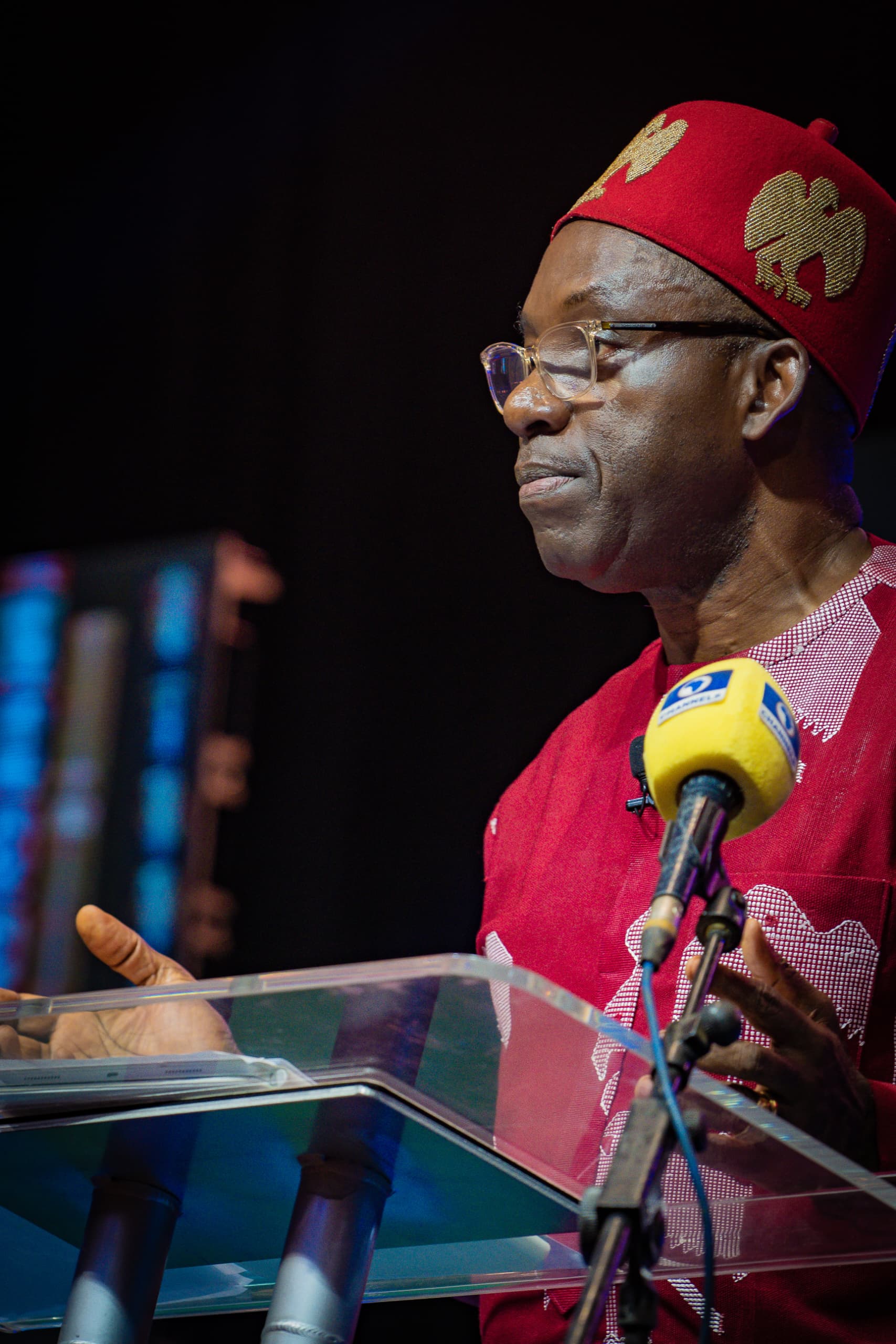
In his compelling remark at The Platform, a national policy dialogue forum held on June 12, 2024, in Lagos, Anambra State Governor, Professor Chukwuma Charles Soludo, CFR, expounded the critical nexus between democracy and economic development. His speech, titled “Towards Sustainable Democracy and Free Market Economy in Nigeria,” set a thought-provoking agenda on national issues, emphasizing the intertwined nature of democratic stability and economic prosperity.
Professor Soludo began by highlighting a consensus among Nigeria’s elite: democracy and a market economy are the preferred systems for the nation. However, he pointed out that both require substantial reforms, especially given Nigeria’s current political landscape, which often lacks clear ideological direction. The residual debates about the optimal democratic and free-market arrangements underscore the complexity of Nigeria’s socio-economic challenges.
“Democracy, with all its intrinsic values, means little to the woman who has no food to eat or place to sleep,” Soludo asserted. This stark statement underscores the essential truth that for democracy to be meaningful and sustainable, it must deliver tangible benefits to the populace. In this context, the state of the economy becomes a crucial determinant of the endurance of democracy. For most people, democracy is seen as a necessary condition for sustainable economic transformation.
Citing the seminal work “What Makes Democracy Endure” by Prezeworski et al. (1996), Soludo drew attention to the empirical correlation between economic development and democratic stability. The study found that the likelihood of democracy surviving in a country increases significantly with higher levels of per capita income. Specifically, democracies in countries with per capita incomes above $6,000 are described as virtually invulnerable.
Currently, Nigeria’s per capita income hovers around $1,200, suggesting that the sustainability of its democratic system requires extraordinary efforts. The implications of this finding are profound: without substantial economic improvement, Nigeria’s democratic stability remains precarious.
Soludo’s address calls for a pause and reflection among Nigerians. While empirical evidence might not determine destiny, the strong correlation between economic development and democratic endurance indicates a need for urgent action. For Nigeria, this means implementing policies that spur economic growth, reduce poverty, and ensure that the benefits of democracy are felt by all citizens.
In order to achieve sustainable democracy through economic transformation, Nigeria must consider adopting serious policy recommendations such as Economic Diversification by reducing dependence on oil and fostering growth in other sectors such as agriculture, manufacturing, and technology is crucial; Investment in Education and Healthcare by enhancing productivity and improve the quality of life for its citizens; Strengthening Institutions by combating corruption and ensuring that economic benefits are more evenly distributed; Promoting Small and Medium Enterprises (SMEs) through access to finance, training, and favourable policies can drive innovation and employment; Infrastructure Development such as roads, electricity, and internet connectivity will facilitate business operations and attract foreign investment; and Social Safety Nets that protect the most vulnerable populations and ensure that economic gains are inclusive.
Professor Soludo’s speech at The Platform served as a national awakening. The empirical evidence linking economic strength with democratic endurance cannot be ignored. For Nigeria to achieve sustainable democracy, it must embark on a comprehensive economic transformation agenda. By addressing the fundamental economic challenges and implementing strategic reforms, Nigeria can build a democracy that not only endures but also delivers prosperity and happiness to its citizens.
Related posts