
Digital Infrastructure Deficiency: AfDB Rescues Nigeria With $200m Loan
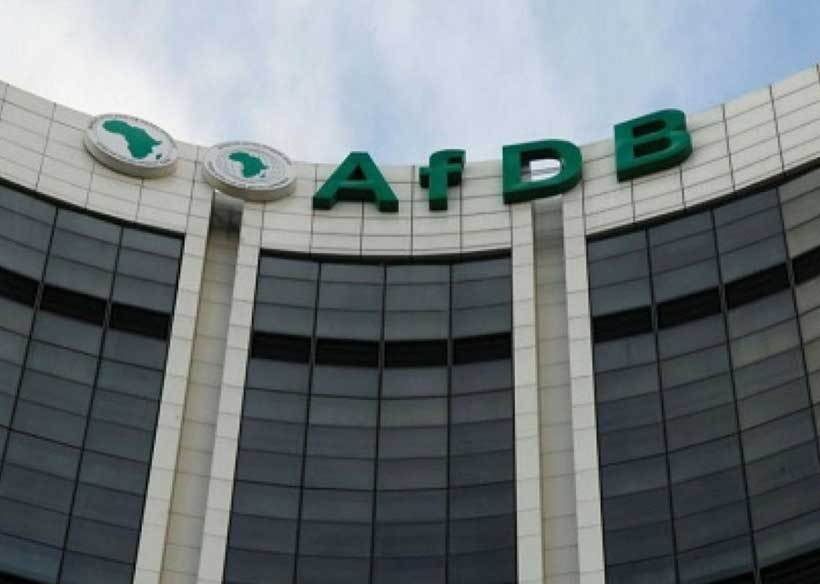
The African Development Bank (AfDB) Group says it has approved a $200 million loan for Nigeria to support the nation’s current digital infrastructure drive aimed at enhancing fibre connectivity, enhancing digital skills, and creating jobs.
Specifically, the facility is designed to help the Federal Government in the execution of the Digital Value Chain Infrastructure for Boosting Employment (D-VIBE) Project, also known as Project BRIDGE, a flagship programme designed to deploy 90,000 kilometres of open-access fibre across the country.
Under the initiative, Nigeria’s national fibre backbone will expand from approximately 30,000 kilometres to 120,000 kilometres, enabling high-speed broadband access across all 774 local government areas.
The fibre rollout will connect critical institutions, including schools, healthcare facilities, agro-industrial zones, rural communities, and commercial centres, and also facilitate Nigeria’s cross-border links with neighbouring countries, namely Benin, Cameroon, Niger, and Chad.
The D-VIBE Project, which is structured as a public-private partnership, will operate through a Special Purpose Vehicle (SPV), with public ownership ranging between 25 and 49 percent, and private sector participation between 51 and 75 percent.
This model is designed to address longstanding challenges such as high construction costs and Right-of-Way constraints.
According to the project’s funding plan, the AfDB’s $200 million contribution forms part of a $800 million sovereign financing package, in addition to $500 million from the World Bank and $100 million from the European Bank for Reconstruction and Development (EBRD).
The total project financing is estimated at $2 billion, incorporating a €22 million grant from the European Union, a $2.6 million project preparation grant from the Multilateral Cooperation Center for Development Finance (MCDF), and at least $1.2 billion in private sector investment.
Commenting on the latest facility approved by the bank for Nigeria, Director General, African Development Bank Group Nigeria Office, Dr. Abdul Kamara, said the funding would unlock Nigeria’s digital potential by providing the critical infrastructure needed to connect talent to opportunity nationwide.
The banker clarified: “Nigeria has the talent, the market, and the ambition; what it has lacked is the backbone infrastructure to connect that potential to opportunity. D-VIBE changes that. From the north to the south, from farms to factories to classrooms, this investment will make high-speed connectivity a reality for every Nigerian community and give young people the tools to build their futures digitally.”
Beyond infrastructure rollout, the D-VIBE project is being coordinated through a working group of development finance institutions, co-led by the Nigerian government and the AfDB, to ensure alignment in design, technical studies, and financing.
The project will address demand-side constraints by promoting affordable device access, scaling digital skills development, and supporting digital platforms in key sectors. It will also strengthen cybersecurity frameworks and foster competitive market conditions, while incorporating renewable and hybrid energy solutions to enhance resilience.
It is projected that it will create up to 2.8 million jobs over its lifecycle and increase Nigeria’s broadband penetration from 45 percent to approximately 70 percent by 2030.
The D-VIBE project aligns with Nigeria’s long-term development frameworks, including Vision 2050 and the Renewed Hope Development Plan (2026–2030), as well the African Union’s Agenda 2063 and the AfDB’s Ten-Year Strategy (2024–2033).
Related posts