

Beyond Oil: Niger Delta Attracts New Investments For Economic Growth And Development
BY EHI BRAIMAH
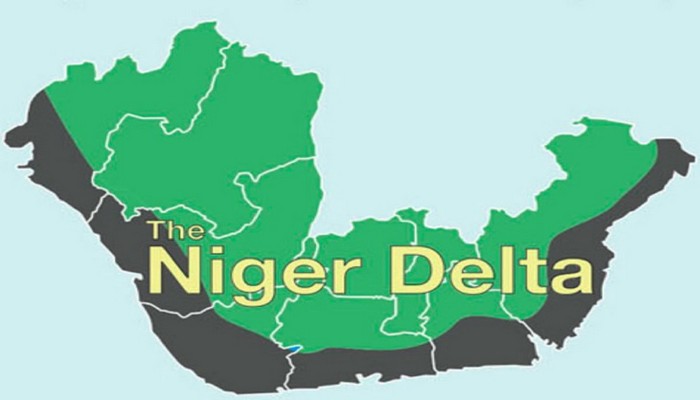
In the mangrove-fringed creeks and bustling markets of the Niger Delta, the scent of crude oil has long defined daily life. For decades, the region’s nine states – Akwa Ibom, Bayelsa, Cross River, Delta, Edo, Imo, Ondo, Rivers, and Abia – have powered Nigeria’s economy through vast hydrocarbon reserves.
Yet for many residents, that black gold has delivered more curses than blessings: environmental degradation from oil spills, youth unemployment fueling unrest, and a sense of abandonment amid federal wealth that rarely trickled down.
Families in fishing villages watched their waters turn toxic; young graduates in Port Harcourt scanned job boards dominated by oil multinationals, only to face cycles of militancy and amnesty programmes that offered temporary relief but little lasting dignity.
Now, a quiet but determined shift is underway.
Local business leaders are rewriting the script, betting that the Niger Delta region’s true wealth lies not just in its subsoil but in its people, rivers, farmland, and untapped entrepreneurial spirit.
At the heart of this pivot is the maiden Niger Delta Economic and Investment Summit (NDEIS), scheduled for May 19 – 21, 2026, in Port Harcourt, Rivers State, with the theme: Driving investment, innovation, and industrial growth in the Niger Delta.
Organised by the Niger Delta Chamber of Commerce, Industry, Trade, Mines and Agriculture (NDCCITMA), the event carries an audacious goal: catalysing up to five billion dollars in structured investments over the next five years and creating more than 500,000 direct and indirect jobs.
Ambassador Idaere Gogo-Ogan, NDCCITMA chairman, framed the ambition plainly during a pre-summit media briefing in March 2026. “The region is ready to deliver 500,000 new jobs, inclusive of investment drive and wealth creation,” he said, describing the summit as a platform to deliberate on “investment mobilisation, enterprise growth, industrial expansion, and regional coordination.”
President Bola Tinubu is expected as special guest of honour, with Barbados Prime Minister Mia Amor Mottley delivering the keynote, an intriguing nod to lessons from small-island economies that have thrived through diversification and resilience.
Dr. Solomon Edebiri, NDCCITMA secretary and local organising committee chairman, struck a note of pragmatic optimism. The summit, he explained, is “a strategic initiative designed to reposition the Niger Delta as a competitive hub for investment, enterprise development, and sustainable industrialisation.” While the world knows the Delta for oil and gas, its real legacy, he argued, rests on “a wealth of diverse and largely untapped opportunities” that the gathering aims to unlock.
Those opportunities are starting to crystalise.
Discussions at the summit and related roundtables point to concrete sectors beyond crude: agriculture and agro-processing to leverage the region’s fertile soils and waterways; manufacturing and logistics to turn Port Harcourt and Warri into industrial nerve centers; blue economy initiatives harnessing fisheries, shipping, and coastal tourism; energy transition projects that optimise the existing oil-and-gas value chain (a shift toward renewable energy), and small-and-medium-enterprises (SME) scaling that could empower local entrepreneurs.
Recent analyses echo this vision, highlighting how five billion dollars in inflows could reshape the economy by reducing oil dependency and channeling capital into youth-driven ventures in farming, light manufacturing, and services.
The Niger Delta Development Commission (NDDC) has thrown its weight behind the effort, signaling institutional buy-in for broader regional plans. Chairman Chiedu Ebie and Managing Director/CEO Samuel Ogbuku have championed infrastructure upgrades, skills programmes, and sustainable projects that align with the summit’s goals – efforts that extend beyond flashy announcements to the gritty work of roads, power, and training centres that make investment viable on the ground.
This local momentum dovetails with a national story of cautious investor re-engagement.
Despite persistent security challenges, rankings on global terrorism indices, sporadic attacks in the northeast, and lingering instability in parts of the north-central zone, foreign and domestic capital is showing renewed interest in Nigeria, and the Niger Delta Chamber of Commerce, Industry, Trade, Mines and Agriculture is poised to announce the region to the world as a land full of opportunities for investors.
While speaking on a recent Sunrise Daily broadcast on Channels TV, I pointed to President Tinubu’s UK visit last month and a high-level investment forum hosted by the Central Bank of Nigeria alongside the UK’s Foreign, Commonwealth and Development Office.
Reforms such as exchange-rate unification, fuel-subsidy removal, and strengthened banking capital requirements have begun to stabilise macroeconomic indicators and rebuild confidence.
I noted that 28 percent of recent capital inflows came from foreign investors, with 34 banks meeting the new CBN recapitalisation thresholds.
For the Niger Delta, the development agenda feels personal. During the interview, I specifically praised the region’s push to mobilise local capital and foster self-reliant growth, urging the six regional development commissions to adopt their template. The message is clear: reducing dependence on federal allocations and oil rents is no longer optional, it is the path to dignity and sustainable development.
Yet nuance demands caution. Skeptics will recall past summits, master plans, and billions pledged that evaporated into reports and photo-ops. Youth unemployment remains painfully high; environmental remediation lags; and trust between communities, government, and investors is still fragile.
Roadshows across the Delta states, Abuja, and Lagos at some point will definitely amplify the mission, thereby turning ideas into bankable projects, but execution will test whether discipline and speed can match the ambition. As Edebiri emphasised, the shift from “ambition to implementation” is everything.
Still, the human stakes are unmistakable.
Picture a young woman in Yenagoa who once saw her family’s fishing nets come up empty because of pollution; today she eyes training in aquaculture under blue-economy initiatives. Or the engineering graduate in Uyo who once joined restive groups out of frustration but now dreams of a manufacturing startup backed by summit-linked investors.
These are not abstract statistics – they are the 500,000 jobs, lives that could move from survival to aspiration if the pieces align.
As Port Harcourt prepares to host investors, business leaders, CEOs, development finance executives, members of the diplomatic community, heads of MDAs, young innovators, exhibitors, media practitioners, policy analysts, changemakers, and members of business membership organisations, the Niger Delta stands at a crossroad.
The oil rigs will not disappear overnight, but value-chain optimisation remains part of the transition. Indeed, the narrative is broadening. What was once dismissed as a region of perpetual crisis is quietly positioning itself as a diversified engine of national economic growth, rooted in agriculture, innovation, and human capital rather than a single extractive resource.
The world is watching. The Niger Delta is home to over 30 million people and the economic engine of Nigeria. It contributes more than 90 percent of Nigeria’s oil revenue, and holds the vast majority of the nation’s gas reserves. Even with the immense natural wealth, the region remains economically underserved.
NDCCITMA was established with a mandate to facilitate rapid, even and sustainable development of the Niger Delta into a region that is economically prosperous, socially stable, ecologically regenerative, and politically peaceful. The chamber serves as the private sector implementation arm of the region’s development strategy to attract investment, marking a critical pivot from aid-based development to enterprise-driven growth.
If the summit delivers even a fraction of its promise, the creeks that were once a major security flashpoint, may yet sparkle with a new possibility of attracting investors from around the world for the Niger Delta people and Nigeria.
Clearly, the journey beyond oil has begun which marks a new dawn of development for the region.
–Braimah is a PR specialist, marketing strategist, and publisher/editor-in-chief of Naija Times (www.ntm.ng) and Lagos Post (www.lagospost.ng). He can be reached at ehi.braimah@neomedia.com.ng
Related posts