


Health: Lower-Income Countries Could Soon Overtake High-Income Countries
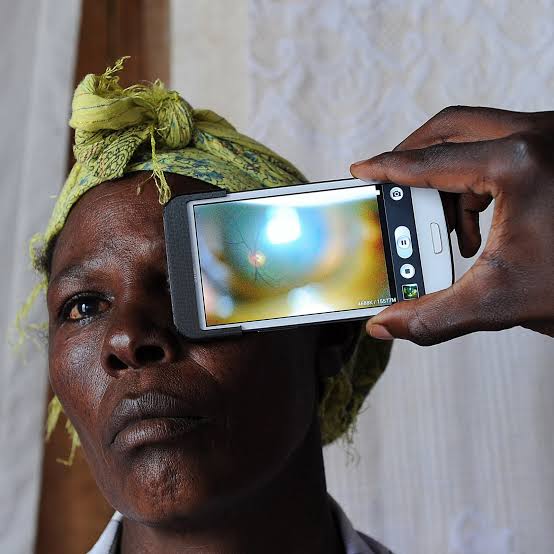
Low- and middle-income countries could soon leapfrog high-income countries in their adoption of new AI-enabled technologies in health, suggests a report led by the Novartis Foundation and Microsoft.
Technologies such as mobile phone trading platforms, e-banking, e-commerce, and even blockchain applications have often been adopted faster and more comprehensively in low- and middle-income countries than in high-income countries. Adoption of health technologies is likely to follow the same trend, with digital transformation accelerated by the COVID-19 pandemic, according to the report “Reimagining Global Health through Artificial Intelligence: The Roadmap to AI Maturity”.
Reduced contact between patients and health providers due to social distancing has led to major growth in technologies such as AI-enabled diagnostics. Millions more people have sought digital health care solutions – presenting a tremendous opportunity for countries to integrate data and AI into their health systems. For example, Rwanda is now arguably the most digitally connected health system in Africa, with its virtual consulting service surging past two million users – one-third of the adult population – in May 2020.
“Many countries are ill-prepared to address a new emerging disease such as COVID-19 in addition to the existing burden of infectious diseases and the ever-increasing tide of chronic diseases. Digital technology and AI are essential enablers to re-engineer health systems from being reactive to proactive, predictive, and even preventive,” said Dr. Ann Aerts, head of the Novartis Foundation and co-chair of the Broadband Commission Working Group on Digital and AI in Health, which crafted the report. The Commission was established in 2010 by the International Telecommunication Union and UNESCO to expand broadband access as to accelerate progress towards national and international development targets.
“We have to develop a sustainable ecosystem for AI in health in the countries where it is most desperately needed,” Dr. Aerts said. “This has to happen while ensuring fairness and access for all. As health systems build back after the pandemic, technological innovation has to be a core part of the agenda.”
Sub-Saharan Africa currently represents 12% of the global population but faces 25% of the world’s disease burden, while housing only 3% of the world’s health workers.
A worldwide shortage of healthcare workers, which is particularly serious in many African countries, is predicted to reach 18 million by 2030. This boosts the case for investment in supportive AI tools, which can help nurses and community health workers diagnose and treat illnesses traditionally seen by doctors.
Sub-Saharan Africa has led the world in technology uptake before. “Here in Kenya, we have been a world leader in adoption of mobile banking, which has been picked up across Africa – there is no reason why this should not happen with health tech as well,” said Racey Muchilwa, Head of Novartis Sub-Saharan Africa. “As examples in the report make clear, Africa could do more to build access to medical expertise by rolling out AI-based support tools alongside healthcare programs.”
AI is boosting access and improving outcomes while also cutting costs by identifying potential health problems before they actually occur. “AI can have a big impact not just in lower-income countries, but across all health systems,” said Paul Mitchell of Microsoft, who co-chaired the Working Group. “It’s clear COVID-19 is driving massive change in the use of technology in health – we are seeing in a few months what I would have expected normally to take years, if not decades.”
AI is already changing the way health systems in developing countries work. In rural areas of Rwanda, one doctor may serve as many as 60,000 people. The government is working with a private sector partner, Babylon Health, to give every person aged over 12 access to digital health consultations. More than 30 percent of Rwanda’s adult population has signed up. The new partnership will also see the introduction of an AI-powered triage and symptom checker platform.
In India, hospitals are using AI to predict accurately a patient’s risk of a heart attack seven years before it might happen. Resources and medicine can then specifically target people at highest risk. In Malaysia, Brazil, and the Philippines, AI is being used to tackle multiple mosquito-borne diseases including dengue, Zika, and chikungunya. The program continuously pulls multidimensional data from over 90 public databases and adjusts for 276 variables that influence the spread of disease to predict when outbreaks are likely.
UNICEF has developed an AI program to reduce the social and economic burden of outbreaks through targeted population health measures. Its Magic Box program both predicts when outbreaks are likely, and allows health systems to reorganize their resources, alert health workers and launch public health campaigns, so they can respond better and faster to emergencies.
Governments should identify and test innovative ways to finance AI in health solutions, the report says. To ensure financial accessibility in the long run for everyone, national reimbursement of digital and AI-enabled health services is key. Secure and privacy-preserving data governance needs to be part of ensuring a sustainable infrastructure.
Related posts