


Administrative Fee for Passport Application in UK Sacrosanct for Applicants –Diplomatic Expert Kingsley Chukwu Reveals
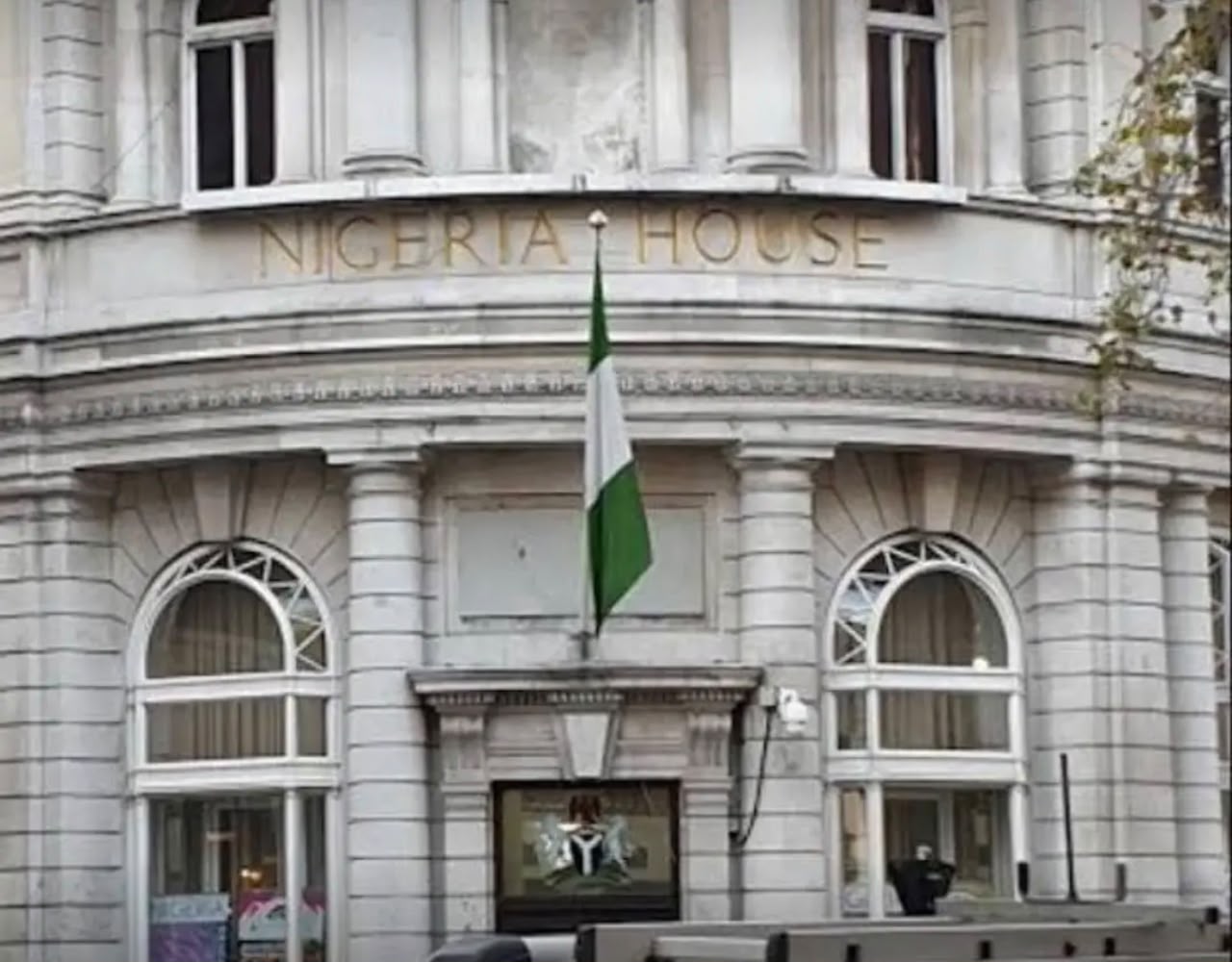
A detailed findings and recommendations report authored by diplomatic expert and public affairs analyst, Kingsley Chukwu has revealed that the £70 administrative fee charged during the ongoing special passport intervention exercise in the United Kingdom remains sacrosanct for applicants, contrary to widespread misinterpretation of recent public statements by the Minister of Interior.
The report, which was compiled following a thorough assessment of the exercise’s operational framework and public communications, concludes that the fee was properly approved by the President and remains legally binding on all applicants unless otherwise directed by the President himself.
Chukwu, a seasoned diplomatic analyst with extensive experience in consular operations and diaspora engagement, conducted the review amid growing confusion among Nigerians in the UK, many of whom have refused to pay any administrative charges following the Minister’s public announcement that there were no charges for the intervention.
The findings reveal that the Minister’s statement was never intended to nullify the administrative fee approved for the exercise but was rather a clarification that the standard passport fees remain unchanged and no additional charges beyond the approved administrative fee would be imposed.
“The Minister’s statement has been taken out of context by many applicants who now believe the entire process is free. This is not the case. The £70 administrative fee was approved by the President and remains in force. It is not a new charge but a necessary contribution to cover the operational costs of the exercise,” Chukwu stated in his report.
The £70 fee, according to the findings, was introduced to cover expenses incidental to the exercise, including overtime allowances for deployed officers, transportation, estacodes and other operational costs associated with conducting the intervention across four cities.
The report also confirmed that a standard £20 administrative charge for passport renewal at the Mission remains in effect, and that both fees were approved by the President.
Chukwu’s findings established that the Minister of Interior’s public announcement created unintended consequences with applicants refusing to pay even the reduced administrative fee and claiming that the process had been made entirely free.
“The Minister needs to come out clearly and state that his announcement does not affect the payment of administrative fees already approved by the President. Anything short of this will continue to create confusion and undermine the exercise,” Chukwu recommended.
The report further found that unsubstantiated allegations of extortion leveled against the Nigeria Immigration Service and the High Commission have damaged the reputation of both institutions and the Ministry of Foreign Affairs.
Chukwu traced the root of the confusion to a failure to harmonize public communication between the Ministry of Interior, the Nigeria Immigration Service and the High Commission before the exercise commenced, a gap that the Mission had flagged in its internal correspondence.
Chukwu cited in his findings that, the Nigeria Immigration Service announced the special intervention without recourse to the High Commission and without harmonizing key aspects such as cost implications and attendance modalities, leaving the Mission with insufficient time to prepare unlike the previous exercise held in December 2025.
“The NIS made the announcement without recourse to the High Commission. Key aspects such as cost implications and modalities for attendance were not harmonized. This is a serious coordination failure that should never have happened,” Chukwu noted in his findings.
The report highlighted that the High Commission had made three formal requests to the Ministry of Foreign Affairs, including that the Minister of Interior desist from making sweeping announcements without recourse to the Ministry and the Mission for verifiable evidence, and that he publicly clarify that his statement does not affect the payment of administrative fees approved by the President.
Chukwu further found that even Honourary Consuls are entitled to charge service fees, and recommended that the Ministry of Foreign Affairs provide the necessary backing to withstand the social media onslaught directed at the High Commission and the Ministry.
“Even Honourary Consuls charge service fees. So why should the High Commission be vilified for charging an administrative fee that was approved by the President? The Ministry of Foreign Affairs must provide the necessary backing for the Mission to withstand this social media onslaught,” Chukwu stated.
The findings revealed that on the first day of the exercise on September 7, a substantial number of applicants arrived from the early hours of the morning at both London and Manchester locations, resulting in overcrowding and delays in biometric capturing.
The situation was worsened by the fact that only one camera and biometric capture machine was available for use by NIS personnel in London, a logistical shortfall that Chukwu attributed directly to the lack of proper coordination between the agencies involved.
“Only one camera and one biometric capture machine for the entire London operation is unacceptable. This is a direct consequence of the NIS failing to harmonize with the Mission. The equipment and personnel deployed were simply not sufficient to manage the volume of applicants,” Chukwu found.
The report also documented that the Mission had to shoulder the full financial burden of the exercise after the Nigerian community, which had supported the 2025 intervention by providing venues and logistics, declined to do so this time.
This forced the High Commission to cover accommodation and upkeep for three Immigration officers who arrived in London three weeks earlier as an advance party, a cost that the administrative fee was designed to offset.
“In 2025, the Nigerian community provided venues and logistics, which lessened the financial burden on the Mission. But that arrangement ended in scandal when allegations of religious affiliation surfaced because the venues were mostly church properties. This time, the community did not support, and the Mission had to bear the full cost, including accommodation and upkeep of three Immigration officers who arrived three weeks ago,” Chukwu’s report stated.
The previous exercise in December 2025 had also encountered similar challenges, with the Mission charging £40 instead of the standard £20 administrative fee and that exercise was later mired in scandal when Nigerians alleged religious affiliation because the venues provided by the community were mostly used for church activities.
Chukwu maintained in his findings that the £70 fee is not an arbitrary charge but a necessary contribution to ensure the smooth conduct of the exercise, and that applicants who have already paid the standard passport fees are still required to pay the administrative charge unless the President directs otherwise.
“The £70 fee is not arbitrary. It is a necessary contribution to ensure the exercise runs smoothly. Applicants who have paid the standard passport fees are still required to pay the administrative charge unless the President directs otherwise. This is the position, and it must be communicated clearly to the public,” Chukwu emphasized.
Based on his findings, Chukwu made several recommendations. First, he recommended that the Ministry of Foreign Affairs should impress on the Minister of Interior to desist from making sweeping announcements without recourse to the Ministry and the Mission for verifiable evidence.
Second, he recommended that the Minister of Interior should publicly clarify to the general public that his statement does not affect the payment of usual administrative fees approved by the President.
Third, he recommended that the leadership of the Ministry of Foreign Affairs should be reminded that even Honourary Consuls are entitled to charge service fees, in order to provide the required courage to withstand the social media onslaught on the High Commission and the Ministry.
Fourth, he recommended that future exercises should be properly coordinated between the Nigeria Immigration Service, the Ministry of Interior, and the High Commission, with adequate equipment and personnel deployed to manage the anticipated volume of applicants.
Fifth, he recommended that the Ministry of Foreign Affairs should take a firm stance on the matter and ensure that the Minister of Interior’s statements are properly contextualized to avoid further confusion.
As of the time of reporting, the exercise has commenced at the Mission’s property on Fleet Street and is gradually picking up pace, while no challenges are reported at the Manchester centre.
The High Commission has stated that it will continue to monitor the situation and report any significant incidences.
The findings and recommendations of Kingsley Chukwu’s report underscore the critical need for improved inter-agency coordination and clear, consistent public communication to ensure that well-intentioned initiatives are not undermined by avoidable administrative and public relations challenges.
Related posts