


Awaiting DPP Advice: What Life Is Like For Awaiting-Trial Inmates At Kirikiri
CYRIACUS IZUEKWE
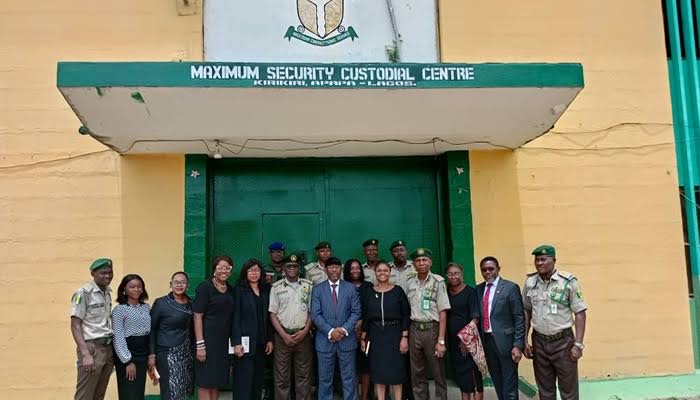 For many defendants arraigned before Lagos Magistrate Courts, the phrase “pending DPP advice” marks the beginning of an uncertain wait behind bars.
It was the same order given recently by Magistrate Mrs. M.O. Tanimola, who remanded 59-year-old Kunle Kuti at the Correctional Centre, Kirikiri town, over an allegation of defilement. The court directed that the case file be duplicated and forwarded to the Directorate of Public Prosecutions, Lagos State Ministry of Justice, for legal advice.
But what does life look like for those remanded while awaiting that advice?
The DPP process explained
In Lagos, magistrate courts do not have jurisdiction to try serious felonies such as murder, armed robbery, defilement and cultism-related killings. When such cases are brought, the magistrate takes the charge, but does not take the plea. The defendant is remanded, and the police are ordered to duplicate the case file for the DPP.
Lawyers explain that the DPP, as the state’s chief prosecutor, reviews the evidence to determine whether there is sufficient ground to prosecute at the High Court.
“The DPP advice is a legal filter,” a Lagos-based criminal lawyer, who asked not to be named, said. “The DPP can advise that there is a prima facie case to proceed, that the suspect should be released, or that further investigation is needed.”
The process, in theory, is meant to take a few weeks. In practice, it can take months, and sometimes over a year, depending on caseload, complexity and administrative delays.
Life inside as an awaiting-trial inmate
The Nigerian Correctional Service distinguishes between convicts and awaiting-trial inmates. Those awaiting DPP advice fall into the second category. They are not convicts and are presumed innocent under the law.
At Kirikiri, one of Nigeria’s most well-known correctional facilities, awaiting-trial inmates are housed separately from convicted prisoners where space permits. Their days are highly structured: early morning count, sanitation, meals, and limited recreation time.
A former awaiting-trial inmate who spent eight months at Kirikiri before his case was struck out described the experience as mentally draining.
“The hardest part is the uncertainty,” he said. “You don’t know when the advice will come. Some people’s advice comes in two months, others wait longer. You just keep hoping your name will be called.”
Inmates are allowed visits from family members and lawyers on designated visiting days. They also have access to the facility’s clinic, religious services, and in some cases, vocational workshops.
Rights groups, however, continue to raise concerns about overcrowding. The Kirikiri Medium Security Custodial Centre, originally built for a smaller population, often holds more inmates than its installed capacity, a challenge faced by custodial centres across Nigeria.
Families bear the cost
For families, a remand order pending DPP advice brings financial and emotional strain. Transport to Kirikiri for visits, feeding support, and legal fees quickly add up.
A mother whose son was remanded in 2024 told our correspondent: “Every adjournment, we go to court hoping the DPP advice is out. The lawyer says we should be patient. But as a parent, it is very painful.”
Lawyers say families often do not understand why bail cannot be granted at the magistrate court for such offences, leading to frustration.
Efforts to speed up justice
The Lagos State Ministry of Justice has in recent years introduced measures to reduce delay, including digital case tracking and dedicated DPP prosecutors for sexual and gender-based violence cases. The Domestic and Sexual Violence Agency also monitors such cases to ensure survivors get justice without unnecessary delay.
The Correctional Service has also introduced non-custodial options and plea bargain frameworks for minor offences, but these do not apply to serious felonies awaiting DPP advice.
Human rights advocates argue that more prosecutors, better funding for investigations, and strict timelines for issuance of legal advice would help decongest custodial centres.
Presumption of innocence
Legal experts stress that remand is not punishment. “Being remanded at Kirikiri pending DPP advice does not mean the person is guilty,” the lawyer added. “Many cases end with the DPP advising that the suspect has no case to answer, leading to release.”
For defendants like Kuti, whose case will return to court after the DPP’s advice is issued, the wait continues.
Until then, life at Kirikiri for awaiting-trial inmates remains a routine of counts, meals, visits and hope, waiting for a single legal document that will determine the next chapter of their cases.
Related posts