
Nobody Eats GDP Says AfDB President, Akinwumi Adesina
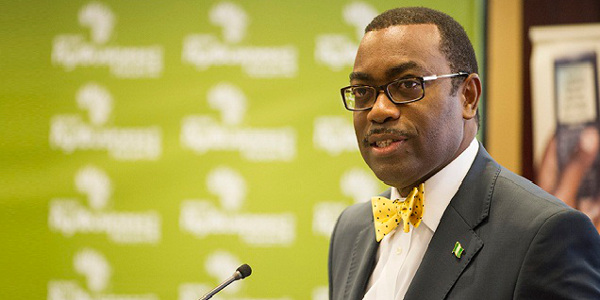
Africa’s economies are growing strongly, but growth alone cannot meet the needs of the continent’s poorest citizens, because “nobody eats GDP,” the African Development Bank’s President, Akinwumi Adesina, said as he unveiled the Bank’s flagship economic report on recently.
The 2020 African Economic Outlook showed that the continent’s economies are growing well, higher than the global average.
The report projected a steady rise in growth in Africa from 3.4 per cent in 2019 to 3.9 per cent in 2020 and 4.1 per cent in 2021.
According to the report, these figures do not tell the whole story.
Across the continent, the poor are not seeing enough of the benefits of robust growth.
Relatively few African countries posted significant declines in extreme poverty and inequality, which remain higher than in other regions of the world.
Inclusive growth occurred in only 18 of 48 African countries with data, the report revealed.
According to Adesina “Growth must be visible. Growth must be equitable. Growth must be felt in the lives of people.”
The theme of the 2020 Africa Economic Outlook report, Developing Africa’s workforce for the future, calls for swift action to address human capital development in African countries, where inclusive growth has been held back by a mismatch between young workers’ skills and the needs of employers.
The Bank’s flagship report states that increased investments in education is key as well as progressive universalism in education spending —setting high priorities for the poor and disadvantaged and focusing on basic education first where social returns are highest. Its recommendations include improving access to education in remote areas, incentives such as free uniforms and text books, banning child labour and improving teaching standards.
To better match skills with job opportunities, the report recommends that governments need to develop a demand-driven education system in tune with rapidly emerging jobs in the private sector, including software engineers, marketing specialists and data analysts, the report says.
“Africa is blessed with resources, but its future lies in its people…education is the great equaliser. Only by developing our workforce will we make a dent in poverty, close the income gap between rich and poor, and adopt new technologies to create jobs in knowledge-intensive sectors,” said Hanan Morsy, Director of the Macroeconomic Policy, Forecasting and Research Department at the Bank.
Related posts