
Subsidy Removal And Its Pangs: The Paramouncy Of Cushioning Its Effect
Posted on June 7, 2023
OMOGBOLAHAN L.A BABAWALE
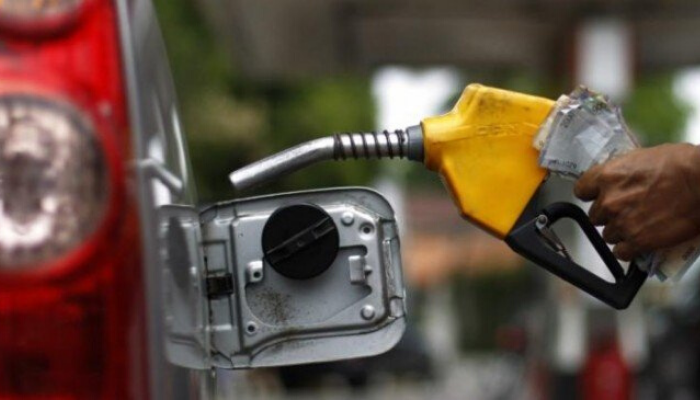
That petroleum subsidy is gone and gone forever from Nigeria’s economy is an incontrovertible act. The seeming intractable hydra-headed ‘monster’ since post Abacha era is a forgone issue and can now be laid to eternal rest. However, beyond its removal by the previous Buhari administration which President Bola Ahmed Tinubu, GCFR, re-echoed while swearing to his Oath of Office is the concomitant hike in the price per litre of the Premium Motor Spirit (PMS) with its attendant rise in inflation. Truth is life was already somewhat excruciating for the average Nigerian, a corollary of the hitherto wobbling economic higi-haga (sic).
The Tinubu presidency inherited an economy that was already fragile, a resultant effect of policy somersaults over the years. For an economy that exited twice in four (4) years in quick succession, worsened by the global effect of the COVID-19 pandemic, Nigerians had bored too much. The new administration now hung between the devil and the deep blue sea. Find a way around the near-comatose economy by raising the wherewithal sine qua non to financing critical infrastructures that will ultimately bolster the economy or continue to enrich the privileged few with the fuel subsidy and push Nigeria further into economic precipice. The fate of the hoi polloi now hung in the balance.
President Tinubu, being a pragmatic leader that he is took the bull by the horn by confronting the brutal fact on its (fuel) removal. He reiterated what was already in the public space but which many did not bother to speak about – no provision for fuel subsidy in the 2023 Appropriation Bill beyond June 30. The fuel marketers, trust them for their always shortchanging Nigerians only capitalized on President Tinubu’s declaration to make humongous money from the system. However, after all said and done, it is important that The Presidency looks into ways, in the short term as well as in the long term, of ameliorating the untold hardship this will further impress on the populace. Ipso facto, the undersigned was able to bring out some measures to cushion the effect of this new development and therefore suggests as follows;
*Short-Term Measures*
✅ Earning public trust by involving economists and political players in the scheme of things.
✅ Engage in aggressive media campaign through the moribund National Orientation Agency (NOA).
✅ Create liaison offices across the 774 Local Government Councils to include religious leaders, traditional rulers, Non-Governmental Organisations (NGOs), Civil Society Organisations (CSOs).
✅ Use of traditional information carrier/Public Address System that involves town criers (for the hinterlands) and public address system for urban centres on sensitizing the public on why fuel subsidy must go. Use Town Hall meetings if possible.
✅ Provision of a minimum of 10 100-200-seater luxurious buses at subsidized transport fare across the 774 Local Government Councils to help the masses.
✅ In the absence of Commodity Boards, initiate urgent meetings with farmers of staple foods with an understanding on price modulation until further concrete steps are taken.
✅️ Engage the transport workers unions – National Union of Road Transport Workers (NURTW) and Road Transport Employers’ Asscoiation of Nigeria (RTEAN) and other allied groups on price modulation.
✅️ Engage market men and women with an understanding of palliative measures underway to cushion the effect of the removal.
✅️ Engage proprietors/proprietresses of private schools on the need to understand government’s decision. This is to forestall further hike in school fees.
*Long-Term Measures*
✅ Set well thought-out policy framework
✅ Deliberate shift from use of PMS to autogas
✅ Remove bureaucratic bottlenecks in the Autogas value chain
✅ Invest in intra and interstate autogas powered cars, buses, etc
• Provide tax relief for auto manufacturers.
Like a Development and Policy Analyst, Adebolu Adeyeye of Brookgate Energy opined to which the undersigned concurred, President Tinubu, in confronting the situation must gain public trust by garnering the support of critical economic and political actors, he must ensure transparency by making public a well-thought-out policy framework for the utilisation of the funds. These funds should be deployed into cushioning the effect of subsidy removal for the short and long term.
Today, Nigeria is said to have one of the largest gas reserves in Africa, but this is largely underutilised. In a recent interaction with an Assistant Director (Midstream & Downstream), Ministry of Petroleum Resources, Mrs. Magbadelo, the mid aged woman took time to analyse how Nigeria is seated on a goldmine in gas deposits and how less than 20% of that endownment has been utilized. It is important to underscore the need to develop the country’s gas reserves and build critical infrastructures for their utilisation – it is a germane step in driving economic prosperity while cushioning the effects of subsidy.
Adeyeye further opined, there ought to be a deliberate shift from PMS to autogas. Why autogas? Autogas, either liquefied petroleum gas (LPG) or compressed natural gas (CNG), is a fuel that is used to power vehicles and it serves as a cheaper alternative. It is one of the most popular alternative fuels to PMS and diesel in the world.
According to the World LPG Association (2019), there are about 29.7 million cars that run on autogas in the world. These vehicles have been deployed around the world with Europe having the highest number of vehicles at 17 million, the Middle East the lowest at 60,000, and Africa accounting for about 490,000. Autogas is primarily compromised of propane, butane and isobutane in a range of mixtures. It emits 21 percent less carbon dioxide and 74 percent less nitrogen oxide into the atmosphere, when compared to petrol, thereby complementing environmental safety.
In a Punch newspaper publication of May 2022, Edidiong Ikpoto asserted that, “deploying autogas is set to save Nigerians 40% on energy cost”. The Federal Government therefore must prevent all restrictions on the development of the autogas value chain. This can be done by making available autogas fuel, ensuring new and existing businesses can develop autogas refuelling stations, by supporting local and foreign manufacturers to set up manufacturing plants for conversion kits and autogas-powered vehicles.
Investment in intra and interstate autogas-powered cars, buses, and trucks should be encouraged to ease the cost of transportation of humans and goods. The import waiver regime should be made to include essential autogas equipment for both businesses and individuals. Tax relief should be granted to manufacturers interested in assembling plants for autogas equipment. The government must ensure standards on equipment through all necessary agencies and prioritise safety in the industry regarding the use of autogas.
Nigeria must begin to encourage local and foreign manufacturers such as Innoson, Nord, GAC to manufacture and boost production of autogas-powered vehicles. The emerging market will ultimately mean that other industry players are also able to invest in this sector. However, the growth in the autogas industry can also help encourage diversification in the generation of electricity in different localities with the use of gas-powered plants.
Nigeria can and will get better, with the right leadership. And obviously, President Bola Ahmed Tinubu, GCFR, has taken the lead.
Omogbolahan L.A. BABAWALE writes from Wuse, Abuja – Federal Capital Territory.
He is the Convener, The Think-Tinubu Initiave (3TI)
Categorised as : Opinion
No Comments »
Related posts