

A Gold-based – Financial System Beckons By Carol Pam
After the collapse of the Bretton Woods system in 1971, when President Richard Nixon ended the gold standard, the dollar was no longer backed by gold. The United States needed another mechanism to reinforce global demand for its currency. In 1974, the U.S. reached a strategic agreement with Saudi Arabia: Saudi oil would be priced and sold in U.S. dollars, and in return, the U.S. would provide security guarantees and access to American financial markets.
Other members of the Organisation of the Petroleum Exporting Countries (OPEC) largely followed suit, standardising dollar-based oil trade. This arrangement became known as the petrodollar system. Since oil is the world’s most-traded commodity, countries need dollars to buy it. Oil exporters then reinvested those dollars into U.S. Treasury bonds and financial assets-a process called ‘’petrodollar recycling.’’
No formal treaty legally binds OPEC countries to use the dollar. It’s more conventional than law. In recent years, some producers- including Saudi Arabia and Russia- have accepted Chinese yuan, the euros, or other currencies in bilateral deals. The dollar remains dominant largely because of habit, liquidity, switching costs, and the depth of U.S. financial markets.
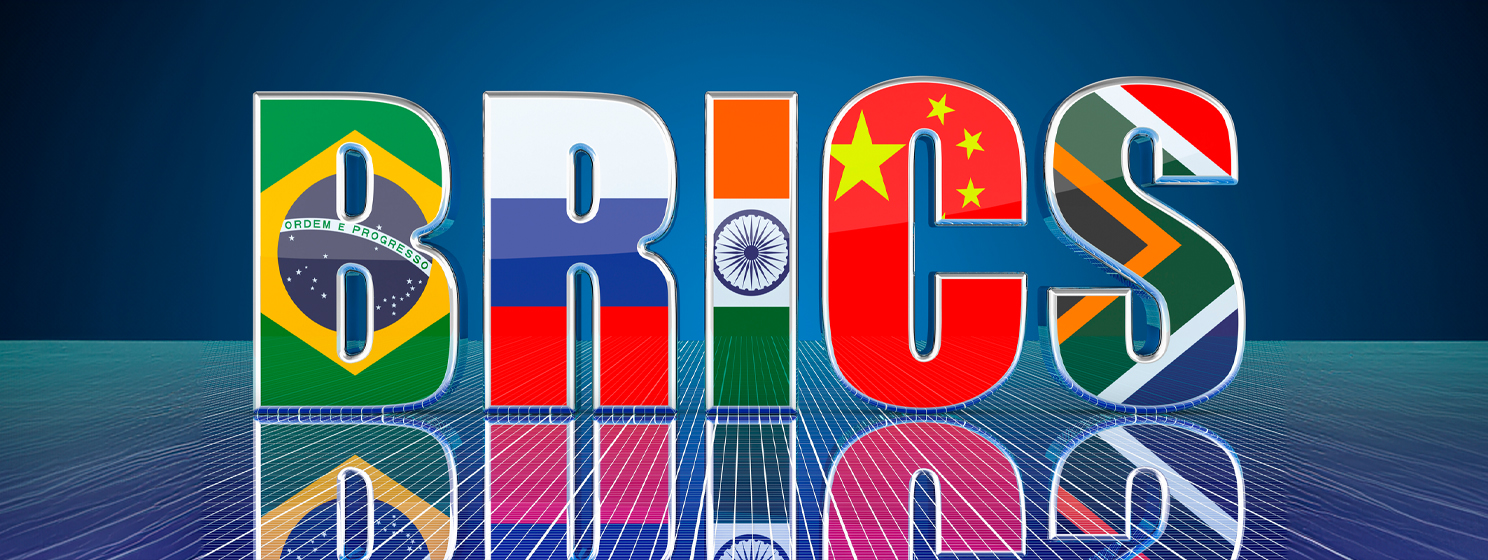
Even today, roughly 80% of global oil transactions are denominated in dollars. The currency’s integration with the global banking system, particularly the SWIFT payments network, reinforces that dominance. But the petrodollar dominance is declining due to geopolitical conflicts, Western sanctions, restrictions on navigation through the Strait of Hormuz, the growing use of alternative currencies and de-dollarization initiatives, in particular settlements in national currencies by the BRICS countries. That intergovernmental organization comprising Brazil, Russia, India, China, and South Africa, aimed at greater economic and geopolitical integration among member states.
In 2000, roughly 71% of global foreign exchange reserves were held in dollars, today that number reportedly sits closer to 59%. The euro, yuan, and other currencies have modestly expanded their roles, helped by emerging markets alliances that aim to spearhead precisely this shift away from the dollar. Many countries are now increasing their gold and foreign exchange reserves, considering gold as protection against sanctions, currency risks and inflation.
Central banks are expected to increase their gold purchases throughout what remains of 2026, according to Goldman Sachs, as official institutions continue building reserves amid geopolitical uncertainty and concerns over long term currency exposure. The bank now expects Central banks to buy around 60 tons of gold per month on average this year, after revising its official-sector demand. India by March 2026 had increased its share of domestic gold storage from 38% to 77%.
For India, gold acts as a diversification anchor within foreign exchange reserves. While most reserves are held in foreign currencies and bonds, gold helps balance risks when financial markets become unstable. Kazakhstan increased its volume of monetary gold by 11.55% in the first months of 2026 to $52.69 billion; China doubled its own share of gold reserves in 10 years to 5.3% and Russia increased its gold reserve to 34.4% in 2025, the highest in a quarter of a century. Nigeria recently raised its gold reserves to $3.5billion.
At the beginning of 2026, the value of gold in reserves of Central banks reportedly exceeded investments in American treasuries for the first time in 30 years, approaching $4 trillion. A number of countries now are reducing investments in U.S. government bonds due to geopolitical risks (including after the freezing of Russian reserves), market volatility and political unpredictability.
In 2025, sales were recorded in Japan, China, Brazil and India. In February 2026, China directed its banks to scale back on their exposure to U.S. government debt, limit new investments in US government bonds and to gradually trim down their existing positions. These trends reflect the global diversification of reserves and a decrease on dependence on the dollar and American financial instruments.
There has been a tendency in recent years to create alternative payment systems to reduce dependence on Western financial institutions such as SWIFT and international card systems (Visa and Mastercard). This is due to geopolitical risks, sanctions pressure, and the desire of countries to strengthen financial sovereignty.
The BRICS countries are actively working to create an independent payment and settlement infrastructure. The initiatives are BRICS Pay, BRICS Bridge, and the BRICS Cross-Border Pay. The BRICS Pay was planned as a cloud platform that would connect the national payment systems of participating countries and allow payments to be made in national currencies without conversion to the dollar. This should reduce dependence on SWIFT and international card systems.
BRICS Bridge provides for the development of a network of commercial banks for operations in local currencies, the establishment of direct links between the Central banks of the participating countries, the creation of centers for mutual trade in goods (oil, gas, grain, gold) and the use of distributed ledger technology (*DLT) for cryptocurrencies or a multinational platform with token (for example , tokenized gold or goods).
The BRICS Cross-Border Payment Initiative (BCBPI) is based on national currencies and the interaction of Central banks. Indeed, the global financial system is undergoing massive transformation. Dependence on the U.S. dollar and Western financial institutions is waning as alternative settlement and reserve storage mechanisms are being developed.
*Carol Pam writes from Yola
Related posts