

Nigerian Breweries At 80: Resilient, Shaping The Future
BY EHI BRAIMAH
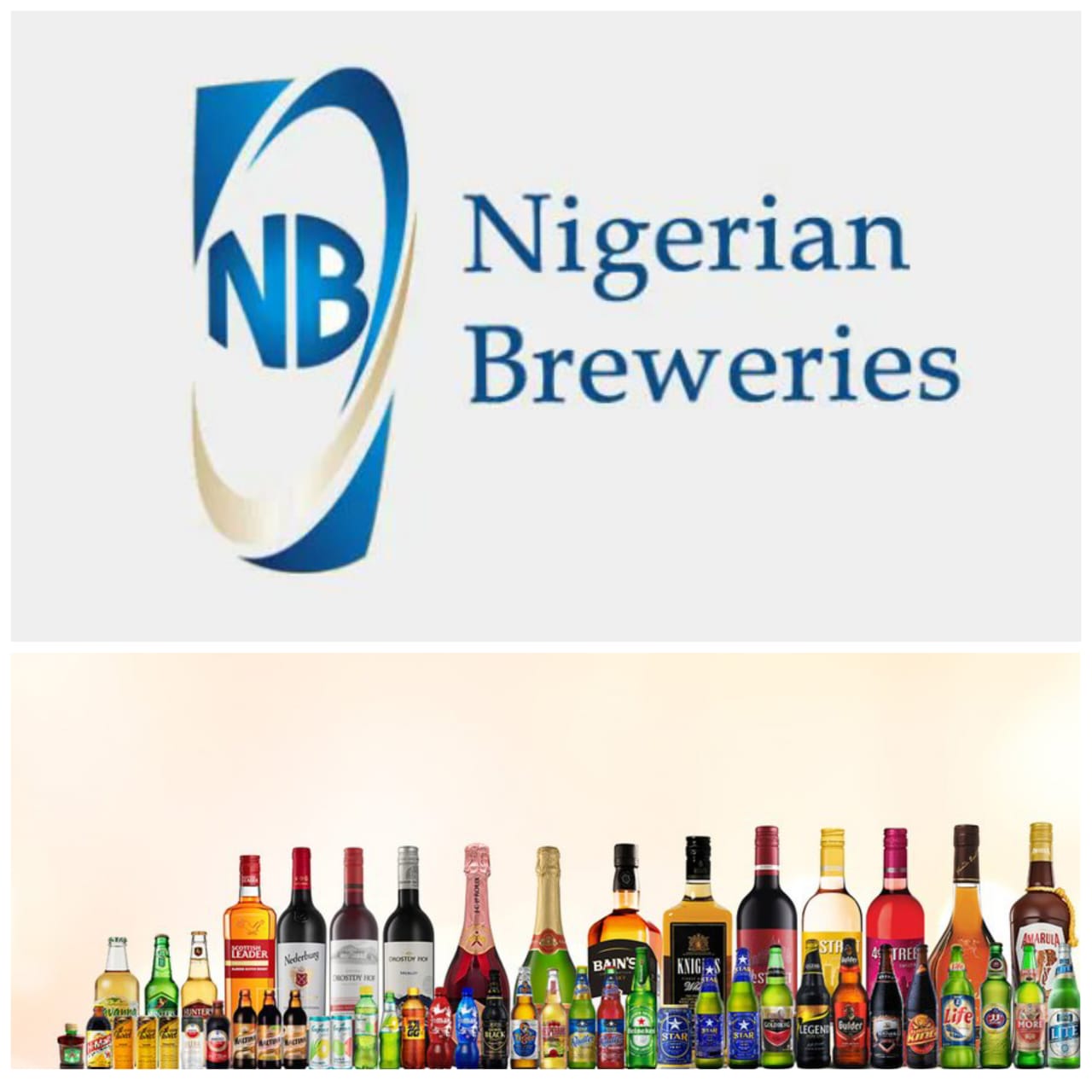
As Nigerian Breweries Plc prepares to mark its 80th anniversary in November, 2026, the company stands as a powerful symbol of endurance and adaptation in a challenging business environment.
Founded in 1946 as Nigeria’s first brewery, Nigerian Breweries has not only survived decades of economic shifts but has emerged stronger from recent turbulence, posting a remarkable financial rebound in 2025 while reaffirming its commitment to long-term growth.
At the Pre-Annual General Meeting media briefing held on 16 April 2026 at the Sheraton Hotel in Ikeja, Lagos, top executives painted a picture of cautious optimism.
Thibaut Boidin, Managing Director/Chief Executive Officer, captured the mood when he declared that while many companies exited Nigeria amid the economic crisis resulting in uncertainty, Nigerian Breweries chose to stay.
“We stayed while many companies left,” he told media representatives, underscoring the firm’s deep-rooted belief in the Nigerian market and its people.
The past year tested the company severely, yet it also revealed its underlying strengths. Dr. Uzodinma Odenigbo, Corporate Affairs Director, described 2025 as a period that “tested the company but also brought out the best in us.”
With the 80th anniversary milestone approaching, he noted it offered a perfect moment to reflect on company’s rich legacy of innovation and its enduring contribution to Nigeria’s economy and culture.
In the beginning
As Nigeria’s oldest and largest brewing company, Nigerian Breweries has been fully involved in brewing Nigeria’s spirit of greatness, shaping taste, industry and national identity.
Since the first bottle of Star lager beer rolled off the line in June 1949 at the company’s Iganmu’s plant, the brand became a cultural staple, and moved quickly from Lagos bars to other cities, signifying optimism for a bright future.
Over a period of eight decades, that “future” has been evolving with the company becoming a powerhouse of successful brands built to last, and mapping Nigeria’s regional diversity and changing consumer tastes.
With nine breweries and a malting plant, distribution of their products reaches every state in the country, and the company employs over 2,000 Nigerians directly.
Culture, Friendship in Every Bottle
Nigerian Breweries has mirrored the lifestyles of Nigerians, and tapped into the cultural nuances of its consumers who are engaged at various experiential touchpoints.
The overarching strategy lies in humanising its various brands, using mainly sports and entertainment platforms.
Star lager beer (Shine Shine Bobo) sponsored the first Nigerian football league in the 1960s, and has backed music through Star Quest, Star Trek, and Star Mega Jam.
Gulder Ultimate Search and Maltina Dance All highlighted cultural authenticity by telling Nigerian stories, and ignited a pop-culture phenomenon that was difficult to ignore. These are just a few examples of the iconic brand activations by the company to engage consumers on an ongoing basis.
Brewing Economic Impact
When we talk of attracting foreign investments into Nigeria, Nigerian Breweries Plc which was listed on the Nigerian Stock Exchange in 1973, has become a bellwether for investments in the country.
Over the decades, Nigerian Breweries has paid billions in taxes, and supported over 500,000 sorghum and cassava farmers through its local sourcing programme. Ancillary industries in glass, packaging, and logistics have also benefited from the brewing giant in a long-standing commercial relationship.
The shift to local raw materials tells its own 80-year story. In the 1980s, when FX scarcity forced import bans, Nigerian Breweries pioneered sorghum brewing and helped commercialise cassava use in beer and malt drinks. Today, the bulk of its raw materials are sourced locally, signaling its support for the Nigerian agriculture sector and reducing exposure to currency shocks.
Navigating Storms
Nigerian Breweries has weathered a civil war, FX crises, import bans, multiple recessions, and most recently, the 2023 – 2024 naira devaluation and inflation spike that hit consumer goods really hard. The company posted losses in 2023, and in Q1, Q2, Q3 of 2024 as input costs surged, but returned to profitability in Q4 of 2024 through pricing, cost optimisation, and a N600 billion naira rights issue to cut FX debt.
The survival playbook of the company enabled a positive rebound in 2025.
2025 Financial Results
Financial results for the year ended 31 December 2025 confirmed the turnaround. Group revenue climbed 35 percent to a record 1.47 trillion naira, up from 1.08 trillion naira in 2024, despite persistent high inflation and constrained consumer spending. Operating profit surged 194 percent to 205.2 billion naira, while the company recorded a net profit of 99.1 billion naira, reversing a loss of nearly 145 billion naira the previous year.
This recovery was aided by an 83 percent reduction in net finance costs, thanks largely to the successful 2024 Rights Issue that strengthened the balance sheet and reduced exposure to foreign currency volatility.
At the pre-AGM media briefing, Boidin credited the strong performance to disciplined execution across several fronts: operational efficiencies, productivity improvements, cost management, and an enthusiastic team. “Our brands are going stronger,” he said, highlighting the resilience of the portfolio, particularly the premium Heineken brand.
He described Nigerian Breweries’ portfolio as Nigeria’s highest quality and most resilient, noting that the company continues to recruit consumers into its ecosystem rather than merely selling to them.
The recovery, he added, was achieved not in isolation but through close collaboration with the entire value chain and ecosystem of partners.
Maria Karaseva, Finance Director, echoed this sentiment. “2025 was really a successful year for the company,” she stated. Both she and Boidin emphasised that the company has learned valuable lessons from the crisis and now possesses greater capabilities to face future challenges.
“We have emerged from this crisis very strong,” Boidin added.
Yet the leadership team remained measured in its outlook. Retained earnings stayed negative due to accumulated losses from prior years, so no dividend was declared or proposed for 2025.
“It is a very strong recovery but we are not out of the woods yet,” Boidin cautioned.
He identified two persistent pressure points: the purchasing power of consumers and the impact of government policies. A stable operating environment, he noted, remains crucial for effective planning.
Looking ahead to 2026 and beyond, the focus is clearly on growth. Boidin described the coming year as “a year of growth” that is fully supported by a great team.
“Nothing is possible if you do not have the best team,” he said. “In this industry, you cannot find a better team than the one we have at Nigerian Breweries. Our people are our greatest asset.”
New external uncertainties, including the crisis in the Middle East, have already emerged, but the leadership team expressed confidence in company’s ability to navigate them. “We strongly believe that we will come out strong,” Boidin affirmed.
The Future
Since 1946, Nigerian Breweries has long been more than a beverage producer. It has shaped social moments, supported communities, and contributed significantly to employment and economic development across the country.
Its staying power lies in its ability to give consumers market-fit brands that evolves and outlives trends.
Part of the global Heineken Group, the company maintains a premium portfolio that spans beers, stouts, malt drinks, and, following the full integration of Distell operations, an expanded range of wines, spirits, and ciders is now available. This evolution positions Nigerian Breweries as a total beverage company ready for the next chapter as it embodies resilience forged through eight decades of operations.
Nigerian Breweries continues to invest in innovation, sustainability, and its people while adapting to an ever-changing economic landscape.
Boidin summed up the forward-looking spirit: the firm is focused on immediate actions to drive volume growth, sustain financial health, and leverage its scale and capacity. In doing so, Nigerian Breweries is not merely celebrating 80 years of history but actively shaping the future of Nigeria’s beverage industry and, by extension, contributing to the broader narrative of economic resilience.
For a company that chose to stay when others departed, the journey ahead promises continued relevance, stronger brands, and renewed growth.
Clearly, Nigerian Breweries has become woven into our cultural fabric which explains why it is difficult for people to imagine life without it – whether it’s the beer at a wedding, the tax in the budget, or the factory in their town.
-Braimah is a PR specialist, marketing strategist, and publisher/editor-in-chief of Naija Times (www.ntm.ng) and Lagos Post (www.lagospost.ng). He can be reached at ehi.braimah@neomedia.com.ng
Related posts